
Preschool readiness is about much more than knowing letters or counting to ten. It is the combination of emotional maturity, social skills, language development, physical coordination, and basic thinking skills that help a child feel secure and confident in a preschool environment. When families understand what preschool readiness really means, they can support their child’s growth at home in ways that make the transition smoother and more joyful.
Below is a parent‑friendly guide that breaks preschool readiness into clear areas, shows what to look for, and offers practical, everyday strategies to prepare a child—without pressure, drills, or comparison.
What “Preschool Readiness” Really Means
Preschool readiness is not a test a child passes or fails; it is a general level of development that allows them to participate in group learning, follow a routine, and separate from caregivers for a few hours. Instead of asking, “Is my child smart enough for preschool?”, a more useful question is, “Is my child ready to be in a group setting with other children and adults, following simple routines and exploring new experiences?” Resources like this preschool readiness checklist for parents can help you think about the whole child, not just academics.
In practice, readiness usually includes:
- A basic ability to separate from parents or caregivers for a short period.
- Interest in playing near or with other children.
- Ability to follow simple directions and routines (for example, clean‑up time).
- Some independence with toileting, dressing, and feeding, depending on the school’s requirements.
- Curiosity, willingness to explore, and the ability to focus for short periods. These ideas are echoed in many school readiness guides for families.
Every child develops on a unique timeline. Rather than treating these as strict requirements, think of them as guideposts to help you understand where your child might need extra support, similar to how broader early childhood developmental checklists are meant to guide—not diagnose—development.
Emotional Readiness: Managing Feelings and Separation
Emotional readiness is often the first thing parents notice when they think about preschool. A child might be very verbal or curious but still become overwhelmed by new environments or separation from their caregiver. Experts emphasize that emotional and social skills are core pillars of preschool readiness checklists.
Signs of emotional readiness
Many preschool‑ready children:
- Can separate from a parent or caregiver with some reassurance, even if they cry at first but settle after a short while.
- Show the ability to soothe themselves with a comfort item (a toy, blanket) or with gentle support from an adult.
- Can manage small frustrations—such as not getting a turn immediately—without completely melting down every time.
- Are beginning to understand and name basic feelings like “happy,” “sad,” “mad,” or “scared.” These examples line up with common social‑emotional milestones for ages 3–5.
Emotional readiness does not mean a child never cries or never gets nervous. It means that, with caring support from adults, they can begin to recover and participate, a view shared by many school readiness frameworks.
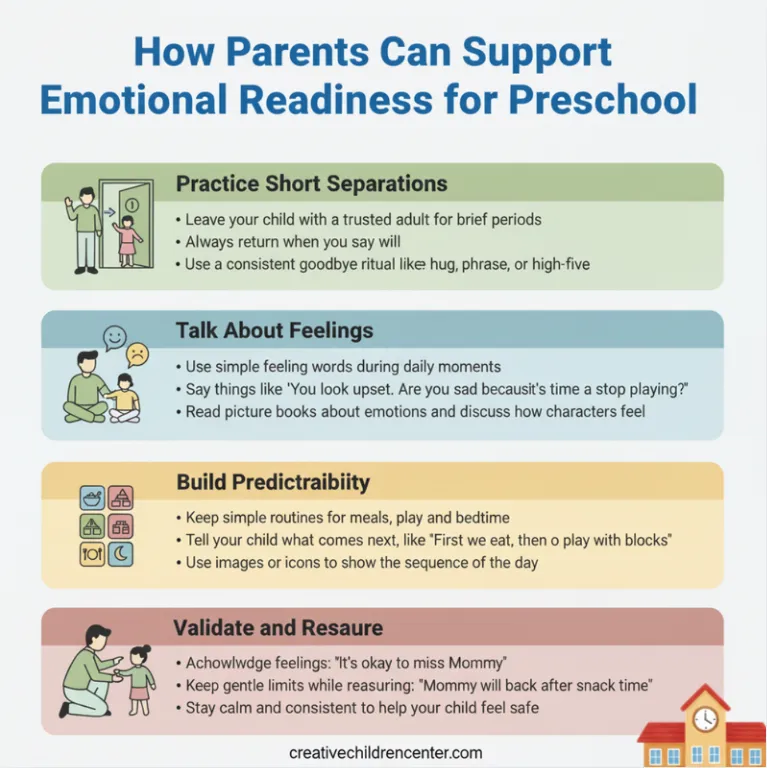
How parents can support emotional readiness
You can gently strengthen emotional skills in everyday life:
1. Practice short separations
- Leave your child with a trusted adult for brief periods and always return when you say you will.
- Create a goodbye ritual—such as a hug, a phrase, or a high‑five—so they know what to expect.
2. Talk about feelings
- Use simple language: “You look upset. Are you sad because it’s time to stop playing?”
- Read picture books about emotions and talk about how characters feel.
3. Build predictability
- Keep simple routines at home for meals, play, and bedtime.
- Let your child know what will happen next: “First we eat, then we play with blocks.”
4. Validate and reassure
- Acknowledge their feelings (“It’s okay to miss Mommy”) while still holding gentle limits (“Mommy will be back after snack time”).
When children feel emotionally safe and know what to expect, they are better prepared to handle the changes that come with preschool, something many parent checklists for preschool readiness highlight as a key indicator.
Social Readiness: Playing, Sharing, and Group Life
Preschool is a social environment. Children learn how to cooperate, negotiate, wait, and communicate with peers and teachers. Social readiness is less about perfectly polite behavior and more about having the basic tools to interact, with guidance. This aligns with many preschool readiness indicators and parent guides.
Signs of social readiness
Many preschool‑ready children:
- Show interest in other children, even if they mostly play side‑by‑side rather than fully together.
- Can share or take turns with adult support, even if it is still hard.
- Understand simple group expectations such as “We use gentle hands” or “We wait for our turn.”
- Are beginning to use words (rather than only crying or grabbing) to express needs: “My turn,” “Stop,” “Help.”
Three‑ and four‑year‑olds are still learning impulse control, so struggles with sharing and waiting are normal. What matters is whether they are gradually improving with guidance, a point underscored in many social readiness checklists for preschool.
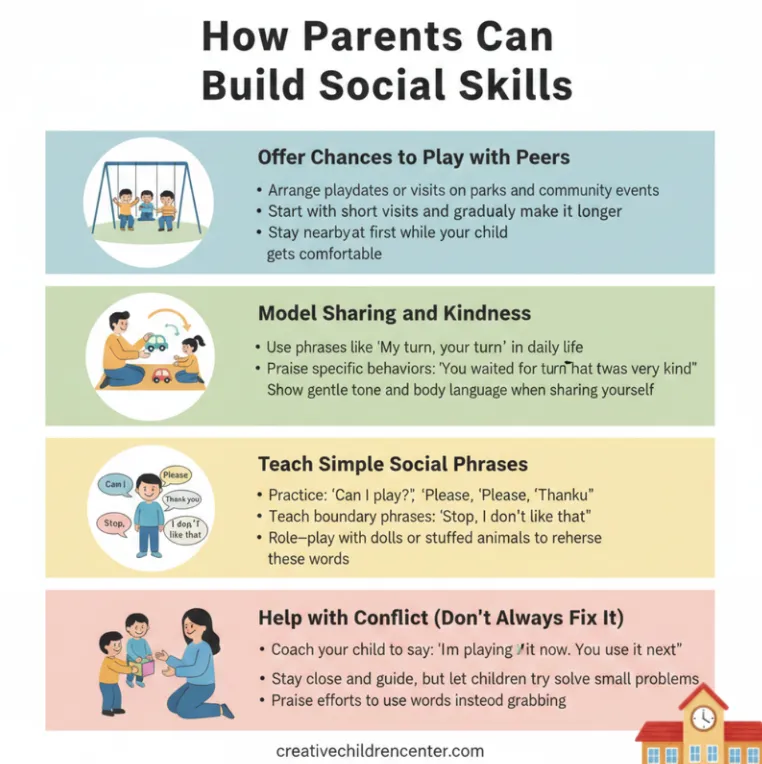
How parents can build social skills
Social readiness grows through repeated practice:
1. Offer chances to play with peers
- Arrange playdates or visits to parks and community events.
- Start with short visits and gradually lengthen as your child becomes comfortable.
2. Model sharing and kindness
- Use phrases like “My turn, your turn” during everyday family interactions.
- Praise specific behaviors: “You waited for your turn on the slide. That was very kind.”
3. Teach simple social phrases
- Practice saying “Can I play?”, “Please,” “Thank you,” and “Stop, I don’t like that.”
- Role‑play situations with dolls, stuffed animals, or toy figures.
4. Help with conflict, but don’t always solve it for them
- Coach them to use words: “Tell your friend, ‘I’m playing with it now. You can use it next.’”
These strategies mirror many practical tips in family resources on school readiness and social skills.
Language and Communication: Understanding and Being Understood
Language skills are central to preschool success because they help children follow directions, express needs, and participate in class activities. Developmental tools like the CDC’s developmental milestones stress communication as a core domain to watch between ages 3 and 5.
Signs of language readiness
Most preschool‑ready children:
- Understand simple directions like “Put the book on the shelf” or “Come sit on the carpet.”
- Can answer basic questions about familiar things: “What is this?” “Who is that?”
- Use short phrases or sentences to express needs: “I want juice,” “I go outside.”
- Are understood by familiar adults most of the time, even if some sounds are still developing. You can compare these abilities with age‑based language and communication milestones at age 3.
Children learn more than one language at different rates, and speech clarity varies widely at ages three to five. What matters most is that they can communicate and that their understanding seems to grow over time, as reflected in many early childhood development milestone charts.
How parents can support language growth
You do not need special materials or a teaching background to support language development:
1. Talk throughout the day
- Describe what you are doing: “I’m cutting the apples. The knife is sharp. Now I’m putting them on your plate.”
- Ask open‑ended questions: “What do you think will happen if we pour water on the sand?”
2. Read aloud regularly
- Look at picture books together, point to objects, and let your child finish familiar lines.
- Ask simple questions like “Where is the dog?” or “What is happening here?”
3. Sing songs, rhymes, and fingerplays
- Repetition supports memory, rhythm, and early literacy.
4. Encourage communication, not perfection
- Respond to the meaning behind your child’s words, even if pronunciation is unclear.
- Gently model correct language instead of correcting harshly.
If you have ongoing concerns about speech or understanding, discuss them with your child’s pediatrician or an early childhood professional. Early support can make preschool more successful and less stressful for children; you can use CDC milestone tools and checklists as a starting point for those conversations.
Cognitive Readiness: Early Thinking and Problem‑Solving
Cognitive readiness is not about how many facts a child can memorize, but how they think, explore, and solve problems. Preschool introduces activities that require attention, memory, and curiosity, which are highlighted in many school readiness skill lists for preschoolers.
Signs of cognitive readiness
Many preschool‑ready children:
- Show curiosity by asking questions, exploring objects, and trying to figure out how things work.
- Can focus on a simple activity (like building with blocks or drawing) for several minutes.
- Recognize some basic concepts such as:
- Familiar colors and shapes.
- Simple size comparisons (big/small).
- A few letters or numbers, especially those in their name.
- Enjoy simple puzzles, matching games, and sorting activities.
These skills develop naturally when children play in rich, engaging environments; they do not require formal academic instruction at home, a point echoed in many preschool readiness guides for parents.
Everyday ways to strengthen thinking skills
You can support cognitive growth with playful, low‑pressure activities:
1. Use toys that invite exploration
- Blocks, nesting cups, shape sorters, and simple puzzles encourage problem‑solving.
- Ask, “How could we make this tower taller?” rather than giving the answer right away.
2. Count and compare in daily life
- Count steps as you climb, fruits as you put them in a bowl, or cars passing by.
- Talk about “more,” “less,” “bigger,” and “smaller” when playing or cooking.
3. Offer open‑ended materials
- Items like cardboard boxes, scarves, and recycled containers invite imagination and experimentation.
- Let your child lead the play—there is no “right” way to use them.
4. Follow their interests
- If your child loves cars, read books about vehicles, count cars, sort them by color or size, and talk about how they move.

These types of experiences match recommendations in broader early childhood development checklists for 3–4 year olds.
Self‑Help and Independence: Doing “Little Big” Things
Preschool routines involve many self‑help tasks—hanging up backpacks, washing hands, putting on jackets, and using the bathroom. Being able to do some of these things with minimal assistance gives children confidence and frees teachers to support the group, which is why self‑care appears in most preschool readiness checklists.
Key independence skills
Common expectations (which vary by program) include:
Toileting
- Many preschools prefer children who are mostly potty‑trained or actively in the process, though accidents are expected.
- Children should know how to tell an adult they need to go and attempt basic wiping and handwashing.
Dressing
- Putting on or taking off simple clothing items like jackets, shoes (especially with Velcro), and hats.
- Trying to unzip or unbutton, even with help.
Eating
- Using a spoon or fork with reasonable success.
- Sitting at a table to eat and trying new foods with encouragement.
Organizing belongings
- Placing items in cubbies or backpacks with adult reminders.
- Recognizing their own bag, lunch box, or comfort item.
Not every child will master all of these before preschool, but working toward them can make the transition smoother, as emphasized in many preschool readiness and independence guides.
How to build independence gently
Independence grows with patience and practice, not pressure:
1. Allow extra time
- Start getting ready earlier so your child can try tasks themselves rather than having everything done for them.
- Praise effort rather than speed: “You worked hard to put on those shoes.”
2. Break tasks into steps
- For example, when putting on a jacket: first, find the arm holes; then, pull it over your shoulders.
- Teach one step at a time and celebrate small successes.
3. Choose child‑friendly clothing and gear
- Opt for elastic waistbands, Velcro shoes, and easy‑zip jackets to reduce frustration.
- Label items clearly so children can find their belongings.
4. Make routines predictable
- Use the same order each morning: bathroom, get dressed, breakfast, put on shoes, grab backpack.
- Use pictures to show the steps if your child responds well to visuals.

These strategies align with practical tips you see in parent‑focused school readiness resources.
Physical Readiness: Gross and Fine Motor Skills
Preschool days include running, climbing, drawing, cutting, and other physical activities. Children do not need perfect coordination, but basic motor skills help them participate confidently, something reflected in most school readiness and developmental milestone frameworks.
Gross motor skills
These are large‑muscle skills involving the whole body. Many preschool‑ready children:
- Can walk, run, and climb safely on playground equipment appropriate for their age.
- Jump with two feet, kick a ball, and attempt to throw and catch.
- Move with enough balance to sit in a circle, stand in line, and follow movement games like “Follow the Leader.”
To support gross motor development:
1. Encourage active play
- Provide time outdoors to run, climb, and explore safely.
- Play games that involve hopping, skipping, or dancing to music.
2. Limit extended screen time
- Screens can be part of modern life, but long periods sitting still can reduce opportunities for active play.
- Balance screen use with real‑world movement and exploration.
These suggestions reflect common advice in developmental milestone resources for early childhood.
Fine motor skills
These involve the small muscles of the hands and fingers. Many preschool‑ready children:
- Can hold a crayon or marker and make marks, scribbles, or simple shapes.
- Turn pages in a book carefully.
- Stack blocks, string large beads, or complete simple pegboard activities.
- Begin to use child‑safe scissors with supervision.
To build fine motor strength:
1. Offer simple art and manipulation activities
- Drawing, coloring, playdough, and finger painting all support hand strength and coordination.
- Encourage tearing paper, peeling stickers, or threading large beads.
2. Use everyday tasks
- Let your child help with safe kitchen tasks like stirring batter, pouring from small containers, or picking up small food pieces.
- Encourage buttoning large buttons or pulling up zippers with help.
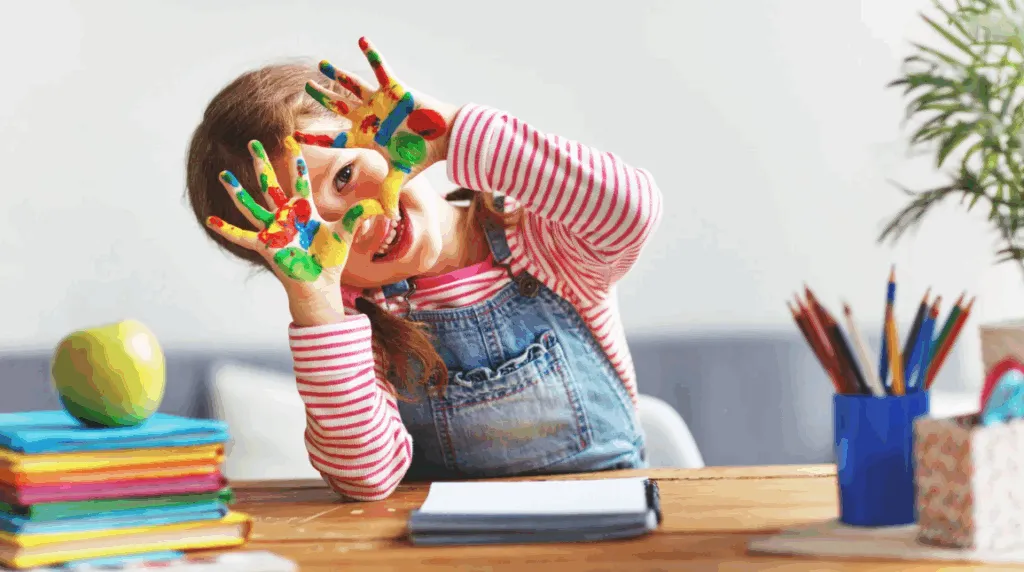
These fine‑motor suggestions match many preschool developmental checklists.
Practical Ways to Prepare Your Child (and Yourself)
Preparation is less about worksheets and more about experiences that mirror what preschool will feel like. Gradual exposure and open communication help children approach this new chapter with excitement instead of fear, a theme repeated in many parent guides to preschool readiness.
For your child
1. Visit the school together
- Attend open houses, tours, or “meet the teacher” days.
- Show your child the classroom, cubbies, bathrooms, and playground.
2. Practice classroom routines at home
- Have “circle time” where you sing, read, or talk together.
- Practice clean‑up time with a simple song or timer.
3. Use books and stories to explain preschool
- Read picture books about starting school and talk about what your child might experience.
- Ask what they are excited or worried about.
4. Create a positive goodbye plan
- Decide on a consistent routine for drop‑off (hug, phrase, wave at the window).
- Avoid long, drawn‑out goodbyes that can increase anxiety.
For yourself as a parent
Preschool readiness is also about the family’s readiness to let go a little:
1. Acknowledge your feelings
- It is normal to feel nervous or emotional when your child starts preschool.
- Talk to trusted friends, family, or other parents about the transition.
2. Trust the process
- Understand that a rough first week does not mean your child is not ready. Many children need time to adjust.
- Work with teachers, share what comforts your child, and ask how the day went.
3. Stay consistent
- Resist the urge to “rescue” your child by immediately pulling them out after a hard day. Shortening the day temporarily or adjusting the schedule can sometimes help, but consistency is key for most children.
4. Celebrate small wins
- Focus on progress: staying a little longer without tears, trying a new activity, or making a new friend.
For extra ideas, you can explore family engagement resources on early learning and readiness.
When Your Child “Isn’t Quite There” Yet
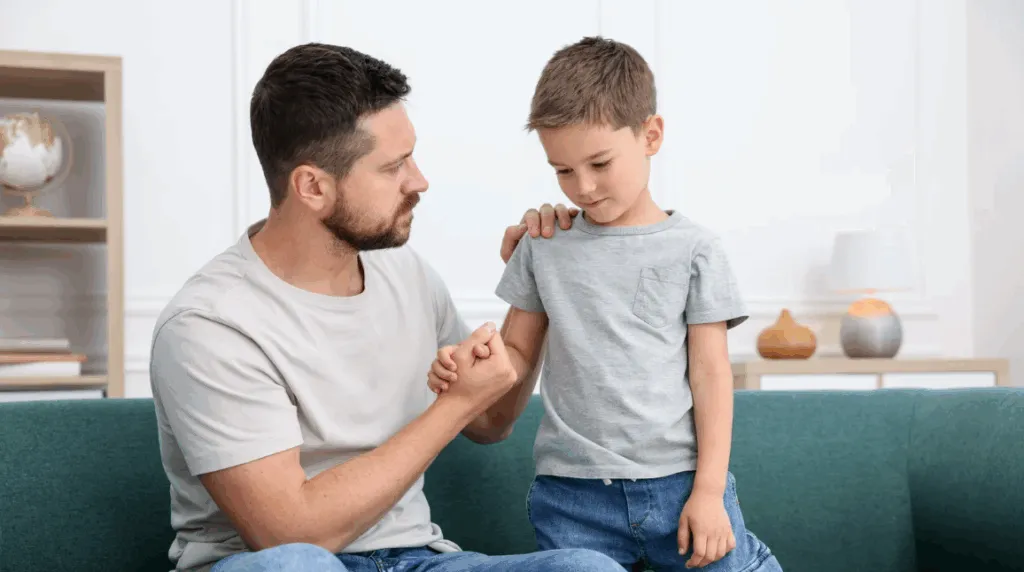
Some children may not show many signs of preschool readiness at the typical age, and that is okay. Development is not a race. The goal is to meet each child where they are and provide the support they need, as many preschool readiness guides emphasize.
Possible next steps
If you feel your child is not ready:
1. Consider a gradual start
- Begin with shorter days or fewer days a week, if the program allows.
- Increase time as your child becomes more comfortable.
2. Look for alternative settings
- Parent‑child classes, playgroups, or smaller home‑based programs can provide group experience with more support.
- Community centers, libraries, and faith‑based programs sometimes offer gentle introductions to group learning.
3. Seek professional input when needed
- Talk to your pediatrician or an early childhood specialist if you have concerns about speech, behavior, or development.
- Early intervention services may be available in your area; tools like the CDC’s Act Early milestones can help you track what you are seeing at home.
Choosing to wait or adjust a plan does not mean a child has failed; it means the family is honoring that child’s unique timeline.
Key Takeaways for Parents
Preschool readiness is a journey that touches every part of a child’s development—emotional, social, language, cognitive, physical, and self‑help. When parents understand these areas and support them through everyday routines and play, children gain the confidence, resilience, and curiosity they need to thrive in a classroom community.
If you are looking for a warm, nurturing environment that supports your child’s growth at every stage, Creative Children Center is ready to partner with your family. Reach out today to learn more about our programs, schedule a visit, and see how we help little learners feel prepared, confident, and excited for preschool.