
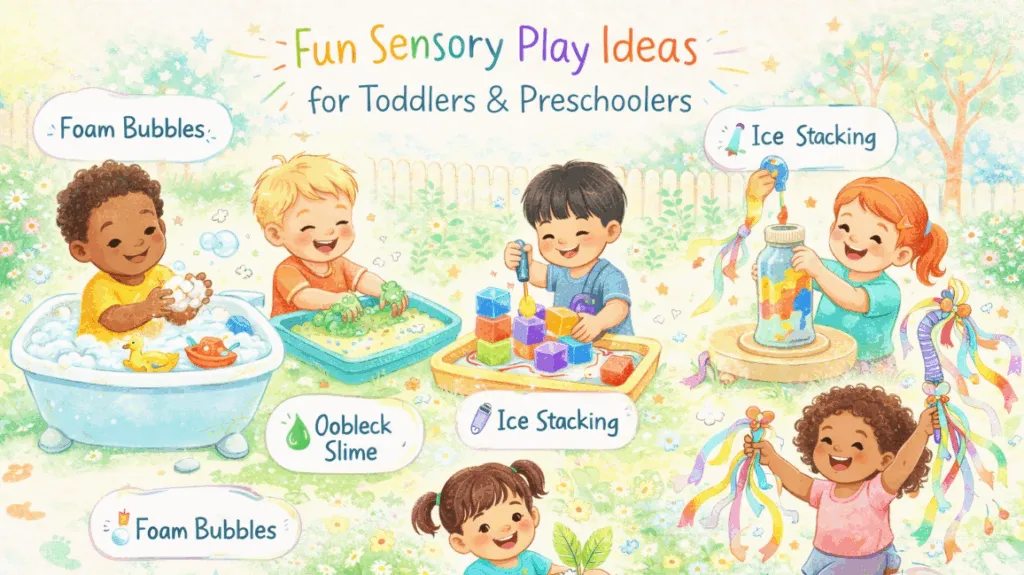
If you’ve ever watched a toddler smear paint on paper, dig their hands into a sandpit, or pour water from one cup to another for what feels like eternity, you’ve seen sensory play in action. To an adult, it might look messy or even pointless. But for a young child, those moments are quietly shaping the way they think, solve problems, and communicate with the world.
What most parents don’t realize is that these seemingly “simple” activities are the foundation for crucial cognitive, social, and motor development. As screens and digital toys dominate childhood, returning to tactile, hands-on play isn’t just nostalgic—it’s essential. By the end of this article, you’ll understand why sensory play matters deeply, how it supports learning and emotional growth, and how to bring it into your home in ways that genuinely work for your family.
Understanding Sensory Play
At its core, sensory play is any activity that engages one or more of the senses—touch, smell, taste, sight, hearing, and even balance or body movement. Think of it as the brain’s workout routine: every new texture, sound, or smell strengthens the neural connections that support higher learning later on.
The best sensory play doesn’t require fancy materials or expensive kits. It can be as easy as letting your child scoop rice with a spoon, splash in a puddle, or squish homemade playdough. The power lies in exploration, not instruction.
Why the Brain Craves Sensory Input
During the toddler and preschool years, the brain is developing at lightning speed. Each sensory experience helps the brain organize and interpret information about the world:
- Touch builds connections between physical feedback and emotional responses.
- Smell and taste strengthen memory (that’s why scent is so tied to nostalgia).
- Sight and sound refine attention and pattern recognition.
- Movement and pressure (proprioception) teach body awareness and coordination.
In other words, sensory play trains the brain to manage complex inputs—skills that later support reading, problem-solving, and emotional regulation.
The Core Benefits of Sensory Play
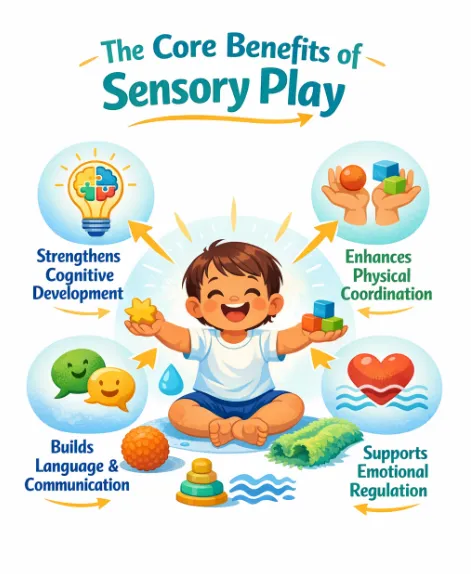
Sensory play might look like simple fun, but beneath the surface, it fuels almost every aspect of a child’s early growth—from how they think and move to how they communicate and manage emotions.
1. Strengthens Cognitive Development
When a child experiments with water, sand, or textures, they’re not just playing—they’re hypothesizing and testing. Pouring water from a tall container into a short one teaches cause and effect, volume, and gravity—all without a word being said.
Over time, this kind of unstructured problem-solving strengthens executive functioning—the same mental muscles children will rely on for schoolwork, social negotiation, and independent thinking.
Example:
A three-year-old playing with a water table notices that some toys sink while others float. They may not articulate “density” or “buoyancy,” but they’re observing patterns and storing those lessons for later.
2. Enhances Physical Coordination
Sensory play supports both fine and gross motor skills. Stirring, pouring, stacking, pinching, or rolling all develop hand strength and dexterity. Similarly, outdoor play—running barefoot in grass, climbing, balancing—helps refine body control and spatial awareness.
These skills lay the foundation for everyday tasks later on: holding a pencil, tying shoes, or writing names.
3. Builds Language and Communication
Talking about what children see, feel, and do turns sensory experiences into rich vocabulary lessons. When you describe textures (“slimy,” “gritty,” “smooth”) or compare sensations (“warm” vs. “cold”), you help children connect abstract words to concrete experiences.
This is usually overlooked, but it matters. The richer a child’s sensory vocabulary, the better their ability to describe feelings, preferences, and needs—a cornerstone of emotional intelligence.
4. Supports Emotional Regulation
Sensory activities can calm an overstimulated child or provide meaningful input for one who needs stimulation. In classrooms, teachers often use “sensory breaks” to help children reset between transitions.
A bin of rice or kinetic sand isn’t just a toy—it can act as a self-soothing tool. Many children instinctively run their hands through textures when anxious, using the rhythmic motion to regulate mood.
For children who struggle with transitions or strong emotions, consistent sensory play can be as important as breathing exercises or naps.
Common Misconceptions About Sensory Play
Despite its proven value, sensory play is often misunderstood—many parents dismiss it as messy, time-consuming, or just another educational trend, when in reality, these misconceptions can prevent children from benefiting from one of the most impactful forms of early learning.
“It’s just messy play.”
Yes, it can be messy—but controlled mess has value. The key is setting boundaries (like using a shallow bin or playing outside) instead of avoiding the experience altogether. Avoiding mess often means missing out on powerful developmental opportunities.
“My child gets bored easily with this stuff.”
Boredom is actually part of the process. In sensory play, a few minutes of aimless fiddling often give way to deeper experimentation. Don’t rush to add new materials or instructions; let curiosity unfold naturally.
“We don’t have the space (or time).”
Sensory play doesn’t require a backyard or an hour-long setup. Even small, intentional moments—a bowl of soapy water, a walk barefoot on grass, or a finger-painting session—count. The key is consistency and mindful presence.
How to Incorporate Sensory Play at Home
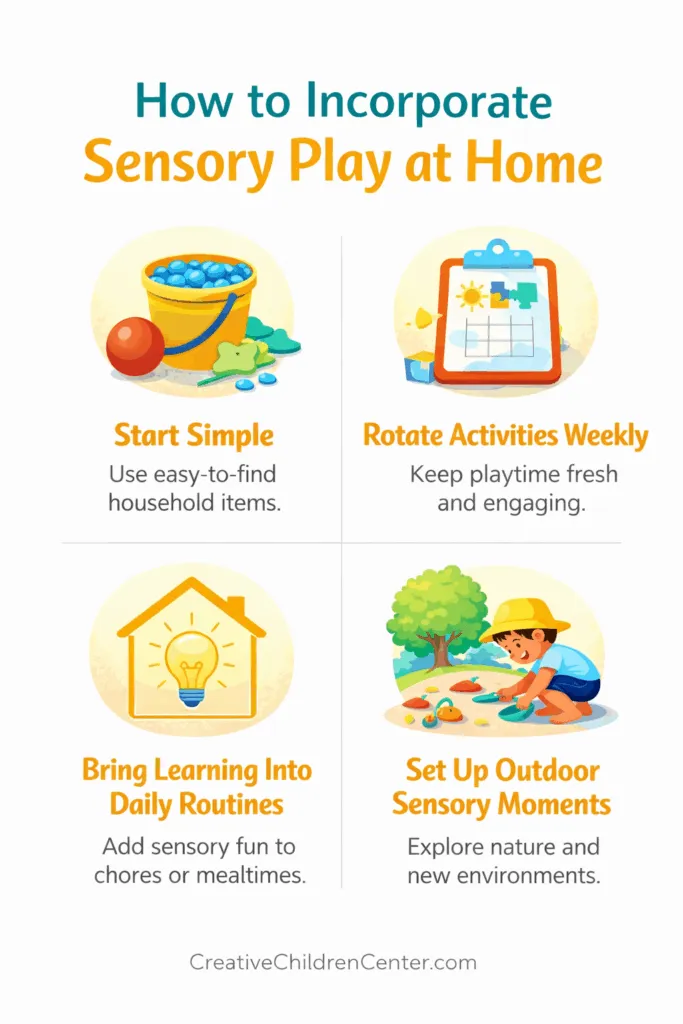
What works best varies by temperament, available space, and family rhythm. Here’s how to design a sensory-friendly routine without turning your living room into an art studio.
1. Start Simple
Begin with easily manageable sensory materials like:
- Water
- Dry rice or pasta
- Shaving foam
- Playdough or clay
- Natural items (leaves, pebbles, flowers)
Let your child explore freely for 10–15 minutes. Resist the urge to direct or explain too much. Observation is the real teaching method here.
2. Rotate Activities Weekly
Children love novelty, but you don’t need endless supplies. Rotate the same materials in new combinations. One week the rice bin might include cups and funnels; the next, small animal figurines or spoons.
This approach keeps things fresh while teaching flexibility and creativity.
3. Bring Learning Into Daily Routines
You don’t need a special “sensory play schedule.” Many household tasks are naturally sensory:
- Helping rinse vegetables or stir batter
- Matching socks by texture and color
- Wiping the table (pressure input through the arms)
- Sorting coins (fine motor and sound recognition)
Simple chores double as sensory experiences—plus they build practical independence.
4. Set Up Outdoor Sensory Moments
Nature is the world’s best sensory lab. Encourage children to:
- Collect sticks, stones, or flowers and describe their textures
- Walk barefoot on grass or sand
- Feel rain, wind, or sunlight on their skin
In my experience, outdoor sensory play tends to self-regulate children’s moods. Even 15 minutes outside can make a restless preschooler calmer and more focused indoors.
When Sensory Play Becomes Therapeutic
Sensory play isn’t only educational—it’s often therapeutic. Occupational therapists frequently use sensory integration activities to help children with sensory processing disorders (SPD), autism, or developmental delays.
However, here’s where things often go wrong: parents sometimes assume every child needs “sensory therapy.” That’s not always true. For typically developing children, unstructured sensory play is enough. If a child consistently avoids textures, struggles with certain sounds, or seems distressed by ordinary sensations, that might be worth discussing with a pediatric therapist—but otherwise, simplicity works.
What’s important is observation. If your child craves constant movement, noise, or touch, that’s their way of seeking regulation, not misbehaving. Structured sensory play can help balance those needs naturally.
The Role of Adults: Step Back, Don’t Take Over
Many adults unintentionally overmanage sensory play, turning it into a mini science class. The real value comes from a child’s exploration, not from adult direction.
Here’s how to support without controlling:
- Comment instead of instructing (“That feels squishy, doesn’t it?”).
- Model curiosity (“I wonder what happens if we mix colors.”).
- Allow repetition. Repeating an activity reinforces mastery and confidence.
- Use gentle prompts. If interaction stalls, ask open-ended questions like “What do you think will happen if…?”
Think of yourself as a facilitator, not a director. Give space for self-driven discovery—that’s where creativity and confidence grow.
When Less Is More
Parents often ask for lists of sensory toys or kits, but I usually recommend restraint. Too many materials can overwhelm both child and adult, leading to clutter and inconsistency.
It’s not about more activities; it’s about deeper engagement with fewer ones. A single water bin explored in different ways over time teaches far more than a closet full of unused sensory toys.
Key Takeaways and Next Steps
Sensory play isn’t just an entertaining pastime—it’s a foundation for learning, communication, and emotional growth. When children explore with their senses, they strengthen neural connections that support focus, problem-solving, and resilience later in life. The key is to make sensory play a consistent, natural part of your child’s environment rather than a complicated activity.
Whether it’s stirring, building, or splashing, every sensory experience helps your child grow in confidence and curiosity. Reflect on what truly engages them, then build from there—start small, observe closely, and trust the process. Over time, these simple moments lead to lasting developmental gains. To learn more about nurturing sensory-rich learning experiences for toddlers and preschoolers, explore the programs at Creative Children Center, where play and discovery go hand in hand.