
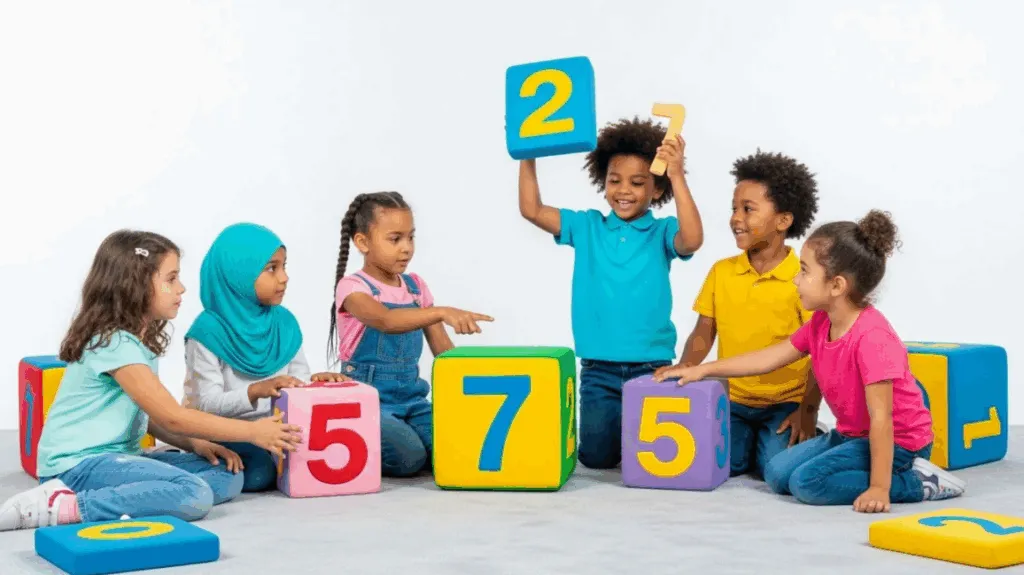
Every parent dreams of raising a child who’s curious, motivated, and eager to learn. Yet, in today’s fast-paced world, that natural spark can fade early — often replaced by screens, overscheduling, or a focus on performance rather than discovery. If your toddler starts resisting storytime or your preschooler tunes out during “learning activities,” it’s not a sign they dislike learning. It may just mean we’ve made the process feel more like work than wonder.
The early years are when the foundations for lifelong curiosity are built. During this stage, children aren’t just learning facts — they’re shaping how they feel about learning itself. If exploration brings joy, challenge, and connection, they’ll carry that mindset into every future subject and skill. This article will help you understand why fostering a love of learning matters so deeply, what actually nurtures it, and how to build simple, joyful strategies into everyday life.
Why Early Curiosity Matters So Much
Young children are born scientists. Before they ever enter school, they experiment constantly — dropping toys to test gravity, tasting new textures, asking endless questions. This natural curiosity is the engine of early learning. But here’s where things often go wrong: adults unintentionally stifle that drive by focusing too heavily on outcomes or “getting ahead.”
In my experience, children who see learning as a fun, self-directed experience grow into far more resilient, adaptable learners later. They’re not afraid to make mistakes because they see them as opportunities. On the other hand, those who learn to associate “learning” with pressure or correction tend to withdraw, perform for approval, or disengage when things get difficult.
The love of learning doesn’t depend on intelligence. It depends on emotion — the feeling that discovery is engaging, safe, and rewarding. When children feel genuinely supported rather than judged, they lean in with curiosity instead of shying away.
Creating an Environment That Sparks Curiosity
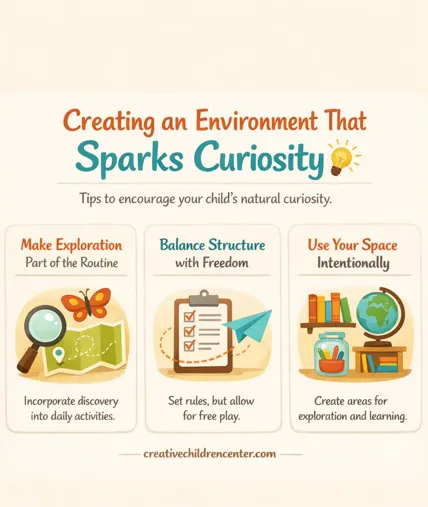
Fostering a love of learning starts long before formal education. It begins with the home environment — the textures, conversations, and rhythms children experience daily.
1. Make Exploration Part of the Routine
Children thrive when they can safely explore new things on their own terms. Let them pour, dig, paint, stack, and experiment freely. This kind of open-ended play builds problem-solving instincts and confidence.
Think of curiosity as a muscle. The more children use it, the stronger it becomes. When adults over-direct or “correct” too quickly, we unintentionally teach children to seek approval instead of understanding.
2. Balance Structure with Freedom
Children do benefit from routines — they feel safe knowing what comes next. But rigid scheduling can limit creativity. For example, you might set aside a daily “quiet exploration time” where your child chooses any activity that interests them. This small dose of autonomy teaches decision-making and persistence.
3. Use Your Space Intentionally
A thoughtfully arranged environment invites learning. Try keeping materials where children can reach them — books, puzzles, art supplies, building sets. You can rotate items weekly to keep things fresh, but avoid overcrowding. What most people don’t realize is that too many options overwhelm rather than inspire.
The Role of Play in Active Learning
Play is not the opposite of learning — it is learning. Through pretend scenarios, sensory exploration, and construction games, children make sense of how the world works.
1. The power of pretend play
When your child pretends to be a chef, builder, or parent, they’re not just having fun — they’re practicing empathy, planning, and abstract thinking. Pretend play is where imagination meets problem-solving.
2. Open-ended materials amplify learning
Blocks, cardboard boxes, scarves, and loose parts invite creativity because they have no fixed outcome. There’s no “right answer” — just possibilities. This freedom is what builds intellectual risk-taking, a hallmark of lifelong learners.
3. Avoid over-instruction
Here’s where things often go wrong: Adults jump in too soon to teach “the right way” to build a tower or mix paint colors. While good intentions drive this, it interrupts the child’s discovery process. Instead, try prompting curiosity with open-ended questions:
- “What might happen if you stack another block?”
- “I wonder what color we’d get if we mix these together.”
These small shifts change play from passive activity to active problem-solving.
Nurturing a Growth Mindset Early On
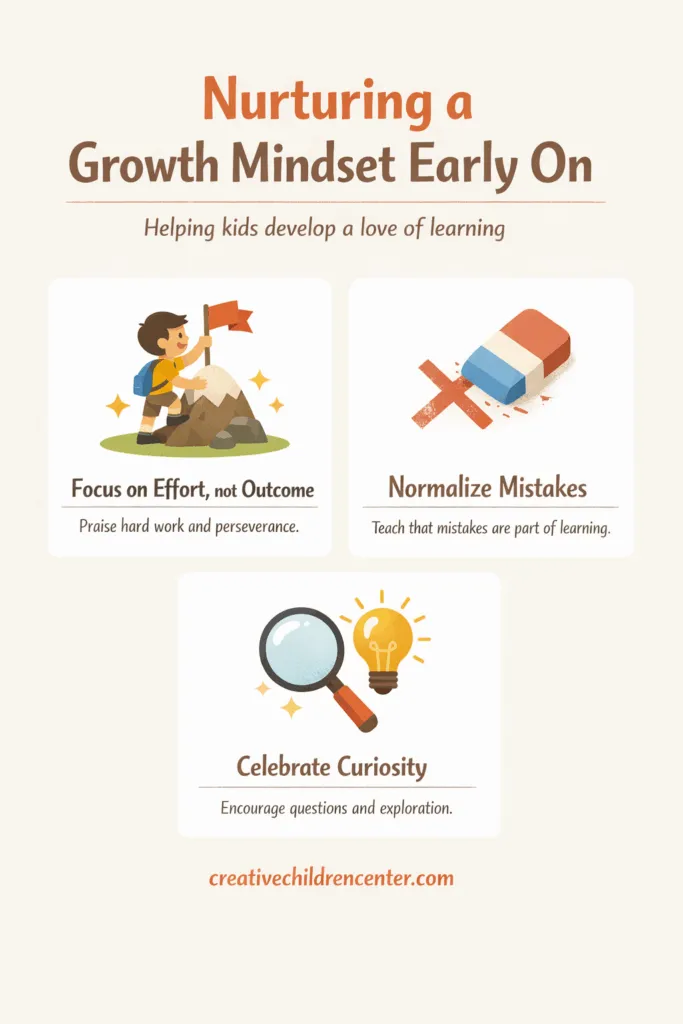
Psychologist Carol Dweck’s concept of a growth mindset — the belief that abilities develop through effort and learning — applies beautifully to early childhood. The goal isn’t just to teach children what to learn but how to approach challenges with curiosity instead of fear.
1. Focus on effort, not outcome
When a preschooler proudly shows you a drawing or Lego creation, avoid generic praise like “You’re so smart.” Instead, say, “You worked hard on that,” or “I love how you kept trying until it stood up.” This reinforces persistence over perfection.
2. Normalize mistakes
Mistakes are part of how children learn. What most parents don’t realize is that shielding kids from frustration actually weakens their problem-solving ability. When they encounter small setbacks — a tower falling or a puzzle not fitting — guide them to reflect: “What could we try differently?” This teaches resilience naturally.
3. Celebrate curiosity
Ask questions with genuine interest. Show excitement when your child explores something new. When adults model wonder, children internalize it as valuable. The tone we bring to discovery is contagious.
Building a Language-Rich Environment
Language fuels learning. The more children hear and engage in meaningful conversation, the more they develop the cognitive pathways needed for literacy, reasoning, and self-expression.
1. Read, but don’t just read to them
Instead of racing through bedtime stories, pause to ask, “What do you think will happen next?” or “Why do you think the character feels that way?” These small moments transform storytime into active thinking time.
2. Narrate everyday moments
Children learn language best when it’s contextual. Describe what you’re doing: “I’m slicing this apple — it’s crunchy and sweet.” Make it conversational, not instructive. Over time, they’ll start mirroring your descriptive habits and curiosity about words.
3. Introduce new vocabulary naturally
If your child hears “evaporate” during water play or “shadow” on a sunny walk, they’ll associate big words with fascinating experiences — not abstract lessons. This sets the stage for a lifelong love of reading and learning.
Encouraging Self-Directed Learning
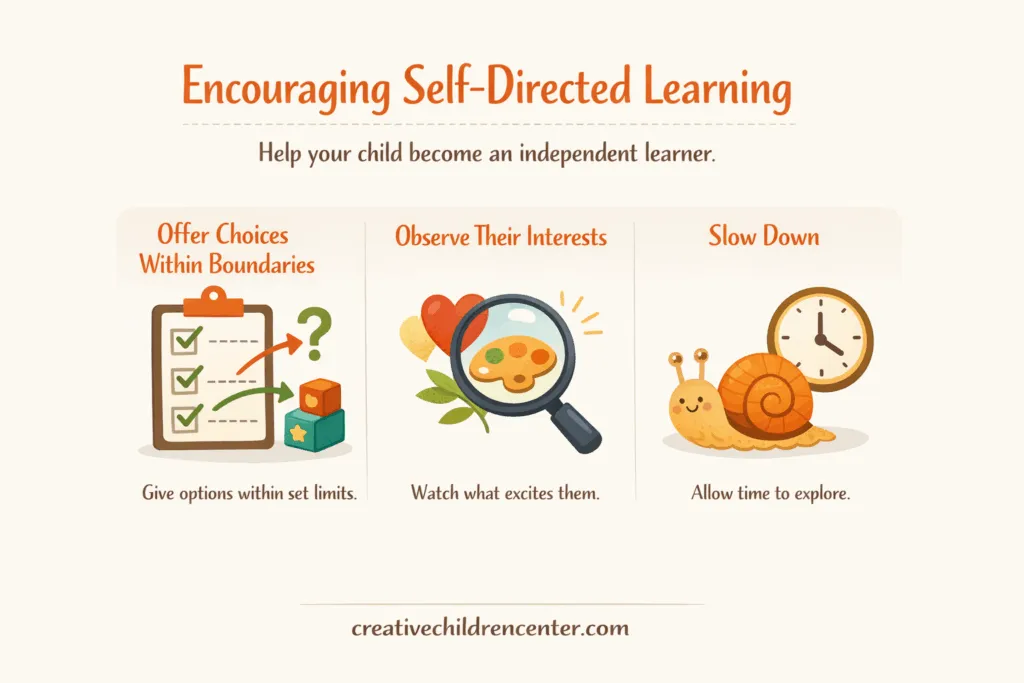
A love of learning grows when children feel ownership over the process. Letting them make small choices fosters independence and motivation.
1. Offer choices within boundaries
Instead of saying, “We’re doing art,” try offering, “Would you like to paint or build with clay today?” The choice empowers them while keeping structure intact.
2. Observe their interests
If your child is fascinated by bugs, follow that lead. Read insect books, explore the garden, or draw what you see. This isn’t spoiling them — it’s channeling intrinsic motivation. When learning connects to personal interest, attention and memory soar.
3. Slow down
Overstimulated children often lose interest not from boredom but from fatigue. Unhurried learning — where curiosity unfolds at its own pace — encourages deeper attention and joy. In my experience, “slow learning” often yields quicker progress in the long run because it builds emotional engagement.
Common Mistakes That Suppress Curiosity
Even the most well-meaning parents can unintentionally discourage curiosity. Awareness helps prevent it.
- Over-scheduling. Too many structured classes can leave no room for spontaneous exploration.
- Focusing on achievement. Constant correction or performance feedback teaches children to play it safe.
- Distraction-heavy environments. Screens, noise, and clutter fragment attention, making independent learning harder.
- Rushing through frustration. Children need time to grapple with challenges — that’s where growth happens.
The goal isn’t perfection, but mindful adjustment. Notice how your child responds. Learning should feel engaging, not exhausting.
Partnering With Educators and Caregivers
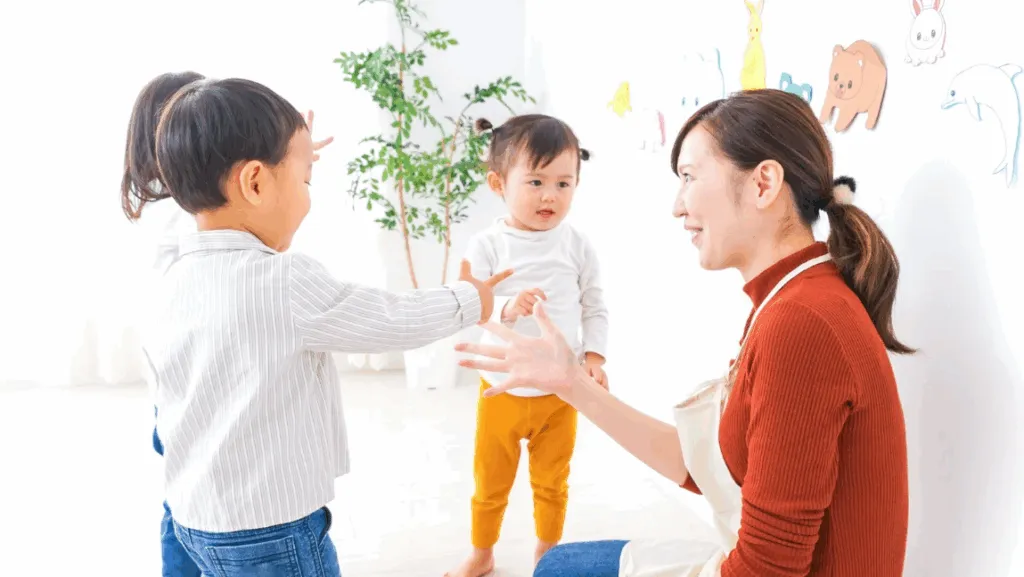
Parents and teachers share the same goal — nurturing curiosity. Strong communication bridges home and school learning beautifully.
Ask teachers what excites your child in class, then build on those interests at home. Likewise, share what sparks exploration at home so educators can connect it to classroom experiences. This continuity reinforces your child’s sense of ownership and joy in learning.
In my experience, the most successful learners come from environments where adults coordinate—not compete—in supporting curiosity.
Key Takeaways and Next Steps
Fostering a love of learning isn’t about early academics or fancy materials. It’s about nurturing curiosity through connection, freedom, and encouragement. When children are allowed to explore without pressure, they develop confidence, focus, and emotional resilience that last far beyond the preschool years.
To begin building this foundation, try these small but powerful steps:
- Create simple spaces for open-ended play.
- Model curiosity and lifelong learning in your own behavior.
- Celebrate effort and persistence over performance.
- Give your child unhurried time to explore and reflect.
- Collaborate with teachers who value play and discovery.
Every question your child asks — even the endless “why?” — is a sign of growing curiosity. Honor it. Encourage it. And if you’re looking for a nurturing environment that champions exploration and joy in learning, visit Creative Children Center, where every child’s curiosity is celebrated and cultivated with care.