
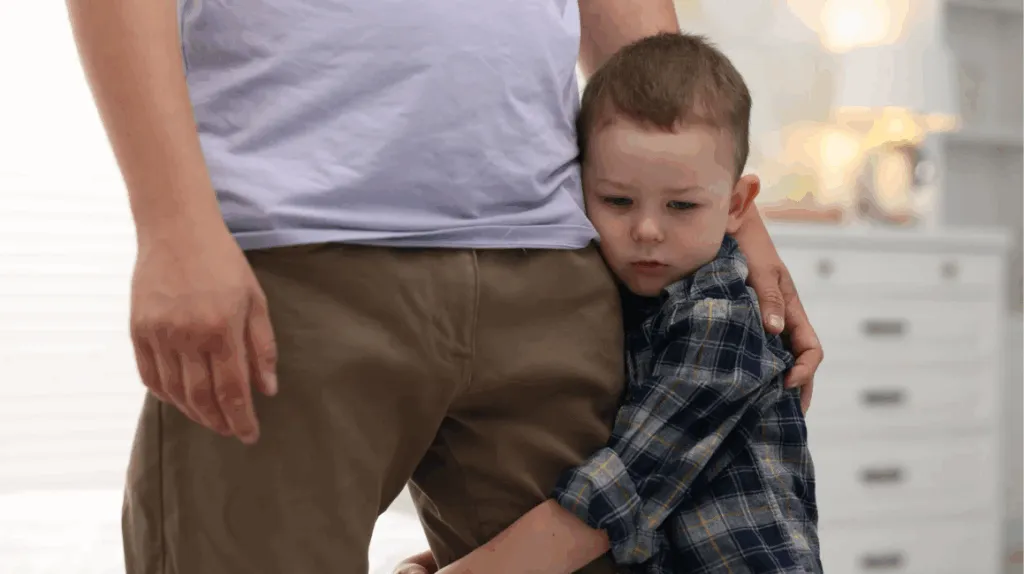
For many parents, preschool drop-off feels like running an emotional marathon before breakfast. One minute your toddler is chatting happily over cereal, and the next they’re clinging to your leg, tears streaming down their face, as you try to hand them to the teacher. It’s in these moments that separation anxiety often takes center stage — leaving even the calmest parent feeling unsure, frustrated, and wondering if they’re doing something wrong or if it will ever get easier.
Separation anxiety is a normal developmental milestone, but the intensity of it can surprise families. In a world where everything moves fast — from work deadlines to school schedules — helping a young child manage big emotions at drop-off has never been more important. This guide will walk you through what’s really happening underneath those tears, what you can do to make mornings smoother, and how to strengthen your child’s confidence over time.
By the end, you’ll understand not just how to handle separation anxiety, but why your approach matters — and how to make this a learning moment for your child (and maybe for yourself, too).
What’s Really Going On
Most parents know that separation anxiety is common around ages one to four, but what’s often missed is why it shows up so differently from child to child. Developmentally, toddlers and preschoolers are just starting to build an internal sense of safety and trust — that the people they love will return. When this sense wobbles, drop-off becomes emotional.
There are usually three layers happening at once:
- A biological response. When a child senses separation, their brain activates the same stress systems adults experience during fear — cortisol spikes, heart rate rises, and reasoning shrinks.
- An attachment test. The child’s reaction isn’t manipulation; it’s often a way to test, Can I trust that you’ll come back?
- A learned experience. How caregivers respond (calmly or anxiously) teaches the child what to expect next time.
What most people don’t realize is that even small shifts in a parent’s body language or tone can dramatically change how secure a child feels in those first moments of goodbye.
The Morning Drop-Off Pattern — and Why It Matters
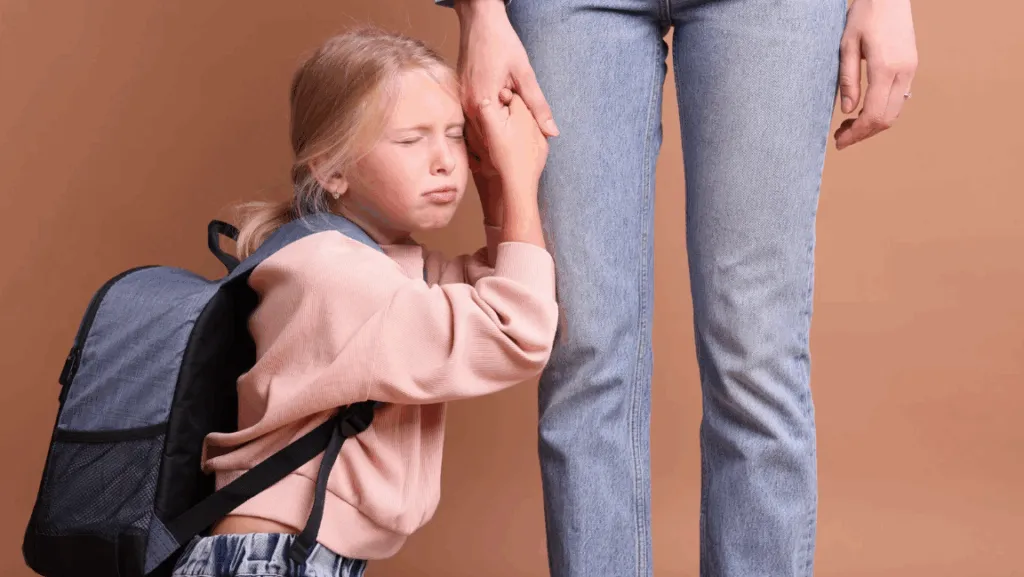
Separation anxiety often follows predictable phases, which is why drop-off routines are so powerful. Usually, a child’s distress peaks right at the moment of transition — when the parent leaves or hesitates. Once engaged in an activity or comforted by a teacher, most calm down within minutes.
But if parents linger, pace back and forth, or return after leaving, they unintentionally extend that distress window. It’s not the parent’s fault; it’s an emotional reflex. You see your child crying, and your instinct is to fix it. Yet consistency, not instant comfort, is what builds actual security.
When parents and teachers coordinate their approach — calm handoff, quick goodbye, confident tone — children internalize that school is safe, predictable, and trustworthy.
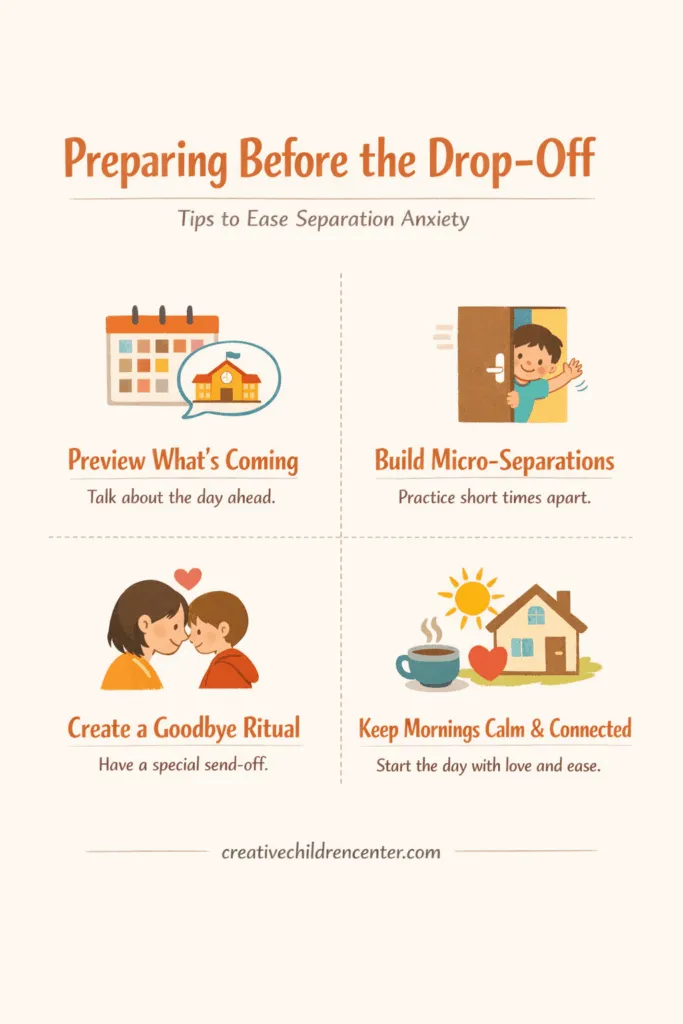
Preparing Before the Drop-Off
A smooth morning begins long before you reach the classroom door. Small choices at home can set the emotional tone for the day.
1. Preview What’s Coming
Talk about the morning routine in simple, honest terms: “We’ll go to school, you’ll play with blocks, and I’ll pick you up after snack time.” Avoid overreassurance or lectures about being brave; instead, emphasize predictability.
2. Build Micro-Separations
Practice small moments of independence — let your toddler play in another room while you fold laundry or talk on the phone. Start with short intervals and return as promised. These “mini-trials” strengthen trust that goodbyes aren’t forever.
3. Create a Goodbye Ritual
This could be a special handshake, a hug, or a short phrase like, “See you after story time.” Rituals act as emotional anchors, signaling consistency and closure.
4. Keep Mornings Calm and Connected
A chaotic household energy feeds anxiety. Wake up a bit earlier so drop-off doesn’t feel rushed. Let your child choose one small decision — which shoes to wear, which snack to pack.
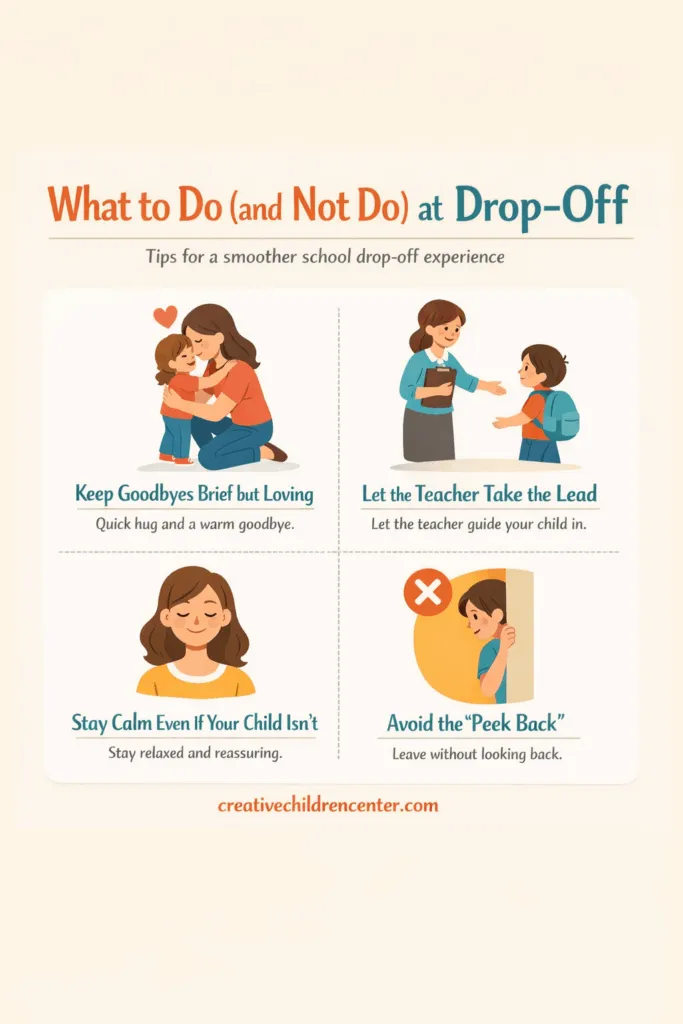
What to Do (and Not Do) at Drop-Off
Here’s where things often go wrong: parents mix reassurance with subtle hesitation. You might say, “It’s okay, Mommy’s right outside,” but your body language says, I’m not sure you’re ready for this. Children pick up on that instantly.
Here’s a practical approach I’ve seen work consistently in preschools and child development settings:
1. Keep Goodbyes Brief but Loving
Kneel to their level, make eye contact, give the agreed-upon hug or handshake, say the goodbye phrase, and leave. Long explanations or promises (“I’ll be back soon, I promise, don’t cry”) usually backfire.
2. Let the Teacher Take the Lead
Experienced early childhood educators often have strategies to redirect, engage, or distract your child. Step back and let them do their part. Trust builds across the parent-teacher-child triangle.
3. Stay Calm Even If Your Child Isn’t
Think of your body as the emotional thermostat in the room. If you stay visibly relaxed, the temperature drops for everyone.
4. Avoid the “Peek Back.”
Once you leave, don’t return for a quick check-in or wave through the window. It resets your child’s distress cycle, teaching them to hold out for reappearance.
Supporting the Child’s Emotional Growth After Drop-Off
What most parents miss is the power of reconnecting after separation. Anxiety doesn’t disappear at the door — it resolves through consistent reunions.
- After-school rituals matter. Ask your child what the best or silliest part of their day was. Focus on moments of joy, not whether they cried.
- Reflect gently on progress. Say something like, “I saw you walked in bravely today,” or “It looked like you were having fun at snack time.” Avoid labeling them as “a big girl” or “so grown-up” — those phrases sometimes add pressure.
- Maintain predictable pickup routines. Being late, even by a few minutes, can undo progress. Young children measure safety in predictability. If you know you’ll be delayed, let the teacher explain it in advance rather than surprising your child.
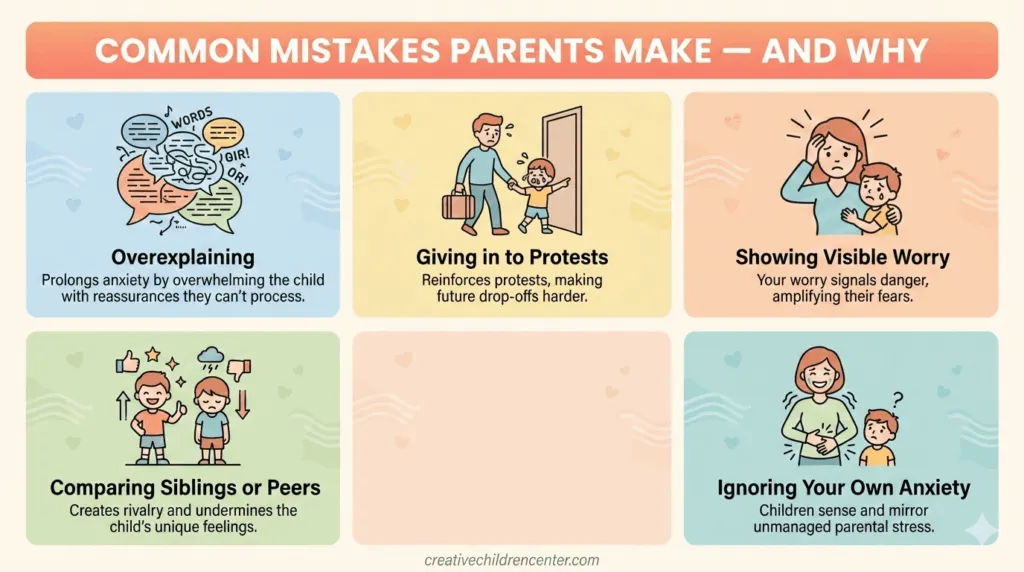
Common Mistakes Parents Make — and Why
Even the most caring parents can unintentionally make drop-offs harder. Understanding the why behind these missteps helps you course-correct without guilt.
1. Overexplaining
Parents think information = comfort. But toddlers can’t yet reason abstractly, so long speeches about schedules only amplify uncertainty.
2. Giving in to Protests
Skipping school “just this once” can make the next drop-off tougher, reinforcing avoidance. If your child is unwell, of course, keep them home — but not simply because they resist.
3. Comparing Siblings or Peers
Every child develops emotional independence at a different pace. Some handle separation at two, others need extra time at four or five. Comparison only fuels frustration.
4. Showing Visible Worry
Children mirror emotions. If your tone tightens or your eyes well up, they see it as confirmation that something is wrong with leaving.
5. Ignoring Your Own Anxiety
Parents’ stress plays a silent but powerful role. Some adults relive their own childhood separations through their kids. Recognizing and managing your reactions helps both of you.
When It Doesn’t Improve
Sometimes, despite everyone’s best efforts, a child’s separation anxiety persists beyond the typical transition period (usually two to four weeks). That’s when it’s worth looking deeper.
Ask yourself:
- Is the child experiencing other changes (a move, new sibling, family stress)?
- Does the anxiety show up in other areas — bedtime, playdates, relatives’ houses?
- Are there behavior changes like stomachaches, sleep disruption, or regression?
If yes, talk with the teacher first. Experienced educators can often spot patterns and suggest next steps. If the anxiety seems intense or chronic, getting input from a pediatrician or child psychologist can help. There’s no shame in seeking support — it’s about equipping your family with the right tools, not labeling your child.
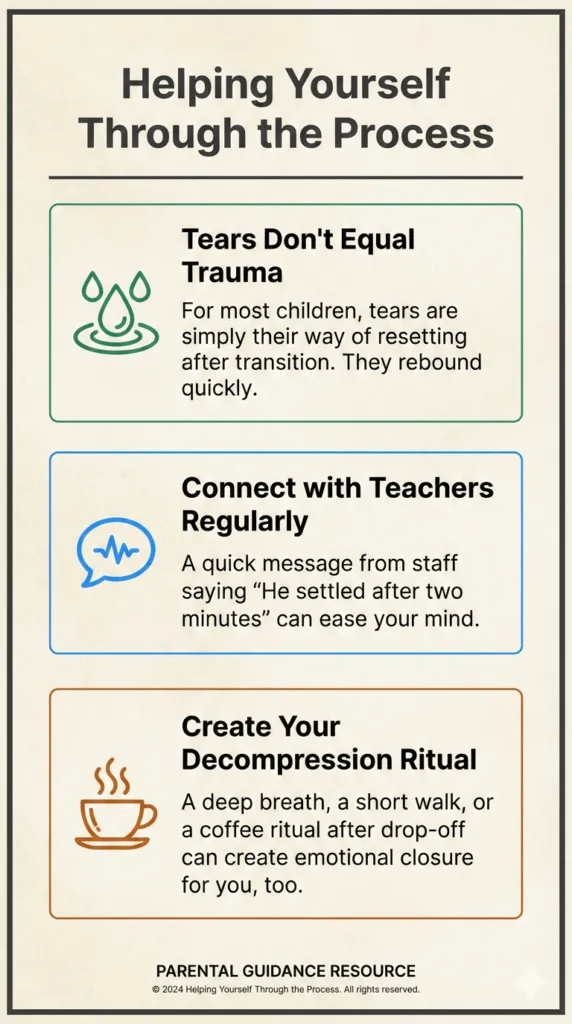
Helping Yourself Through the Process
Parents often forget they need adjustment time too. Watching your child cry at drop-off can stir guilt, frustration, or self-doubt. Here’s what helps:
- Accept that tears don’t equal trauma. For most children, tears are simply their way of resetting after transition. They rebound quickly.
- Connect with teachers regularly. A quick message from staff saying “He settled after two minutes” can ease your mind.
- Develop your own short decompression ritual. A deep breath, a short walk, or a coffee ritual after drop-off can create emotional closure for you, too.
Remember — calm is contagious, and your steadiness teaches by example.
Key Takeaways and Next Steps
To bring everything together, easing drop-off separation anxiety starts with consistency and understanding. Children thrive when routines are predictable and adults respond with calm confidence, even when emotions run high. Every clear goodbye and steady reunion reinforces your child’s sense of safety and helps them grow more secure over time.
For families seeking a nurturing environment that supports emotional growth, Creative Children Center LLC provides experienced teachers and a warm, structured setting where children learn to navigate separation with confidence. The center’s team partners closely with parents to build trust, communication, and comfort throughout the transition process.
Visit Creative Children Center LLC to explore how their programs can help make drop-offs smoother — and mornings more joyful for both parent and child.