
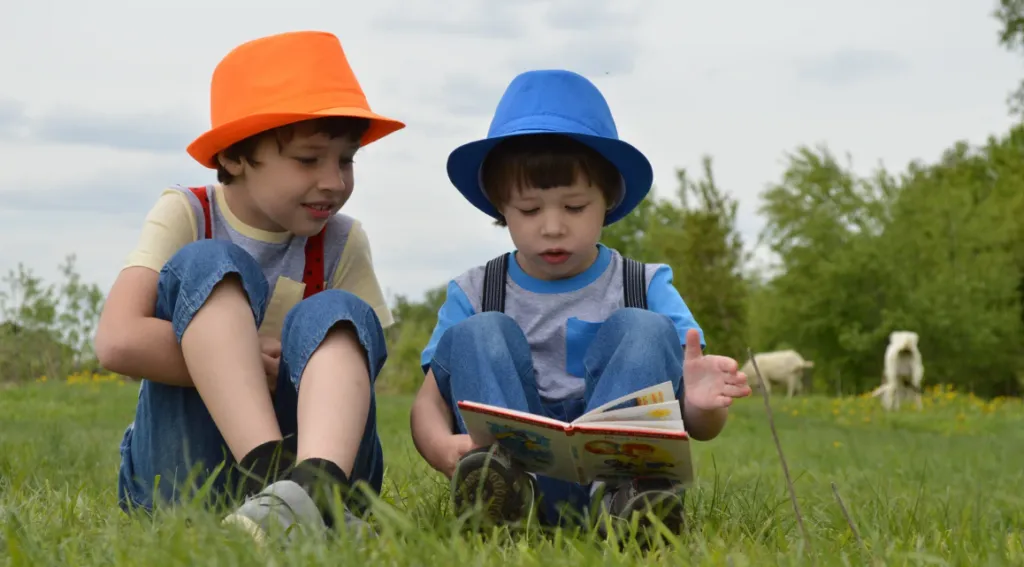
On any given Monday morning, many parents watch their children shuffle into classrooms still half-dreaming of the weekend. The shift from open, playful movement to rigid indoor routines can feel jarring—for both kids and parents. Amid growing concerns about screen time, stress, and disconnection from nature, families are increasingly asking: Would my child learn better outside, even part of the time?
That’s where Outdoor Learning Benefits come in—a topic that has quietly regained relevance in recent years as educators and parents look for ways to nurture well-rounded, resilient children. This article explores the true value of outdoor learning for school-age kids—what it looks like, why it works, and how families can cultivate it beyond the classroom walls.
Why Outdoor Learning Matters More Than Ever
The last decade has seen a dramatic change in how children experience their world. Many spend more hours indoors than any previous generation, often shifting between school, homework, and digital entertainment. While technology plays a role in learning, research, and lived experience point to a truth long known to parents and teachers: children thrive when they move, explore, and connect with nature.
Outdoor learning doesn’t mean replacing academics—it means enriching them. It combines academic instruction with real-world experience: counting leaves to learn math, journaling in the garden, studying weather patterns firsthand. The aim isn’t simply exercise; it’s developing thinking, curiosity, and social growth outside traditional classroom walls.
In my experience, the greatest benefit isn’t the novelty of being outdoors—it’s the shift in mindset. Children start to see learning as something that happens everywhere, not just at a desk.
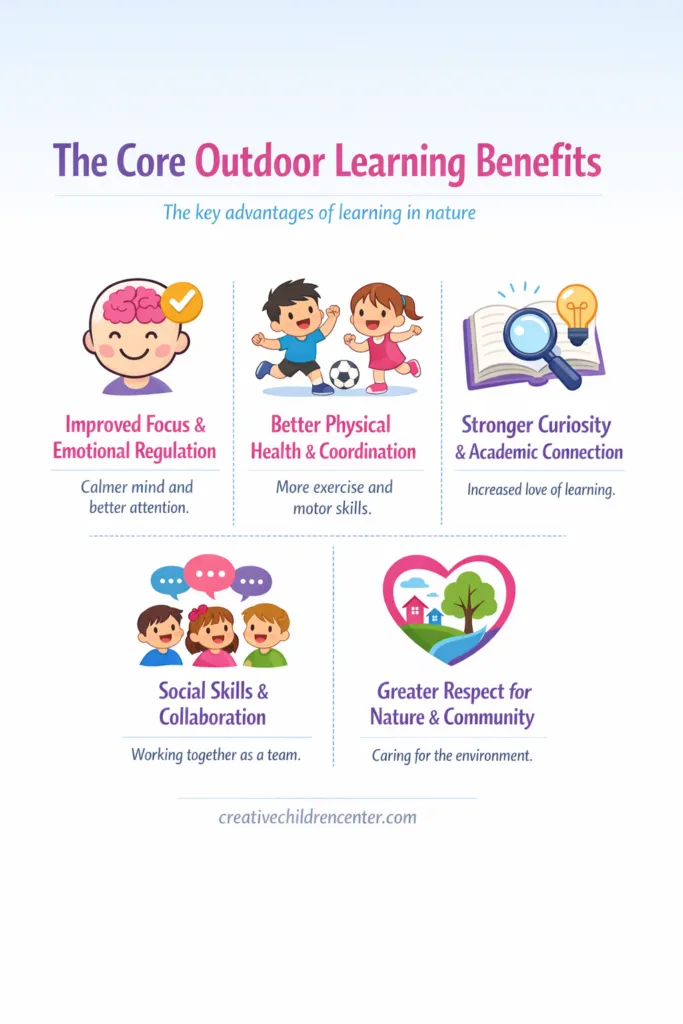
The Core Outdoor Learning Benefits
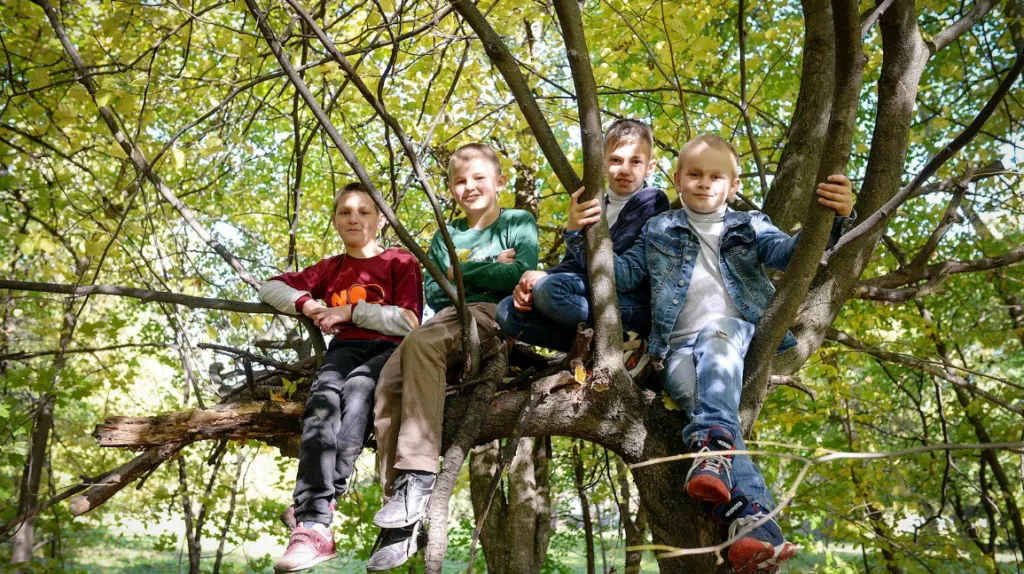
Outdoor learning supports a broad range of developmental and educational goals. Here are some of the most meaningful and well-documented benefits.
1. Improved Focus and Emotional Regulation
Most teachers can attest: some kids simply think better with fresh air. Studies show outdoor activity helps balance sensory input, reduces stress hormones, and improves mood. For children who struggle with attention or anxiety, nature offers a resetting effect that classrooms rarely replicate.
A child who spends thirty minutes planting herbs may come back to reading lessons calmer, more alert, and ready to engage.
2. Better Physical Health and Coordination
Outdoor environments encourage movement—climbing, running, balancing, digging—which naturally builds strength, agility, and endurance. In contrast, extended indoor time often limits spontaneous, unstructured play that allows kids to test their bodies safely.
Here’s where things often go wrong: structured sports are beneficial, but they don’t replace free movement in natural spaces. That unstructured play teaches subtle physical problem-solving—how to balance on uneven ground, assess risks, or coordinate meaningfully with others.
3. Stronger Curiosity and Academic Connection
Outdoor settings naturally invite questions: Why are the clouds changing color? How do ants find food? When children investigate answers, they sharpen scientific reasoning and creativity without even realizing they’re learning.
Teachers often find that kids who engage in outdoor projects—such as tracking local plants or measuring soil quality—gain a deeper appreciation for subjects like math, science, and writing because those lessons are tied to personal experience.
4. Social Skills and Collaboration
One of the often-overlooked Outdoor Learning Benefits is how it strengthens peer relationships. Activities like team scavenger hunts, gardening, or nature mapping require group planning, leadership choices, and compromise. These social lessons carry far beyond the field or forest.
What most people don’t realize is how much communication quality improves outdoors. Without the noise and hierarchy of a classroom, children often speak more freely, listen better, and work more cooperatively.
5. Greater Respect for Nature and Community
Spending time outdoors helps children form an emotional bond with their environment. They see cause and effect—how litter affects wildlife, how plants grow in different conditions—and build ecological awareness in real terms. That empathy often extends to people, too. Children who care for living things develop a sense of responsibility that translates into community-minded behavior.
The Emotional and Cognitive Impact
This is usually overlooked, but it matters deeply: emotional development and cognitive growth are intertwined. Children who learn in natural environments demonstrate not just academic gains but also emotional resilience. They develop patience, empathy, and strategic thinking by confronting small, controllable challenges—like crossing a stream or completing a nature trail assignment.
From a neurodevelopmental standpoint, outdoor experiences stimulate both hemispheres of the brain. Sensory variety—texture, movement, sound—activates neural pathways that indoor learning alone may leave underused. It’s a physiological reminder that human learning evolved outdoors, not under fluorescent lights.
Myths and Misconceptions About Outdoor Learning
There’s a persistent belief that outdoor learning is mostly for younger children or that it’s “recess disguised as class.” In reality, structured outdoor programs exist for all ages, including middle schoolers studying ecosystems or high school students learning geometry through real-world mapping.
Another common misconception is that outdoor learning replaces core academic rigor. The truth is, when done well, it reinforces it. A writing lesson outside might focus on sensory language or observation skills. A math session could involve measuring tree height using right-angle formulas. It deepens understanding, not dilutes it.
Finally, some parents worry it’s impractical or unsafe. In practice, outdoor education is carefully planned, often in controlled environments—gardens, school grounds, nearby parks—with clear guidelines. The key is balance, not reckless freedom.
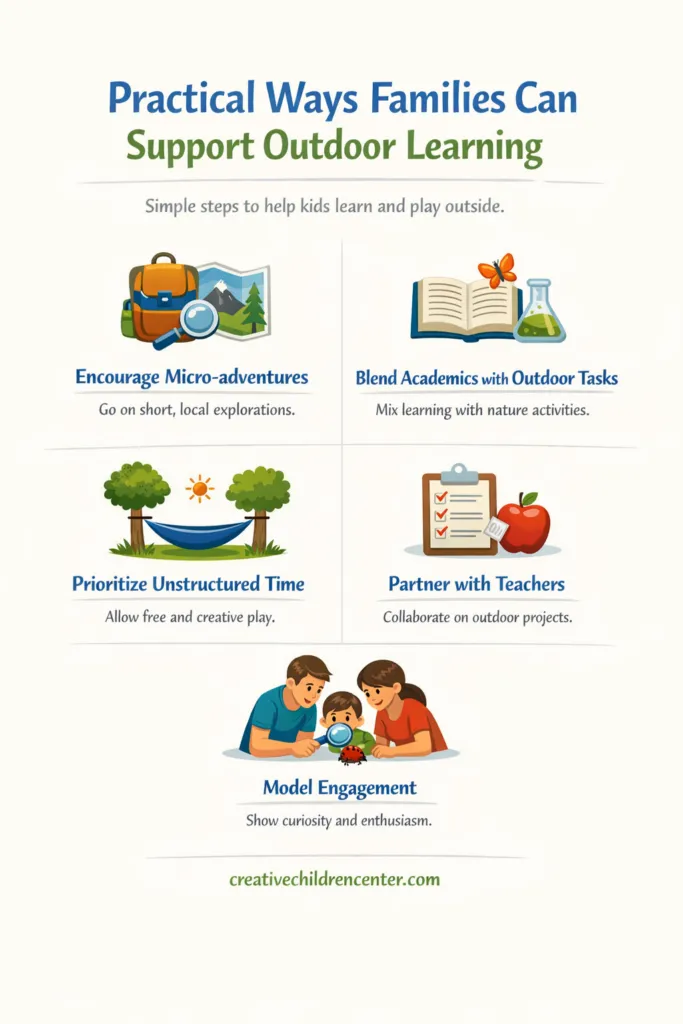
Practical Ways Families Can Support Outdoor Learning
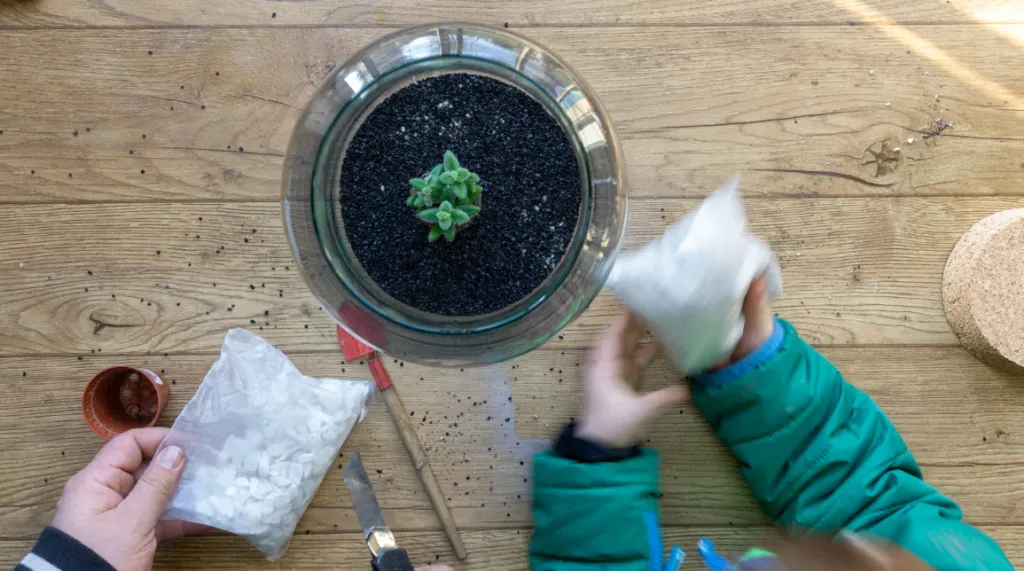
The school itself doesn’t need a forest or sprawling campus to make this work. Families play an equally important role in fostering these benefits.
1. Encourage Micro-adventures
A walk to a nearby park can become a science lesson if children bring notebooks to record sounds, shapes, or habitats. It’s about seeing familiar spaces differently.
2. Blend Academics with Outdoor Tasks
Have children measure plant growth for a simple math exercise or write short poems inspired by weather changes. The goal is connection, not perfection.
3. Prioritize Unstructured Time
Parents often overschedule with clubs and homework. Outdoor learning thrives on open, imaginative play—climbing trees, exploring textures, building makeshift forts.
4. Partner with Teachers
Ask how the school integrates outdoor lessons. Volunteer for garden days or neighborhood cleanups. Partnerships bridge classroom goals with real-world application.
5. Model Engagement
Children imitate what they see. When parents show curiosity—like stopping to observe a bird’s nest—it normalizes inquiry and wonder.
Overcoming Real-World Challenges
Of course, not all schools have equal resources or safe outdoor access. Teachers may face logistical or administrative limits. For families, urban environments can pose additional barriers.
When outdoor spaces are limited, the principle—not the setting—matters most. A balcony garden, rooftop observation, or even shadow-play on sidewalks can deliver the same learning energy. In my experience, creativity solves more obstacles than funding ever could.
The bigger challenge is mindset: viewing outdoor learning as essential rather than optional. Once parents and teachers see it that way, small opportunities expand—schoolyard microhabitats, recycled planter boxes, weather journals, or nature clubs.
The Long-Term Payoff
Outdoor Learning Benefits create changes that last well beyond childhood. The impact compounds over time, shaping not only how children learn but also who they become.
- Greater adaptability and confidence. Children who grow comfortable outdoors learn to navigate uncertainty, solve problems, and adjust to new situations more effectively.
- Higher emotional intelligence and resilience. Nature’s unpredictability teaches patience, empathy, and self-regulation—skills that support emotional maturity well into adulthood.
- Lifelong curiosity and creativity. Outdoor exploration encourages kids to ask questions, experiment, and make connections—mindsets that inspire ongoing learning and innovation.
- Sustained physical and social well-being. They’re more likely to stay active, value community, and maintain strong, healthy relationships.
- A grounded sense of belonging. Most importantly, they develop a sense of place—an understanding that they’re part of a living world, not just observers within it.
Educators often note that test scores don’t measure the most meaningful transformations. They happen in moments: when a shy student finds their voice leading a group hike, or when a restless child spends an hour quietly planting seeds. These are the experiences that shape identity and lasting self-worth.

Key Takeaways and Next Steps for Parents
Outdoor learning isn’t a passing trend—it’s a return to something deeply human. For families with school-age children, its value reaches far beyond fitness or academics. It nurtures balanced, curious, and compassionate individuals who understand the world through direct experience rather than filtered screens.
Parents can start small and make nature a regular part of learning. Encourage children to read, study, or reflect outdoors, even for short moments each day, and look for schools that integrate outdoor activities into their curriculum. Collaborating with teachers, reevaluating digital habits, and embracing small backyard or park explorations can all create meaningful growth.
If you’re a parent seeking guidance on integrating outdoor experiences into your child’s growth, Creative Children Center LLC offers programs designed to merge academic excellence with nature-based learning. It’s a practical way to help young minds thrive—body, heart, and intellect combined.