

Healthy eating habits begin early in life, and the environments where children spend their time can strongly influence how those habits develop. During the toddler and preschool years, children go through rapid physical growth, brain development, and emotional changes that all depend on proper nutrition. Because many young children spend much of their day in a trusted childcare center, these environments play an important role in shaping daily eating routines and attitudes toward healthy food.
A well-structured childcare nutrition program does more than provide meals. It helps children build consistent eating schedules, introduces a variety of nutritious foods, and supports lifelong healthy habits. From balanced breakfasts to nutritious lunches and healthy afternoon snacks, thoughtful meal planning helps children stay energized, engaged in learning, and supported in their overall development while also helping parents reinforce healthy eating practices at home.
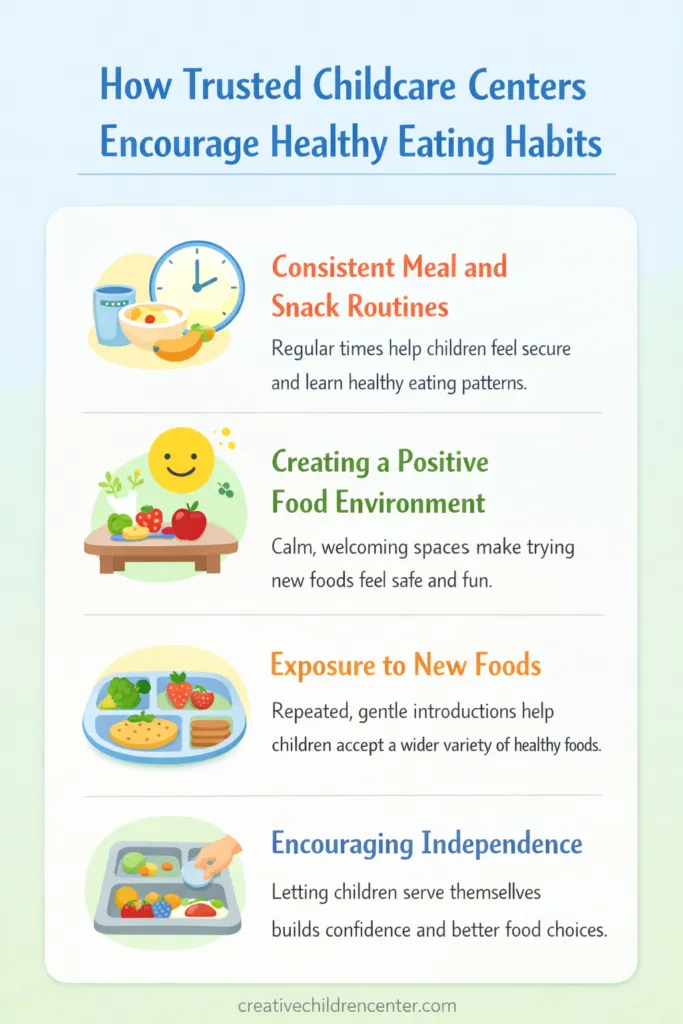
Why Nutrition Matters in Early Childhood Development
Proper nutrition during early childhood lays the foundation for healthy growth, brain development, and emotional well-being.
1. Nutrition and Brain Development
The early childhood years are critical for brain development. During this time, children’s brains are forming connections that support learning, memory, attention, and problem-solving skills. Proper nutrition provides the building blocks needed for this development.
Nutrients such as iron, healthy fats, and protein play important roles in cognitive function. For example, iron helps carry oxygen to the brain, while healthy fats support brain cell growth. When children receive balanced meals throughout the day, they are better able to focus during activities, participate in social interactions, and engage in early learning experiences.
Consistent nutrition also helps prevent energy crashes that can make it difficult for children to concentrate or regulate their emotions.
2. Physical Growth and Energy Needs
Toddlers and preschoolers grow quickly, which means their bodies require a steady supply of nutrients. Protein supports muscle growth, calcium strengthens bones, and carbohydrates provide the energy children need for active play.
Because young children are naturally active, they need regular meals and snacks to maintain their energy. Long gaps between meals can lead to fatigue or irritability, while balanced nutrition helps support endurance for both physical activities and learning experiences.
3. Nutrition and Emotional Regulation
Nutrition also plays a role in emotional well-being. Hunger can affect a child’s mood, patience, and ability to manage frustration. Regular meals and snacks help maintain stable blood sugar levels, which can support more consistent behavior and emotional regulation.
Trusted childcare centers often establish predictable meal routines, which helps children feel secure and understand what to expect throughout the day. This consistency can reduce anxiety and support smoother transitions between activities.
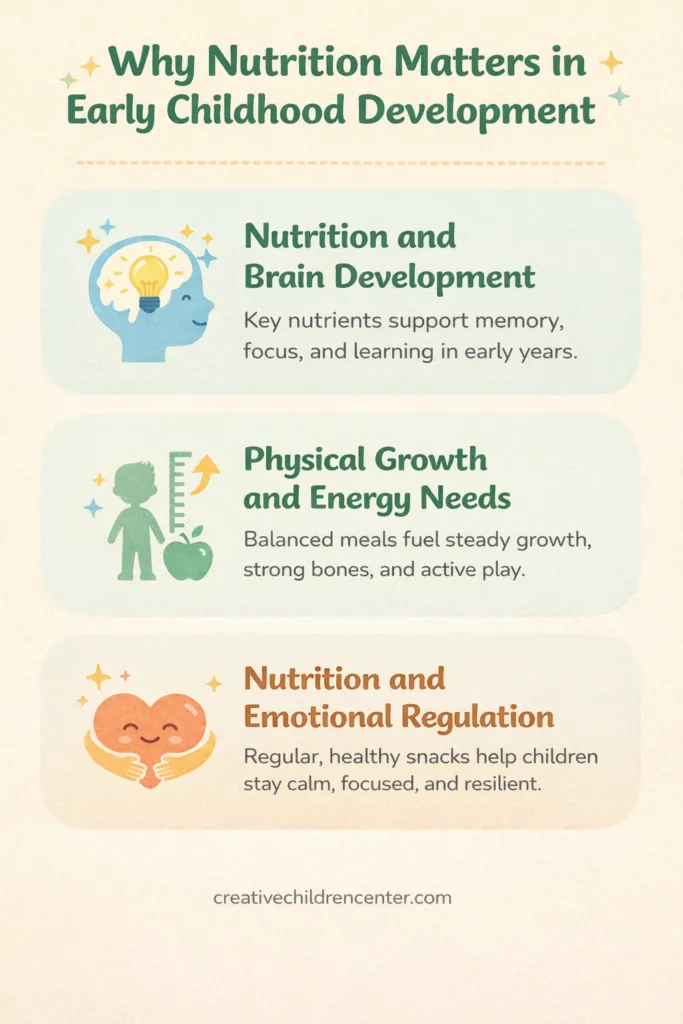
Core Nutrients Every Childcare Meal Plan Should Include
A balanced childcare meal plan focuses on providing a variety of nutrients that support all areas of development.
1. Protein for Growth and Repair
Protein helps build and repair tissues and supports healthy growth. Good sources of protein in childcare meals may include:
- Eggs
- Yogurt
- Beans and lentils
- Chicken or turkey
- Cheese
Including protein in meals and snacks can also help children feel full longer and maintain steady energy levels.
2. Calcium for Strong Bones
Calcium is essential for developing strong bones and teeth. Early childhood is an important time to build bone strength that supports long-term health.
Common calcium sources include:
- Milk
- Cheese
- Yogurt
- Fortified dairy alternatives
- Leafy green vegetables
3. Iron for Brain Development
Iron deficiency in early childhood can affect development and energy levels. Including iron-rich foods in childcare meals supports healthy brain function and oxygen circulation.
Examples include:
- Lean meats
- Spinach
- Beans
- Fortified cereals
- Eggs
4. Healthy Fats for Brain Health
Healthy fats are important for brain development and overall health. These fats also help children absorb certain vitamins.
Examples include:
- Avocados
- Seeds
- Nut butters (when allergy policies allow)
- Fish (age appropriate)
5. Fiber for Digestive Health
Fiber supports healthy digestion and helps prevent constipation, which can be common in young children.
Fiber sources include:
- Fresh fruits
- Vegetables
- Whole grains
- Oatmeal
- Beans
A well-planned childcare nutrition program typically includes a variety of these foods throughout the week to ensure children receive balanced nutrition.
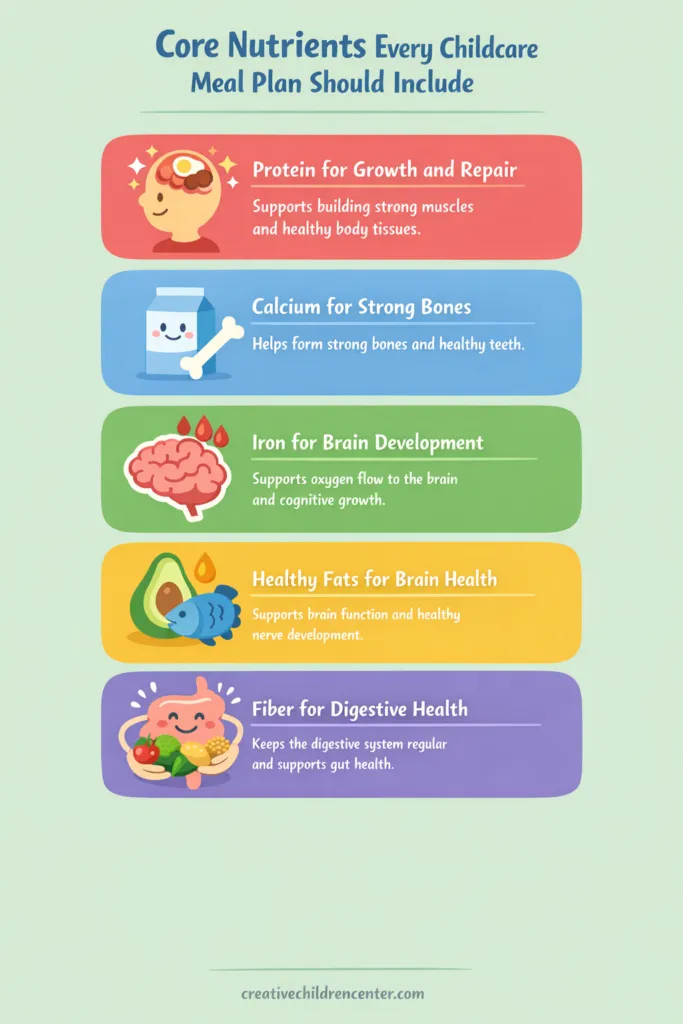
What a Balanced Meal Plan Looks Like in a Trusted Childcare Center
Nutrition planning in a trusted childcare center typically focuses on providing balanced meals at consistent times throughout the day. This structure helps children develop routines while ensuring they receive the nutrients they need.
1. Nutritious Breakfast to Start the Day
Breakfast provides the energy children need to begin their day. A balanced breakfast often includes whole grains, protein, and fruit to support concentration and activity levels.
Examples of balanced breakfast options may include oatmeal with fruit, yogurt with whole grain cereal, or eggs with toast and fruit. Starting the day with a nutritious meal helps children transition smoothly into learning and play activities.
2. Balanced Lunch for Sustained Energy
Lunch is often the most substantial meal of the day in a childcare setting. Balanced lunches typically include a combination of protein, vegetables, whole grains, and dairy or dairy alternatives.
This balance helps provide sustained energy for afternoon learning, social interaction, and physical play. Offering a variety of foods also helps children become more comfortable trying new flavors and textures.
3. Healthy Afternoon Snacks for Growing Bodies
Afternoon snacks play an important role in maintaining children’s energy between lunch and the end of the day. These snacks help prevent hunger and allow children to stay focused and engaged.
Healthy snacks might include fruits, whole grain crackers, yogurt, or vegetables with dips. In many toddler and preschool programs, children receive nutritious breakfast, lunch, and afternoon snacks as part of a structured daily routine designed to keep growing bodies fueled throughout the day while supporting consistent eating habits.
Nutrition Needs for Toddlers in Childcare Programs
Toddlers have unique nutritional needs because they are developing independence while still learning how to eat a variety of foods. Their appetites may vary from day to day, which is normal during this stage of development.
Toddler nutrition often focuses on:
- Smaller portions
- Frequent meals and snacks
- Simple food combinations
- Soft textures for safe eating
- Exposure to new foods
Trusted childcare centers often provide structured meal schedules that include breakfast, lunch, and snacks to support growth while helping toddlers become comfortable with different foods. Regular exposure to healthy foods without pressure encourages children to gradually accept new options.
Caregivers may also encourage self-feeding skills by allowing toddlers to use spoons, drink from cups, and practice basic independence during meals. These experiences help children build confidence and develop positive mealtime behaviors.
Nutrition Needs for Preschoolers in Childcare Programs
As children enter the preschool years, their nutritional needs continue to evolve. Preschoolers are typically more active, more social, and more interested in making their own choices.
Nutrition planning for this age group often focuses on:
- Balanced meals that support activity levels
- Opportunities to try new foods
- Encouraging independence
- Social eating experiences
- Developing healthy food preferences
Preschool programs often continue structured nutrition routines by providing balanced meals and snacks that support learning, physical activity, and social development. Eating together also gives children opportunities to practice communication skills, table manners, and patience.
Children at this stage also benefit from being involved in simple food-related tasks such as cleaning up, choosing between healthy options, or helping with simple preparation tasks when appropriate. These experiences can increase interest in healthy foods.
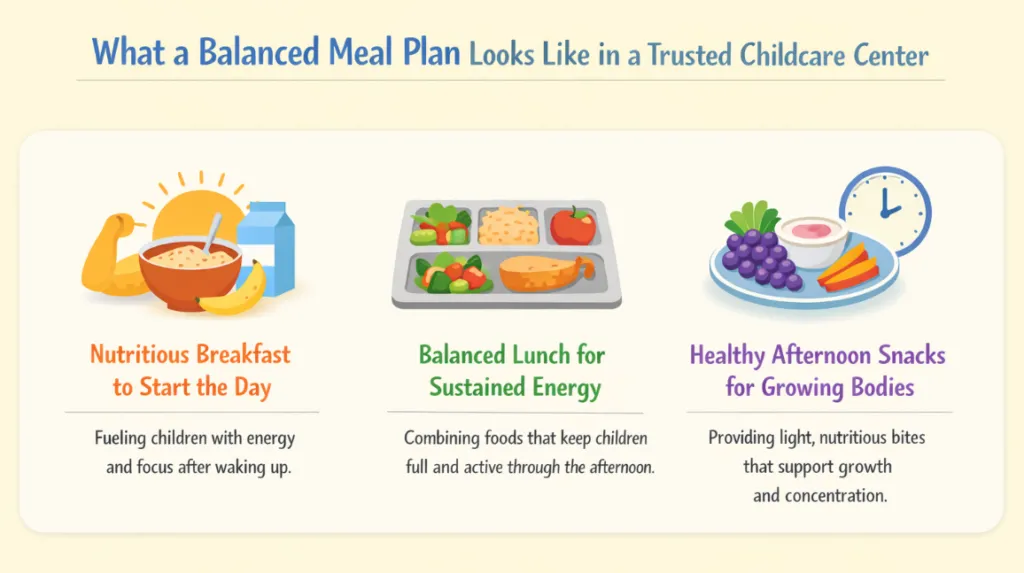
How Trusted Childcare Centers Encourage Healthy Eating Habits
Trusted childcare centers often take intentional steps to help children develop healthy eating habits that extend beyond the classroom.
1. Consistent Meal and Snack Routines
Predictable meal times help children understand when they will eat, which can reduce anxiety and improve cooperation during meals. Routine also helps regulate hunger cues and supports healthy metabolism.
2. Creating a Positive Food Environment
A positive eating environment encourages children to feel comfortable exploring food. Caregivers often model healthy eating behaviors and encourage children without forcing them to eat. This approach helps reduce mealtime stress and promotes healthy relationships with food.
3. Exposure to New Foods
Children may need to see a food many times before they feel comfortable trying it. Childcare settings often provide repeated exposure to healthy foods in a supportive environment. This gradual introduction helps children become more open to variety.
4. Encouraging Independence
Childcare programs often encourage children to practice independence during meals. This may include:
- Serving themselves small portions
- Pouring water from small pitchers
- Cleaning up after meals
- Making simple choices between healthy foods
These practices help children develop confidence and responsibility while supporting healthy habits.
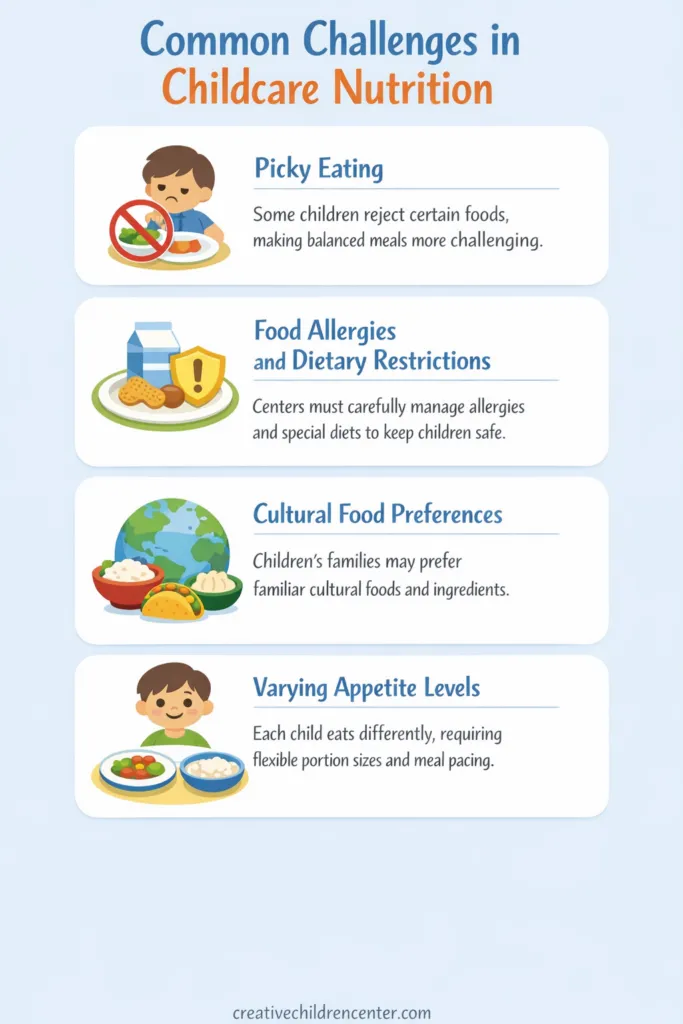
Common Challenges in Childcare Nutrition
Even with strong planning, childcare nutrition can present challenges that require thoughtful solutions.
1. Picky Eating
Picky eating is common in early childhood. Children may reject foods they previously enjoyed or hesitate to try unfamiliar foods. Patience, routine, and gentle encouragement are often the most effective strategies.
2. Food Allergies and Dietary Restrictions
Food allergies require careful planning to ensure safety. Trusted childcare centers typically follow clear policies to prevent exposure and communicate with families about dietary needs.
3. Cultural Food Preferences
Children come from diverse backgrounds with different food traditions. Respecting cultural food preferences can help children feel included while also broadening exposure to different healthy foods.
4. Varying Appetite Levels
Children’s appetites can vary based on growth stages, activity levels, and individual needs. Offering balanced options and allowing children to respond to their hunger cues helps support healthy eating patterns.
How Childcare Centers Support Families Through Nutrition Programs
Nutrition programs in childcare centers often provide important support for families. Knowing that children are receiving balanced meals during the day can reduce stress for working parents and caregivers.
Structured nutrition programs also help reinforce healthy routines that children can carry into their home environments. When children become accustomed to eating fruits, vegetables, and balanced meals in childcare, they may become more open to those foods at home.
Communication between childcare providers and families can also help maintain consistency. Sharing general information about meal routines can help families establish similar structures at home, supporting children’s overall development.
What Parents Should Look for in a Childcare Center Nutrition Program
When evaluating a childcare center, nutrition programs are an important factor to consider. Parents may benefit from looking for programs that demonstrate thoughtful planning and a commitment to children’s well-being.
Important things to look for may include:
- Balanced meals that include multiple food groups
- Scheduled snack times
- Access to drinking water throughout the day
- Clear allergy awareness practices
- Safe food preparation standards
- Age-appropriate meal options
- Communication about general nutrition practices
These factors can help indicate whether a childcare center prioritizes children’s health and development through proper nutrition.
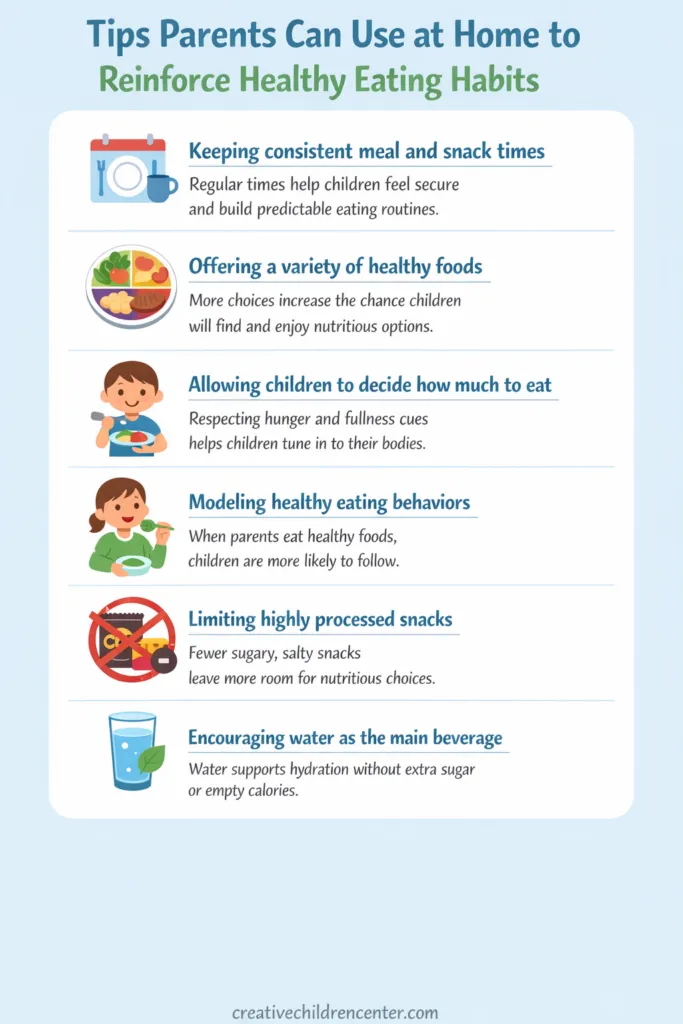
Tips Parents Can Use at Home to Reinforce Healthy Eating Habits
Healthy eating habits are strongest when childcare routines and home routines work together. Parents can support what children learn in childcare by maintaining similar practices at home.
Helpful strategies include:
- Keeping consistent meal and snack times
- Offering a variety of healthy foods
- Allowing children to decide how much to eat from healthy options
- Modeling healthy eating behaviors
- Limiting highly processed snacks
- Encouraging water as the main beverage
Consistency between environments helps children feel confident and secure in their eating routines.
Final Thoughts: Building Lifelong Healthy Eating Habits Through Childcare Nutrition
Healthy eating habits formed in early childhood can have a lasting impact on a child’s growth, learning, and overall well-being. As highlighted throughout this guide, balanced meals, consistent routines, and positive mealtime experiences help children develop the energy, confidence, and healthy relationships with food they need during their most important developmental years.
This is why choosing a trusted childcare center matters. Environments that support structured nutrition, introduce healthy food choices, and encourage positive eating habits can help reinforce the foundation children need both in the classroom and at home.
For families seeking this kind of supportive environment, Creative Children Center LLC reflects these principles through its focus on nurturing development and healthy routines. Through toddler and preschool programs that include nutritious breakfast, lunch, and afternoon snacks, the center helps keep growing bodies fueled and ready to learn, giving parents confidence in their child’s daily care.