
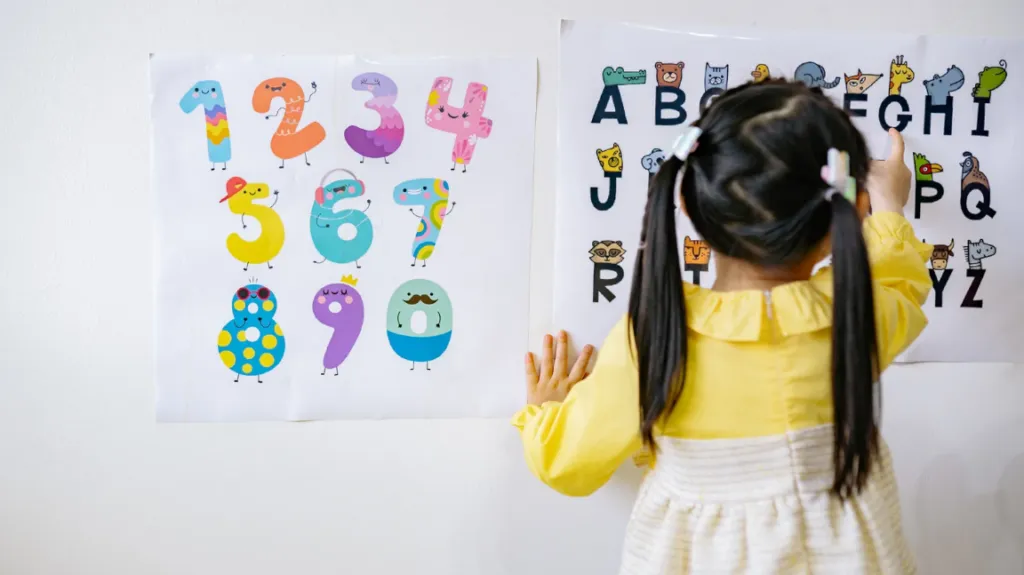
It usually begins with a simple moment—your two-year-old pointing to the fridge and saying “juice!” or stringing together “Mommy go work.” These tiny bursts of communication feel magical and, sometimes, unpredictable. For many parents, it’s both exciting and nerve-wracking: Should they be saying more words by now? Are other toddlers this chatty?
Understanding toddler language development during the 2–3-year window helps parents see what’s typical, what’s variable, and how to support progress naturally without pressure. Because language growth in this stage can vary widely, knowing what to expect—and when to be concerned—makes all the difference in how parents respond each day.
Why the 2–3-Year Stage Matters So Much
Between a toddler’s second and third birthday, language skills take a leap that’s bigger than most parents expect. Words turn into short sentences, questions begin to appear (“Where ball go?”), and their grasp of meaning expands rapidly.
This period sets the tone for later social and academic readiness. When toddlers can express needs and emotions clearly, frustration decreases and social skills grow. What most people don’t realize is that language development isn’t just about vocabulary—it’s about building thinking pathways, self-regulation, and confidence.
What to Expect in Normal Toddler Language Development
Every child develops differently, but there are general patterns in toddler language development between ages two and three. These milestones give context—not rigid standards—for what parents might observe.
Around 24 Months:
- Vocabulary often reaches 50 or more words.
- Simple two-word phrases appear (“More milk,” “Daddy up”).
- They can identify familiar objects and people by name.
- Understanding typically outpaces speaking; they may follow two-step directions like “Pick up the toy and bring it to me.”
Around 30–36 Months:
- Speech becomes clearer and sentences expand (“I want cookie,” “We go park now”).
- They start using pronouns (“me,” “you,” “mine”) and plurals.
- Vocabulary may exceed 300 words by age three, though this varies greatly.
- They begin experimenting with questions (“What’s that?” or “Where is Mommy?”).
What’s often overlooked is how comprehension silently accelerates. A parent might assume their child isn’t understanding because they don’t reply—but most toddlers grasp far more than they can say.
Factors That Shape Toddler Language Development
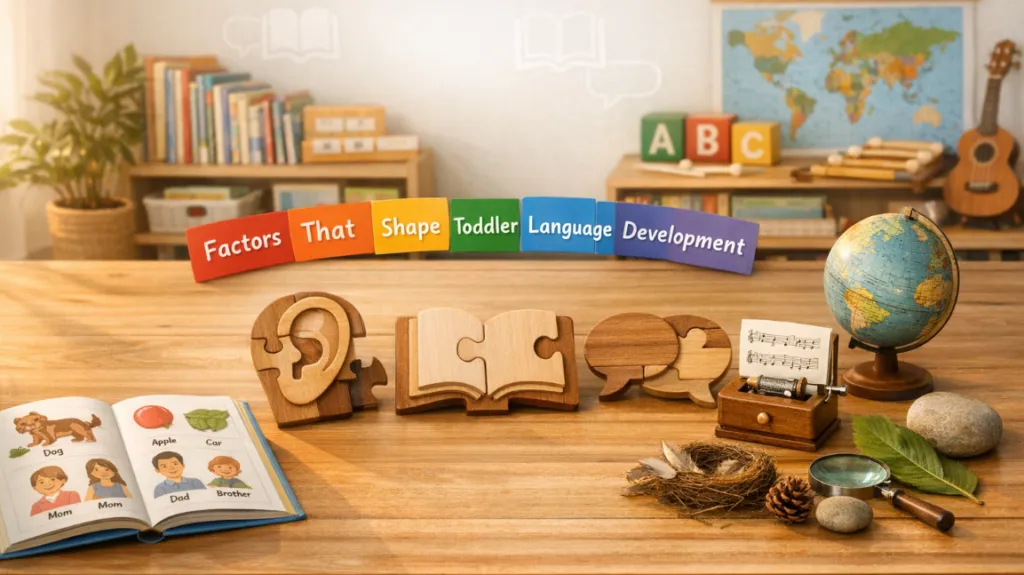
Not every toddler follows the same timeline, and that’s normal. Real-world experience shows several influences:
- Environment: Homes rich in conversation, books, and back-and-forth dialogue naturally stimulate verbal growth.
- Hearing: Even mild or temporary hearing issues from ear infections can slow progress.
- Temperament: Some children observe and internalize before speaking much; others chatter early.
- Bilingual exposure: Kids learning two languages might mix words or take slightly longer to speak fluently in each, but they’re building twice the framework.
- Interaction quality: Responsive, face-to-face communication—rather than passive listening or screen time—drives the strongest gains.
Parents can’t control every factor, but they can shape the environment and how they talk with their child daily.
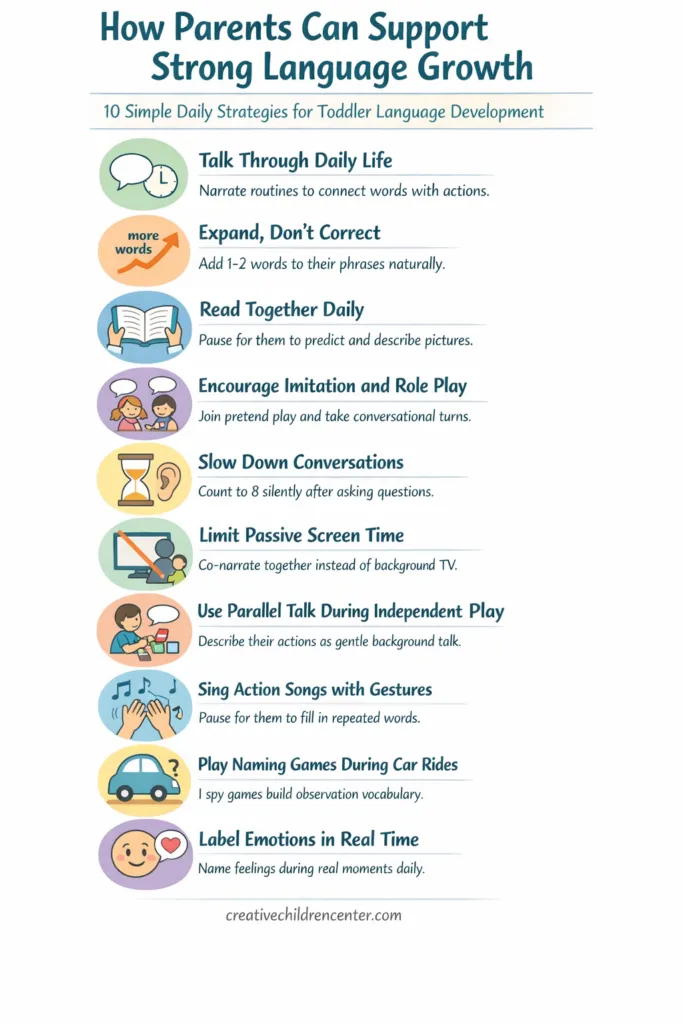
How Parents Can Support Strong Language Growth
Supporting toddler language development doesn’t require fancy flashcards or structured lessons. As one of the Five Core Areas of Development, language growth naturally develops through everyday routines, genuine conversation, and play. Simple moments like talking during meals, describing daily activities, reading together, and responding to your child’s attempts to communicate can make a big difference.
Here are 10 experience-based strategies that make a real difference:
1. Talk Through Daily Life
Narrating routine activities exposes toddlers to new words in meaningful context. Repetition helps them connect words to actions and objects.
Describe what you’re doing as it happens—”Now we’re putting on socks,” or “The water is warm for bath time.” Use the same phrases consistently each day. Speak at a normal pace with natural rhythm—your tone matters more than perfect vocabulary.
2. Expand, Don’t Correct
When toddlers use simple phrases, adding words models proper grammar without making them feel wrong. This builds sentence structure naturally.
Child says “Dog run.” You respond: “Yes, the big dog is running fast outside!” Child says “More juice.” You say: “More apple juice coming right up!” Always add 1-2 words to their phrase.
3. Read Together Daily
Frequent reading builds vocabulary far faster than conversation alone. Interactive reading turns passive listening into active language practice.
Choose short, colorful books with familiar objects. Read slowly, then pause after turning pages—let them fill in predictable words or point to pictures. Ask “What’s happening here?” instead of test questions like “What color is the ball?”
4. Encourage Imitation and Role Play
Pretend play creates natural opportunities for dialogue. The back-and-forth of make-believe helps children practice conversational rhythm and new phrases.
Set up simple scenarios—feeding dolls, driving toy cars, or having a tea party. Join in and narrate their actions: “Baby wants milk now!” Take turns speaking so they learn to wait and respond.
5. Slow Down Conversations
Parents often speak too quickly for toddler processing speed. Strategic pauses give children time to formulate responses.
After asking a question, silently count to 8 before helping. If no response comes, model an answer: “You’re looking for your blue truck!” This waiting practice builds their confidence to speak up.
6. Limit Passive Screen Time
Toddlers learn language through human feedback, not videos. Co-viewing transforms screen time into interactive language practice.
Skip background TV completely. If using screens, sit together and narrate: “Look, the puppy is jumping!” Pause videos to discuss what happened. Keep total screen time under 30 minutes daily.
7. Use Parallel Talk During Independent Play
Describing a child’s actions during solo play provides constant language input without interrupting their focus. They absorb vocabulary effortlessly.
While they build blocks or play with cars, comment gently: “You’re making a tall red tower,” or “The car goes vroom down the ramp!” Keep your voice soft—think soundtrack, not teacher.
8. Sing Action Songs with Gestures
Music combined with movement creates strong memory pathways for words. Repetitive songs build confidence through predictable patterns.
Sing favorites like “Wheels on the Bus” or “Itsy Bitsy Spider” with big hand motions. Pause mid-song at repeated parts—let them fill in words. Do the same song daily for a week, then switch.
9. Play Naming Games During Car Rides
Ordinary trips become vocabulary adventures. Observation games build descriptive language and attention to detail.
Skip devices and play “I spy something green” or “How many blue cars?” Describe surroundings: “Look, workers with yellow hats building a big wall!” Vary games by trip to keep it fresh.
10. Label Emotions in Real Time
Naming feelings builds emotional vocabulary and self-regulation. Toddlers learn to identify and express complex emotions.
During tantrums: “You feel mad because blocks fell.” When excited: “You’re so happy about the bubbles!” Use simple emotion words consistently—mad, happy, sad, scared—across all situations.
Start with 2-3 strategies this week. The power lies in daily repetition, not perfection. Parents using these specific techniques typically see noticeable language growth within 4-6 weeks.
Everyday Activities That Strengthen Toddler Language Development
Practical approaches often work better than structured “teaching.” Each of these common activities doubles as language learning:
- Cooking together: Let them stir, pour, and identify ingredients (“Can you find the apples?”).
- Outdoor walks: Describe what you see—birds, cars, clouds—and ask open-ended questions like “What’s making that sound?”
- Music and rhythms: Singing nursery rhymes improves memory for words and sentence flow.
- Picture matching games: Matching objects or actions reinforces word-object associations.
- Storytelling from photos: Flip through family pictures and ask, “Who’s this?” or “What were we doing here?”
Consistency, not length, is key. Fifteen focused minutes of shared talk beats an hour of background chatter.
Common Mistakes Parents Make
Here’s where things often go wrong: parents sometimes measure progress by how much a child talks instead of how they communicate. A quiet child pointing, gesturing, or listening well is still developing language effectively. Speech comes next.
Other common mistakes include:
- Using baby talk excessively. A little is fine for affection, but toddlers need real words to model.
- Asking too many test-like questions. Constant “What color is that?” can feel overwhelming. Conversation should feel equal, not evaluative.
- Talking over the child. When caregivers always fill silences, children have no chance to practice.
- Comparing siblings or friends. Timelines vary widely; comparison adds pressure and frustration without benefit.
Parents who shift focus from “number of words” to “quality of interaction” see steady, confident progress.
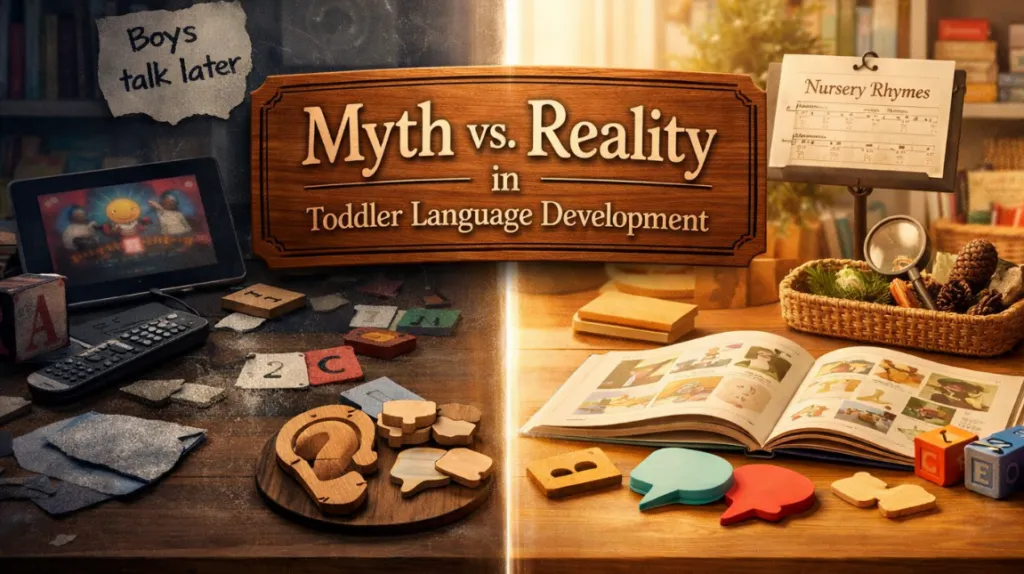
Myth vs. Reality in Toddler Language Development
Myth: “Boys just talk later, so there’s nothing to worry about.”
Reality: While averages show slight gender differences, persistent delays shouldn’t be dismissed. Hearing, environment, or oral-motor issues sometimes need attention.
Myth: “They’ll catch up eventually.”
Reality: Many do—but some don’t without intervention. Early observation and, if needed, speech therapy make support much simpler later.
Myth: “TV shows and apps teach vocabulary.”
Reality: They may expose new words, but without interaction, toddlers won’t internalize meaning. Language grows from conversation, not consumption.
The truth is that toddler language development thrives on authentic connection, not passive exposure or waiting it out. Awareness and gentle guidance make all the difference.
How Toddler Programs Support Language Development
Parent interaction remains the foundation of toddler language development. High-quality toddler programs simply complement this with what home life sometimes lacks.
Key benefits programs provide:
- Consistent peer interaction where toddlers naturally imitate each other’s words and gestures
- Guided language modeling from skilled educators during everyday routines
- Regular opportunities for back-and-forth conversation practice
What effective programs do differently:
- Surround children with rich conversation throughout the day (snack time, cleanup, outdoor play)
- Model full sentences and introduce new vocabulary through play, not lessons
- Provide parents with specific feedback about their child’s communication patterns
This peer + educator combination often accelerates speech clarity and confidence, especially for quieter toddlers. The home-school partnership creates consistent language exposure across environments.
For busy families: Programs like those at Creative Children Center LLC—which emphasize toddler language development through play-based learning—offer daily language-rich experiences that align with developmental science rather than structured instruction.
When to Seek Professional Support
While natural variation is broad, some signs suggest a need for professional input. Parents should consider consulting a pediatrician or speech-language pathologist if:
- By age two, the toddler has fewer than 50 words or rarely combines them.
- Speech is mostly unintelligible by age three to familiar listeners.
- The child doesn’t respond to simple instructions or seems unaware when spoken to.
- There’s sudden regression—words previously used disappear.
- Parents sense frustration or withdrawal during attempts to speak.
Early evaluation isn’t about labeling; it’s about clarity. Even short-term speech therapy or guidance can help parents learn how to support communication more effectively at home.
The Role of Emotion and Patience
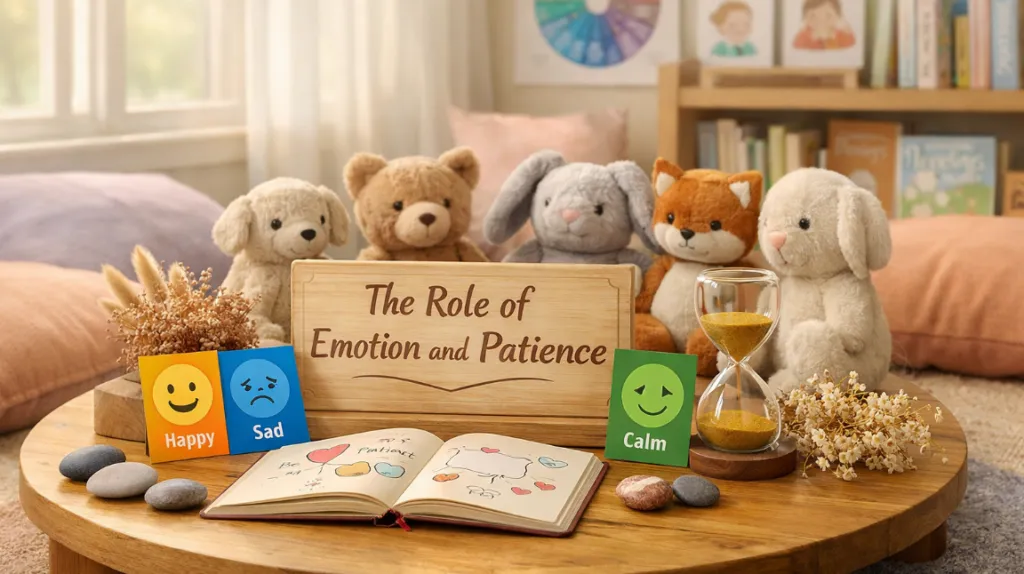
One subtle but crucial point: emotional safety matters. A child who feels rushed, corrected, or pressured may speak less. Secure, playful communication encourages experimentation without fear of failure.
Every toddler develops at their own pace. Language, like any skill, unfolds best in an atmosphere of curiosity and joy.
Wrapping Up
Toddler years bring language explosions, messy pronunciations, and sometimes worry—but for most families, this period is a remarkable window of growth. Supporting toddler language development isn’t about perfection. It’s about talking, listening, and connecting in small daily moments, trusting that progress happens naturally when curiosity leads the way.
For parents seeking more personalized guidance, Creative Children Center LLC offers language-enriched programs designed for toddlers aged two to three. Through play-based learning, small-group interaction, and expert educator oversight, the center helps young children build vocabulary and communication confidence—one meaningful conversation at a time.