
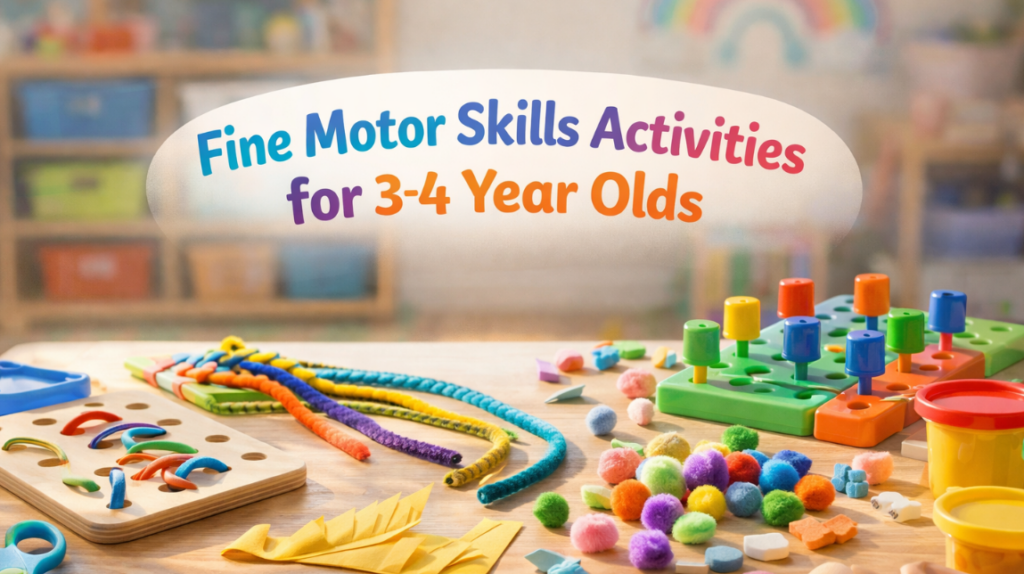
Most parents notice it around the same time: the day their 3-year-old starts insisting on “doing it myself.” Buttoning a shirt, feeding with a spoon, holding a crayon—these small actions mark big strides in independence. But behind every one of these moments lies something deeper: developing control over the tiny muscles of the hands and fingers. That’s where fine motor skills activities for 3 4 year olds become so valuable.
At this age, children’s brains and hands are in a stage of rapid coordination growth. How parents guide and support those moments of practice—without forcing or over-directing—can shape both confidence and lifelong motor proficiency. This article helps parents understand what’s happening developmentally, which activities truly make a difference, and when to step back to let the learning process unfold naturally.
Why Fine Motor Skills Matter More Than Most Realize
Fine motor skills aren’t just about neat handwriting or cutting paper neatly. They create the foundation for most practical daily tasks—feeding, self-dressing, brushing teeth, even opening a lunchbox. The more naturally these movements develop now, the less frustration children experience later when tasks become more complex.
What most people don’t realize is that fine motor development also connects deeply with cognitive growth. When a child plans a way to stack blocks or manipulate clay, their problem-solving circuits fire right alongside their motor pathways. That mind-hand connection builds early executive function and persistence—traits that often predict later learning success.
What Fine Motor Control Looks Like at Ages 3 and 4
Around three years old, children are just beginning to show control. They can hold a crayon with a modified grip, turn doorknobs, thread large beads, or stack five or six blocks. By four, movements usually gain more precision—they can use scissors, build more complex structures, and even start tracing shapes.
Parents shouldn’t expect consistent accuracy yet. Variation is normal. One day a child can trace a line cleanly, the next day it’s all over the page. What matters is the overall trend: control improving over time as curiosity leads to more practice.
Choosing the Right Fine Motor Skills Activities for 3 4 Year Olds
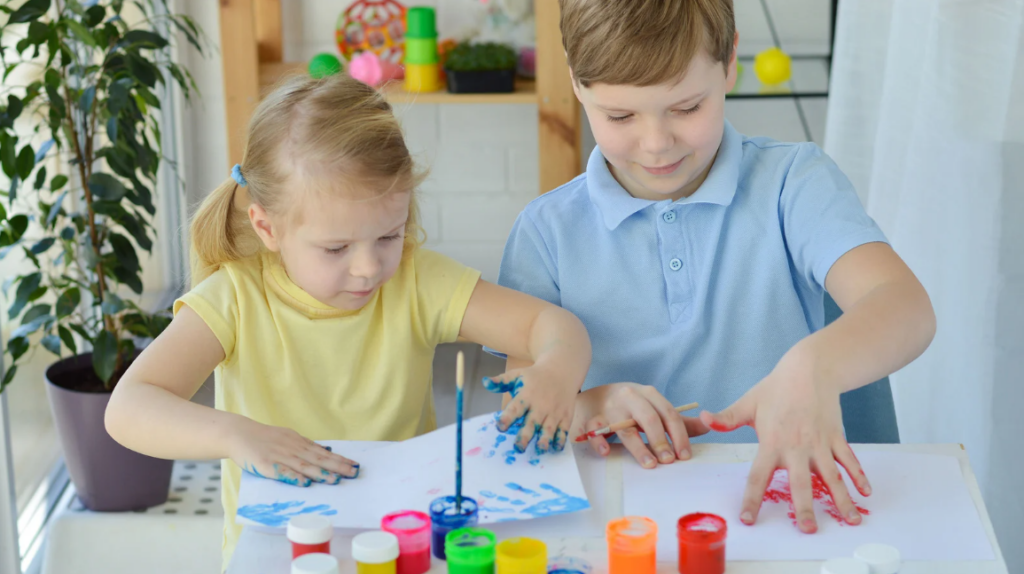
The ideal fine motor skills activities for 3 4 year olds blend fun with purpose. Below are categories of play that support this fine control while keeping children genuinely engaged.
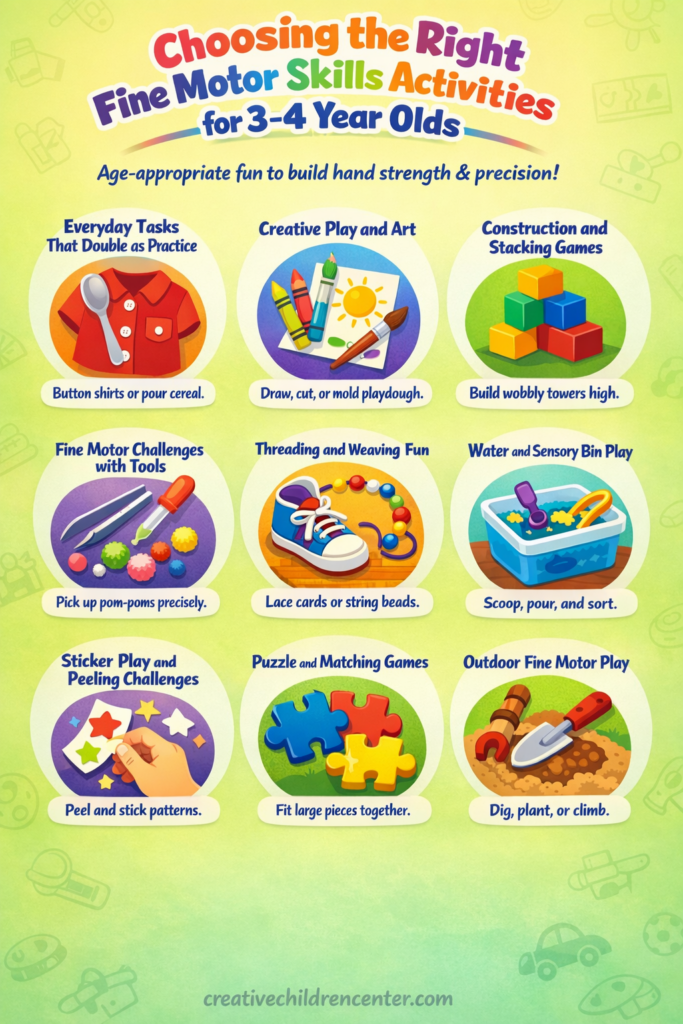
1. Everyday Tasks That Double as Practice
- Dressing routines: Zipping, buttoning, or fastening are perfect opportunities. Instead of rushing to help, let them try first—even if it’s messy or slow.
- Feeding time: Encourage using utensils regularly. Transferring small pieces of food from one bowl to another with a spoon can be both fun and skill-building.
- Helping around the house: Pouring water into plants, peeling a banana, or stirring batter builds practical confidence.
These mundane moments often do more for fine motor growth than any store-bought toy.
2. Creative Play and Art
Engaging fine motor skills activities for 3 4 year olds let children enjoy sensory experiences. Set up a low-stakes creative station where outcomes don’t matter.
- Playdough molding, rolling, cutting shapes
- Painting with Q-tips or small sponges to strengthen grip control
- Tearing paper and gluing it into collages
- Stringing large beads, macaroni, or cut straws onto yarn
Creative play like this doesn’t just refine motor control—it also fosters imagination and emotional expression.
3. Construction and Stacking Games
Classic building toys remain unbeatable fine motor skills activities for 3 4 year olds. Wooden blocks, Duplo, or magnetic tiles encourage hand-eye coordination and planning.
For added benefit, describe what your child is doing: “You stacked the tall blocks on the short one.” This supports language growth alongside tactile learning.
4. Fine Motor Challenges with Tools
Engaging fine motor skills activities for 3 4 year olds can gently introduce small tools once a child shows readiness, such as:
- Child-safe scissors for cutting playdough or paper shapes
- Plastic tweezers for transferring cotton balls or pom-poms
- Spray bottles or droppers for art or plant watering
At this age, supervision matters, not restriction. The key is controlled exploration—tools teach cause and effect, but safety must always come first.
5. Threading and Weaving Fun
Threading activities help children refine precision and patience. Provide simple materials like:
- Lacing cards with holes around the edges
- Pipe cleaners and beads
- A shoelace and stiff cardboard with punched holes for weaving
These activities engage attention span and hand-eye coordination while offering a satisfying sense of completion when the pattern is finished.
6. Water and Sensory Bin Play
Sensory bins don’t have to be complicated. Fill a shallow container with rice, beans, or water and let your child scoop, pour, and sift with different tools like cups, funnels, and spoons.
This type of tactile exploration helps refine finger control and strengthens forearm muscles. Plus, it’s naturally calming for many children.
7. Sticker Play and Peeling Challenges
Stickers are simple but powerful tools for fine motor learning. Peeling stickers off a sheet and placing them on paper builds finger dexterity and precision. You can even create sorting games—like matching colored stickers or forming patterns on cards.
Just make sure to provide stickers with tabs or easy edges at first; frustration early on can dampen interest.
8. Puzzle and Matching Games
Simple wooden puzzles or shape sorters encourage wrist rotation and hand stability. When children grasp and twist pieces to fit the shapes correctly, they learn spatial reasoning in addition to fine muscle control.
Puzzles with knobs, animals, or vehicles are usually most engaging for 3-4 year olds, especially if they align with the child’s current interests.
9. Outdoor Fine Motor Play
Many parents underestimate how well outdoor environments can support development. Fine motor skills activities for 3 4 year olds can include:
- Drawing on pavement with thick chalk
- Collecting leaves and sticking them into a scrapbook
- Digging with small shovels in a sandbox
These combine both gross and fine motor development naturally, giving the hands diverse movement practice while keeping energy levels balanced.
How to Encourage Without Overcorrecting
Here’s where things often go wrong: adults rush in. A parent sees a child struggling to thread beads and instinctively says, “No, like this.” But interrupting practice too quickly prevents the child’s brain and fingers from working through the coordination puzzle.
Instead, create space for slow learning. Offer help only when frustration crosses into discouragement. Celebrate effort rather than precision. This builds resilience and turns daily struggle into a self-driven challenge.
If a child consistently resists certain activities, try changing the context. Some respond better in group play with peers; others focus best when alone or when music is playing softly. Adapt the environment before assuming the child “just isn’t ready.”
Common Mistakes Parents Often Make
Even with the best intentions, it’s easy to push too hard or too soon. Some mistakes include:
- Focusing only on handwriting: Writing readiness develops from overall finger strength—jumping straight to pencil work can lead to improper grasp patterns.
- Overloading activities: Rotating between too many different tasks in one sitting leads to cognitive fatigue.
- Ignoring left or right-hand preferences: Around four years old, hand dominance starts to emerge naturally. Pressuring children to switch hands often backfires.
The most successful parents are those who watch closely but guide lightly. They pay attention to what captivates their child’s interest, then find ways to make those interests slightly more challenging.
A Common Misconception: It’s All About Practice

A popular myth is that improvement simply comes from repeating fine motor activities daily. Practice matters, yes—but quality of movement, motivation, and posture are just as critical.
If a child leans heavily on the table or tenses their shoulders during coloring, they may lack core strength, not finger dexterity. This is usually overlooked, but it matters. Gross motor stability forms the foundation for fine motor control. A child who climbs, crawls, and plays on the floor regularly will likely progress faster than one who spends hours in table-bound activities.
This is why balanced development—alternating between big-body play and focused small-muscle play—works best.
Structuring a Daily or Weekly Routine
Parents often ask, “How often should we do fine motor skills activities for 3 4 year olds?” There’s no one-size-fits-all answer, but consistency matters more than duration. Aim for short, regular spurts of meaningful engagement.
A simple weekly framework could look like:
- Daily: Self-care independence tasks (dressing, brushing, feeding)
- 2–3 times a week: Art or crafts with varied materials
- 1–2 times a week: Construction or tool-based play
- Free play daily: Open-ended, unstructured exploration
Embedding activities naturally into daily routines keeps learning effortless and enjoyable.
When to Seek Extra Support
Most variation in fine motor development at this age is normal, but there are times to consult a pediatric occupational therapist. For example:
- If a child avoids using one hand all the time
- If there’s visible difficulty grasping objects or persistent tremors
- If frustration during fine motor play leads to meltdowns regularly
Early support can make a substantial difference. Therapy sessions often look playful but rely on precise strategies for strengthening underlying muscle control and sensory integration.
Subtle Ways to Reinforce Progress
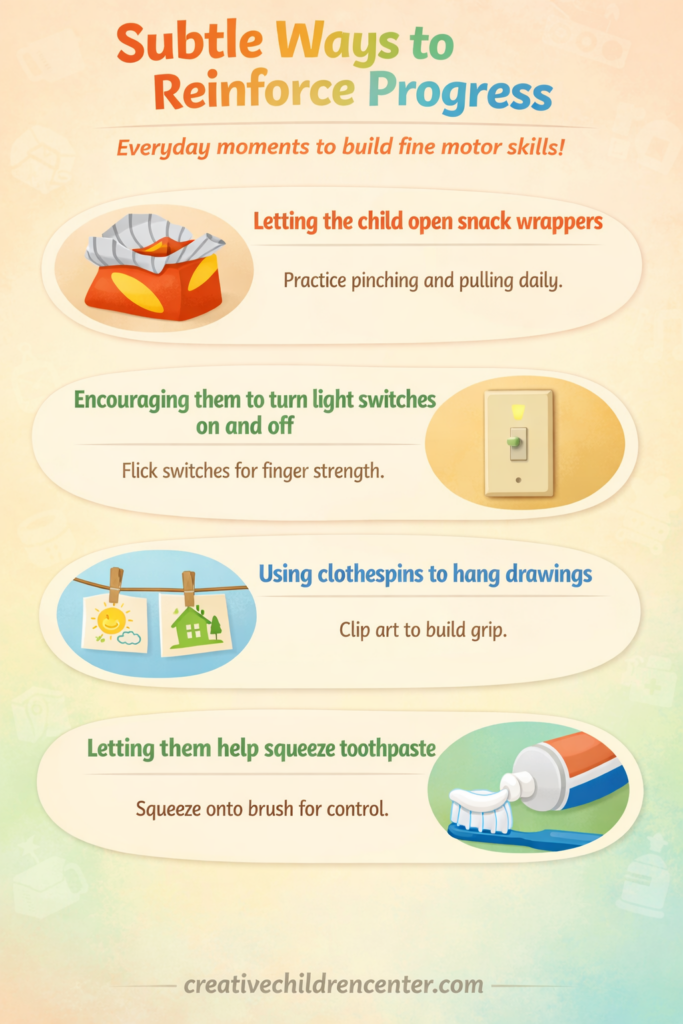
Building strong fine motor foundations doesn’t always require structured tasks. Many parents find success with small rituals:
- Letting the child open snack wrappers on their own
- Encouraging them to turn light switches on and off
- Using clothespins to hang drawings
- Letting them help squeeze toothpaste or open packages
These tiny acts reinforce coordination almost invisibly throughout the day. Over time, they produce the biggest changes because the child experiences natural reward in autonomy.
Wrapping It All Together
Supporting a young child’s fine motor development doesn’t require perfection—it requires patience, presence, and small daily opportunities. Through thoughtfully chosen fine motor skills activities for 3 4 year olds, parents can nurture not just skilled hands but also confident, curious minds. Keep sessions playful, observe often, and let the child lead; skill naturally follows interest.
For families who want guided support and access to expertly designed developmental programs, the educators at Creative Children Center LLC offer structured play sessions and parent workshops tailored to ages three and four. They help transform ordinary play into purposeful growth, giving every child the tools to explore their world with capable, confident hands.