
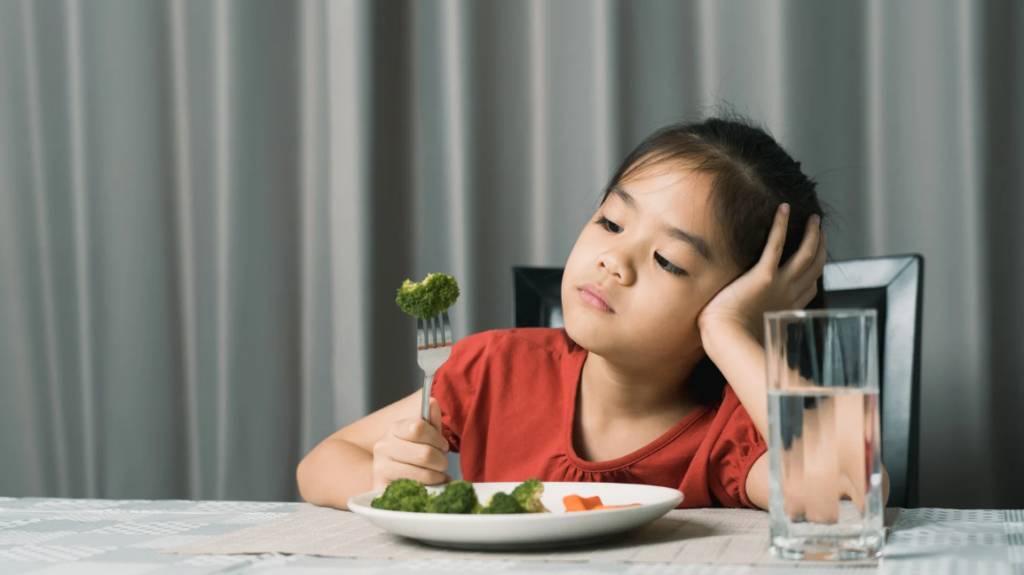
Finding ways to get children to eat fruits and vegetables can feel like a daily challenge. That’s why exploring healthy food ideas for picky eaters is so important. Picky eating is a normal part of toddler and preschool development, as children test boundaries, explore flavors, and assert their independence. While it can be frustrating for parents, there are many creative strategies to encourage kids to enjoy nutritious foods without mealtime stress.
Introducing fruits and vegetables in playful, engaging, and stress-free ways helps children build a positive relationship with healthy eating early on. Whether at home or in a childcare setting, using colorful presentations, involving kids in food prep, and offering a variety of choices can transform mealtime into a fun adventure while helping picky eaters develop lifelong healthy habits.
Understanding Picky Eating in Toddlers and Preschoolers
Picky eating is a natural part of early childhood development. Toddlers and preschoolers are learning to assert independence and are highly sensitive to new tastes, textures, and colors—a phenomenon known as food neophobia. At this stage, children may refuse foods they once liked or reject unfamiliar options entirely.
Forcing or bribing children to eat new foods often backfires, creating negative associations with mealtime. Instead, offering repeated exposure, gentle encouragement, and creative presentations can gradually increase acceptance. Understanding that picky eating is a phase helps parents stay patient and consistent while reinforcing healthy choices.
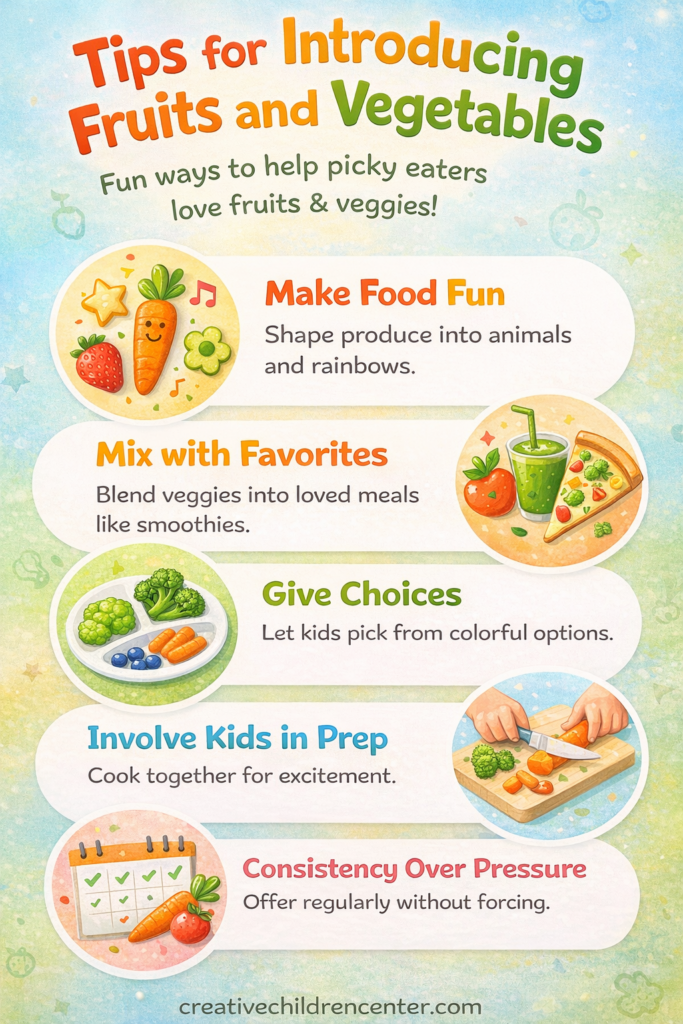
Tips for Introducing Fruits and Vegetables
Using creative healthy food ideas for picky eaters can make fruits and vegetables more exciting and enjoyable. When children see mealtime as fun and engaging, they’re more likely to explore new flavors with curiosity and confidence.
1. Make Food Fun
Presentation matters! Children are naturally drawn to colorful, playful foods. Cutting fruits and vegetables into fun shapes, arranging them in patterns, or giving them creative names—like “dinosaur carrots” or “rainbow peppers”—can make new foods more appealing.
2. Mix with Favorites
Pairing new fruits or vegetables with foods your child already enjoys can increase willingness to try them. For example, adding spinach to a favorite smoothie, mixing shredded zucchini into pasta sauces, or topping a sandwich with colorful veggie slices can subtly introduce new flavors.
3. Give Choices
Offering children small choices empowers them and encourages independence. For example, let them choose between apple slices or grapes, or between carrot sticks and cucumber. This strategy helps children feel in control while still promoting healthy eating.
4. Involve Kids in Prep
Engaging children in simple food preparation—washing, stirring, assembling kabobs—creates curiosity and investment. When children help make their meals, they are more likely to try what they helped prepare.
5. Consistency Over Pressure
Repeated exposure without pressure is key. A child may need to see a new food multiple times before accepting it. Keep offering healthy options alongside familiar favorites, but avoid forcing them to eat it. Over time, new foods become familiar and more likely to be enjoyed.
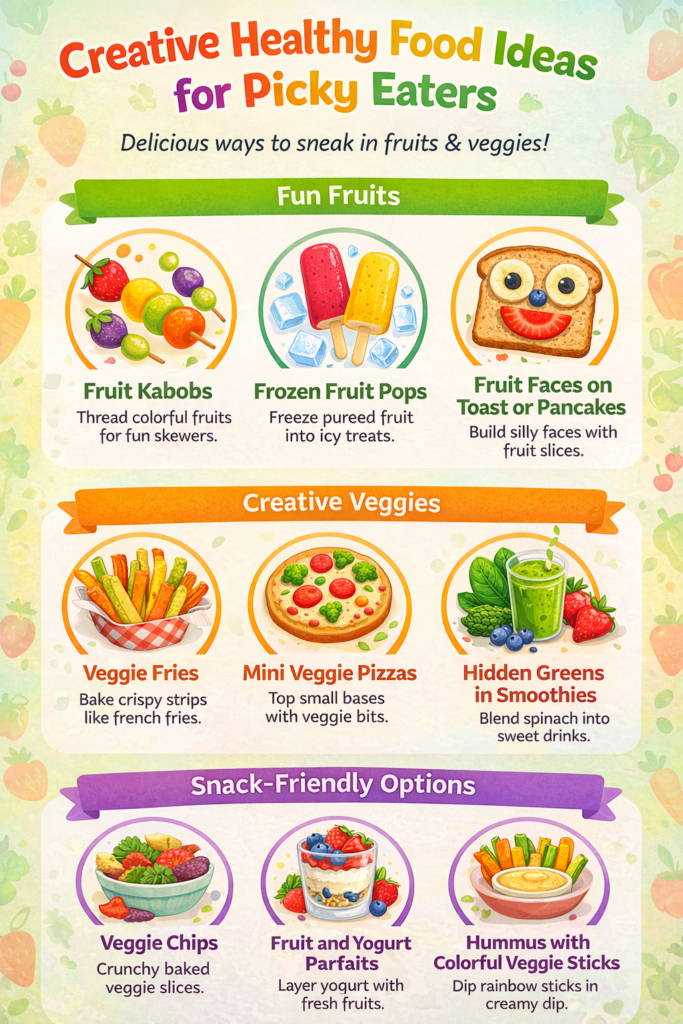
Creative Healthy Food Ideas for Picky Eaters
Using fun and engaging healthy food ideas for picky eaters can transform fruits and vegetables into a hands-on, exciting experience. Children are more willing to try new foods when they are colorful, interactive, and served in small, approachable portions. The following ideas offer practical tips for preparation, presentation, and encouraging kids to explore and enjoy nutritious meals.
Fun Fruits
1. Fruit Kabobs
Healthy food ideas for picky eaters include threading fruits onto skewers, turning colorful snacks into a playful and engaging activity.
- How to prepare: Cut soft fruits like grapes, strawberries, melon, and banana into bite-sized pieces. Thread them onto child-safe skewers or straws.
- How to serve / present: Arrange kabobs in a rainbow pattern or in a cup so kids can pick them up easily. Encourage toddlers to hold and eat the kabobs themselves, fostering independence.
- Parenting tip: Let children choose which fruits to use for their kabob—giving them control increases willingness to try new items.
2. Frozen Fruit Pops
Cold, sweet, and colorful, frozen pops are visually exciting and fun to eat, making fruit appealing even to hesitant eaters.
- How to prepare: Blend fruit with a little water, coconut water, or yogurt. Pour into popsicle molds and freeze.
- How to serve / present: Serve in small, easy-to-hold molds for toddlers, or let preschoolers choose their favorite flavors to mix.
- Parenting tip: Add small chunks of fruit inside the pops for extra texture and engagement.
3. Fruit Faces on Toast or Pancakes
Healthy food ideas for picky eaters combine creativity and food, making healthy options interactive as children enjoy making “faces” or designs with fruits.
- How to prepare: Spread yogurt, nut butter, or cream cheese on toast or pancakes. Use berries, banana slices, or kiwi to create eyes, noses, and smiles.
- How to serve / present: Let children assemble their own designs at the table or plate pre-arranged “fun faces” for toddlers.
- Parenting tip: Praise effort and creativity rather than whether they finish the food—this reinforces positive experiences.
Creative Veggies
1. Veggie Fries
Creative healthy food ideas for picky eaters turn baked vegetable sticks into familiar favorites like French fries, making them more approachable.
- How to prepare: Slice carrots, zucchini, or sweet potatoes into thin sticks. Lightly coat with olive oil, sprinkle a pinch of mild seasoning, and bake until soft.
- How to serve / present: Serve upright in a cup or arranged like “fries” on a plate with a fun dipping sauce (yogurt-based ranch, hummus, or guacamole).
- Parenting tip: Offer one new vegetable at a time to avoid overwhelming toddlers, and allow dipping to increase appeal. You may also check this for more ideas.
2. Mini Veggie Pizzas
Involving children in assembly makes vegetables interactive and visually appealing.
- How to prepare: Use whole-grain crackers or mini pita rounds as the base. Top with tomato sauce, shredded cheese, and finely chopped vegetables. Bake or warm as needed.
- How to serve / present: Let preschoolers add their own toppings to create “personalized pizzas.” Toddlers can help sprinkle cheese or place veggie pieces.
- Parenting tip: Offer a variety of colors (red peppers, green spinach, yellow squash) to make the plate visually stimulating.
3. Hidden Greens in Smoothies
Using healthy food ideas for picky eaters, smoothies are an easy way to incorporate leafy greens without overwhelming taste buds.
- How to prepare: Blend spinach, kale, or avocado with fruits like banana, berries, and a splash of milk or yogurt. Sweet fruits mask the flavor of greens.
- How to serve / present: Pour into small cups with colorful straws for toddlers or mason jars for preschoolers.
- Parenting tip: Let children choose which fruits to add for flavor customization, creating excitement around healthy drinks.
Snack-Friendly Options
1. Veggie Chips
Crunchy textures are appealing, and baking provides a healthier alternative to packaged chips.
- How to prepare: Slice vegetables like sweet potato, beet, or kale thinly. Lightly season and bake until crisp but not burnt.
- How to serve / present: Serve in small bowls or cups for easy toddler access. Arrange a variety of colors for visual appeal.
- Parenting tip: Encourage tasting by presenting them as “fun chips” instead of calling them vegetables—positive framing helps acceptance.
2. Fruit and Yogurt Parfaits
Layered colors and textures make eating visually appealing and interactive.
- How to prepare: Layer yogurt, berries, and a small sprinkle of granola or crushed cereal. Repeat layers for a fun, colorful effect.
- How to serve / present: Serve in clear cups so children can see the layers. Let preschoolers help layer the ingredients themselves.
- Parenting tip: Focus on exploration—children can mix layers themselves, creating curiosity and engagement.
3. Hummus with Colorful Veggie Sticks
Dipping encourages hand-eye coordination and makes vegetables more appealing.
- How to prepare: Cut carrots, cucumbers, bell peppers, and celery into thin sticks. Serve with a small portion of hummus.
- How to serve / present: Arrange sticks in rainbow order to make it playful. Offer a tiny plate for toddlers to self-serve.
- Parenting tip: Let children dip their veggies; participation increases the likelihood they will taste them.
How Childcare Programs Support Healthy Eating
Structured environments like trusted childcare centers play a big role in reinforcing healthy eating habits. Toddlers and preschoolers benefit from predictable meal and snack routines, repeated exposure to fruits and vegetables, and positive modeling from caregivers. These experiences help children explore new foods in a supportive, stress-free environment.
At Creative Children Center LLC, nutritious meals are integrated into both toddler and preschool programs. Children receive thoughtfully planned breakfast, lunch, and afternoon snacks designed to keep growing bodies fueled throughout the day while supporting active learning and healthy development.
Strategies to Encourage Trying New Foods at Home
Parents can use healthy food ideas for picky eaters at home, reinforcing habits similar to those practiced in childcare programs:
- Keep Mealtimes Low-Pressure: Avoid forcing children to eat new foods; encourage exploration instead.
- Praise Effort, Not Outcome: Celebrate when children try or interact with a new food, even if they don’t eat it fully.
- Repeat Exposure: Offer new foods alongside familiar favorites regularly without pressure.
- Encourage Tasting: Ask children to try just one bite, respecting refusals without creating tension.
- Role-Model Healthy Eating: Eat a variety of fruits and vegetables yourself to set a positive example.
Consistency between home and childcare helps children develop confidence and maintain positive eating behaviors.
Overcoming Common Challenges with Picky Eaters
Even with the best healthy food ideas for picky eaters, picky eating can present challenges:
- Texture and Color Aversions: Some children reject foods because of how they look or feel.
- Food Jags: Toddlers may eat only one type of food for days. This is normal and usually temporary.
- Allergies or Sensitivities: Always ensure safe options are available and communicate clearly with caregivers.
The key is patience, creativity, and celebrating small wins. Over time, even the pickiest eaters often expand their preferences with consistent encouragement and positive experiences.
Resources and Tools for Parents

- Kid-Friendly Cookbooks: Books focused on fun, healthy meals for children can spark new ideas.
- Apps for Healthy Meals: Many apps provide recipes, snack ideas, and meal prep tips.
- Nutrition Workshops: Local or online workshops can provide guidance and strategies for families.
- Grocery Shopping Involvement: Bringing children along and letting them pick fruits or vegetables encourages engagement.
These resources support parents in maintaining a consistent approach at home, complementing what children learn in childcare programs.
Final Thoughts: Helping Picky Eaters Thrive with Creative Food Ideas
Introducing fruits and vegetables to picky eaters doesn’t need to be stressful. By offering fun, colorful, and varied foods in a positive environment, parents can help children build healthy habits that last a lifetime. Consistent exposure, creative presentation, and gentle encouragement make trying new foods an exciting experience rather than a struggle.
Structured routines and supportive environments amplify these efforts. Creative Children Center LLC provides toddler and preschool programs that integrate nutritious breakfast, lunch, and afternoon snacks to keep growing bodies fueled throughout the day. By combining thoughtfully planned meals with engaging experiences, children develop positive relationships with food while staying energized and ready to learn. Parents can explore the center’s programs to see how a nurturing, consistent approach to nutrition supports their child’s growth, development, and overall well-being.