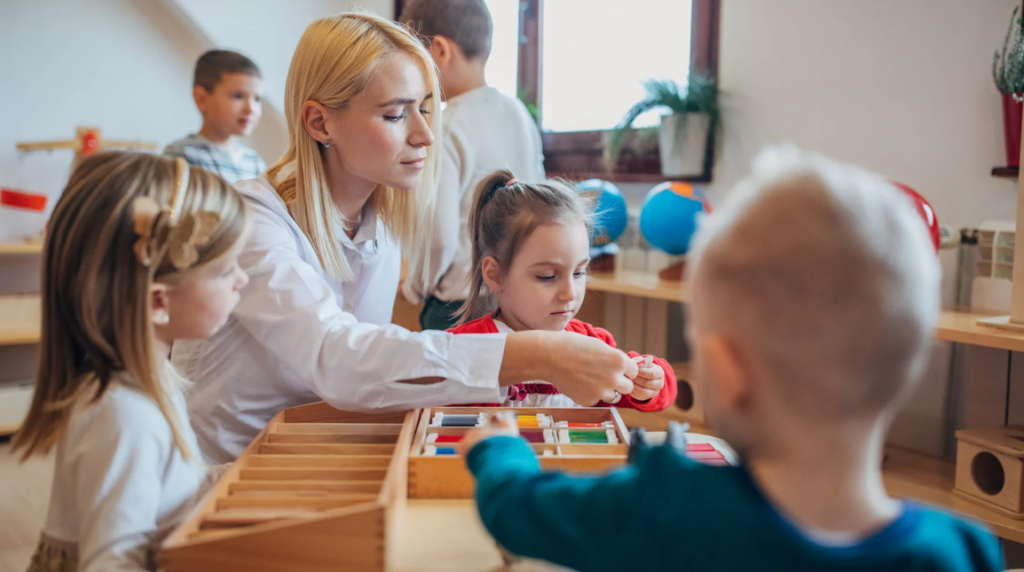
Developing social skills is one of the most important aspects of the preschool years. At this stage, children are learning how to interact with peers, express their feelings, and understand the emotions of others. Among these skills, sharing and cooperation stand out as foundational abilities that help children build friendships, manage conflicts, and navigate group activities successfully.
Parents play a crucial role in guiding these early social experiences. With thoughtful guidance and consistent practice, children can develop the confidence and emotional intelligence needed to interact positively with others. Structured activities both at home and in trusted childcare settings can make learning preschool social skills engaging, hands-on, and enjoyable, transforming challenges into opportunities for growth.
Understanding Preschool Social Skills
Social skills encompass a variety of abilities, including communication, turn-taking, empathy, problem-solving, and cooperation. In preschoolers, these skills develop rapidly as they navigate group settings, explore their independence, and interact with peers. At this age, children learn not just how to share toys or take turns but also how to express emotions appropriately, listen to others, and resolve minor conflicts.
Typical milestones include recognizing others’ feelings, using polite words, negotiating play, and working collaboratively on simple tasks. Children with strong social skills tend to have better peer relationships, exhibit improved emotional regulation, and develop the confidence needed for school and beyond.
Of course, challenges are normal. Some children may struggle with shyness, difficulty sharing, or managing frustration during group activities. Recognizing that these behaviors are a normal part of development allows parents and educators to guide children patiently, using structured activities that teach these skills in a supportive and positive way.
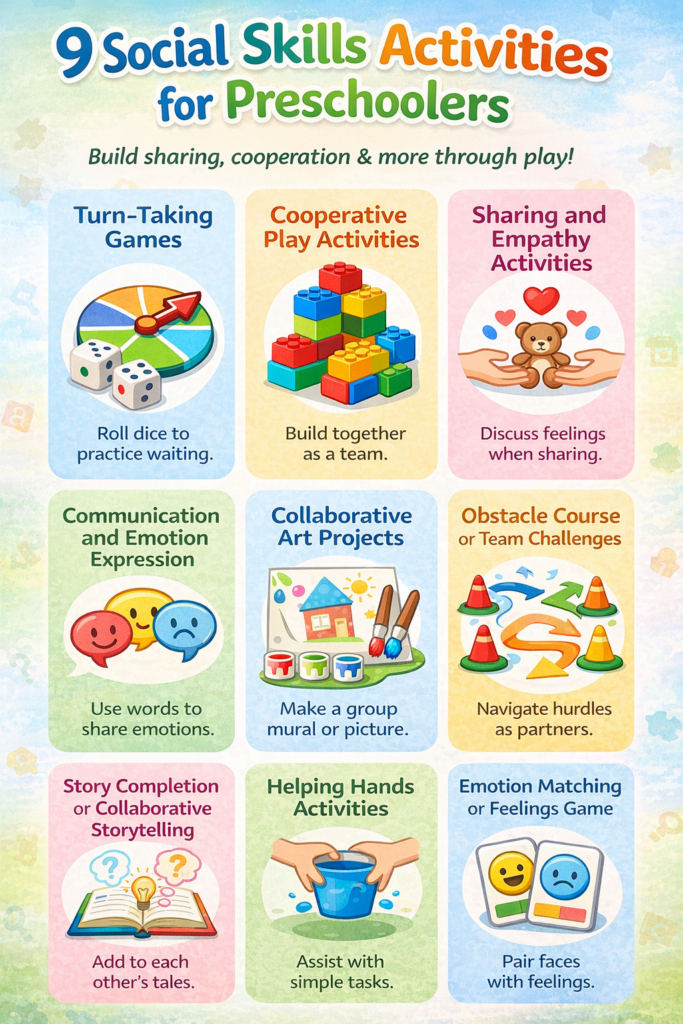
9 Social Skills Activities for Preschoolers
Parents don’t need a formal classroom to support social development. Many simple, playful activities at home can encourage sharing, cooperation, and emotional growth.
1. Turn-Taking Games
Games that require waiting for a turn are ideal for teaching patience and fairness. Examples include board games, simple card games, and stacking or building block challenges. Encourage children to take turns and celebrate each attempt. Use gentle reminders to guide them when disputes arise, emphasizing positive reinforcement over criticism.
2. Cooperative Play Activities
Creative social skills activities for preschoolers, like building a tower together, role-playing, or organizing a pretend store, allow children to practice working toward a shared goal. These activities emphasize teamwork, problem-solving, and compromise. Parents can model cooperative behavior and support children in negotiating ideas, reinforcing the concept that working together yields better results.
3. Sharing and Empathy Activities
Activities that foster empathy help children understand the feelings of others. Examples include passing toys during play, role-playing caring for dolls or pets, and practicing verbal prompts like, “How do you think your friend feels?” After each session, encourage children to reflect on what they did, how it made others feel, and what they might do differently next time.
4. Communication and Emotion Expression
Engaging social skills activities for preschoolers help children learn to express feelings constructively. Feeling charades, storytelling, and simple “I feel…” exercises allow children to identify and verbalize their emotions. Parents can label emotions during daily interactions, model healthy expression, and encourage children to listen to others without judgment.
6. Obstacle Course or Team Challenges
Create simple indoor or backyard obstacle courses where children work together to complete fun tasks. Activities such as passing a ball without dropping it, moving through easy challenges as partners, or carrying an object together as a team help children practice cooperation, communication, and problem-solving while staying active. Here is a list of some easy and creative obstacle course ideas designed especially for young children.
7. Story Completion or Collaborative Storytelling
Interactive social skills activities for preschoolers include starting a story and taking turns adding sentences or events. This activity encourages listening, creativity, patience, and taking turns, while reinforcing that everyone’s contribution is valuable. You can also do a “group puppet show” version for hands-on engagement.
8. “Helping Hands” Activities
Assign small household tasks that children can do together, like sorting laundry by color, watering plants, or tidying up toys. These activities teach responsibility, cooperation, and the satisfaction of contributing to a shared goal.
9. Emotion Matching or Feelings Game
Fun social skills activities for preschoolers involve creating cards with facial expressions or emotion words. Take turns matching the cards with real-life scenarios or acting out feelings. This builds empathy, self-awareness, and understanding of others’ emotions in an interactive, playful way.
Parenting Tip: Keep these activities short, playful, and repeated consistently. Praise effort and participation, not just outcomes, to create positive associations with social learning.
How Creative Children Center LLC Teaches Sharing & Cooperation
At Creative Children Center LLC, social skills are a core part of toddler and preschool programs. The center emphasizes activities that help children practice sharing, turn-taking, and cooperative problem-solving in a supportive environment.
Structured Activities in the Classroom
- Circle Time Discussions: Children gather to talk about feelings, share experiences, and learn to listen attentively.
- Partner and Small Group Projects: Group tasks encourage teamwork, negotiation, and collaborative decision-making.
- Classroom Responsibilities: Assigning roles such as “line leader” or “snack helper” helps children learn responsibility, fairness, and cooperation.
- Guided Play and Cooperative Games: Activities like building challenges, pretend play, or group art projects reinforce collaboration and turn-taking.
- Snack and Lunch Sharing Routines: Mealtime is another structured activity where children practice patience, serving others, and appreciating shared resources.
Teacher Modeling and Guidance
Teachers at Creative Children Center actively model positive social interactions, guiding children through conflicts with patience and structured strategies. By observing adults navigate sharing, cooperation, and problem-solving, children learn practical ways to apply these skills in their own interactions.
Benefits of Center Activities
Through these structured activities, children develop confidence, empathy, and problem-solving abilities. The predictable routines and hands-on guidance ensure that children can practice social skills safely, making learning both consistent and enjoyable. These experiences prepare children not just for school, but for lifelong healthy relationships.
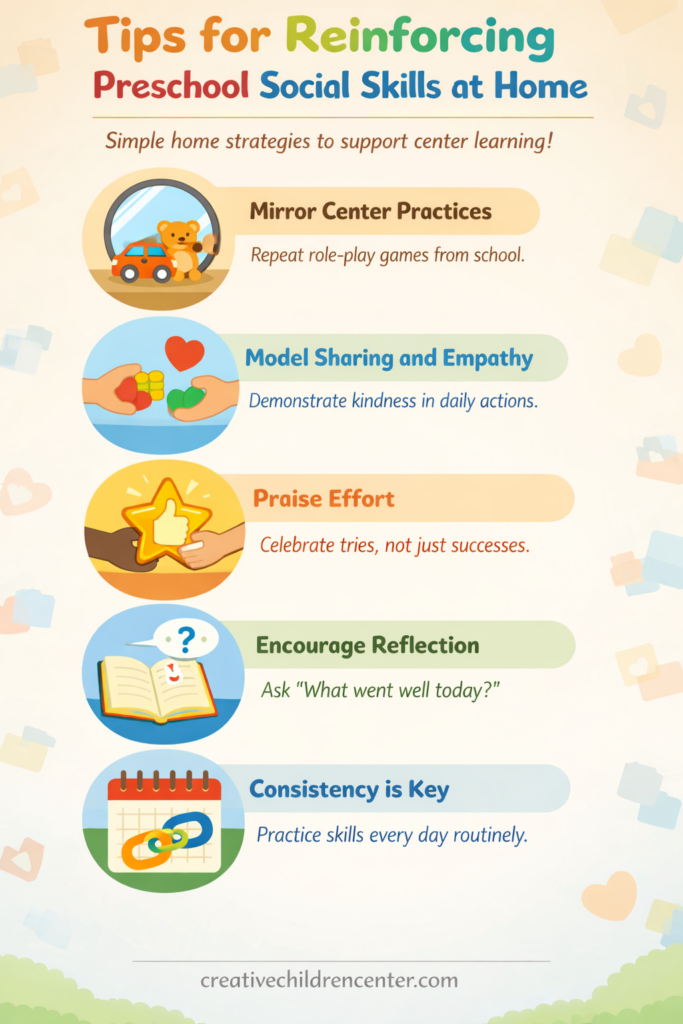
Tips for Reinforcing Preschool Social Skills at Home
The strategies children experience in a childcare setting can be reinforced at home through simple, everyday activities:
- Mirror Center Practices: Use cooperative games, role-playing, and circle-time style discussions at home.
- Model Sharing and Empathy: Show children how to share toys, express feelings, and solve disagreements calmly.
- Praise Effort: Focus on recognizing attempts at cooperation and sharing rather than only outcomes.
- Encourage Reflection: After play, talk about what went well, how others might feel, and what could be done differently.
- Consistency is Key: Short, repeated activities reinforce learning and make preschool social skills a natural part of daily routines.
By integrating these practices at home, parents strengthen the lessons learned at Creative Children Center LLC, helping children generalize their social skills across environments.
Common Challenges and How to Overcome Them
Even with consistent practice, preschoolers may face challenges in developing social skills:
- Conflicts Over Toys: Children may resist sharing or insist on using materials their way. Solution: calmly guide them to take turns and negotiate.
- Limited Attention Spans: Activities may need to be brief, engaging, and age-appropriate.
- Sibling Rivalry or Peer Disputes: Use verbal prompts and reflection exercises to help children understand others’ perspectives.
It’s important to remember that setbacks are normal. Preschool social skills develop gradually, and children benefit from repeated practice, supportive guidance, and plenty of positive reinforcement.
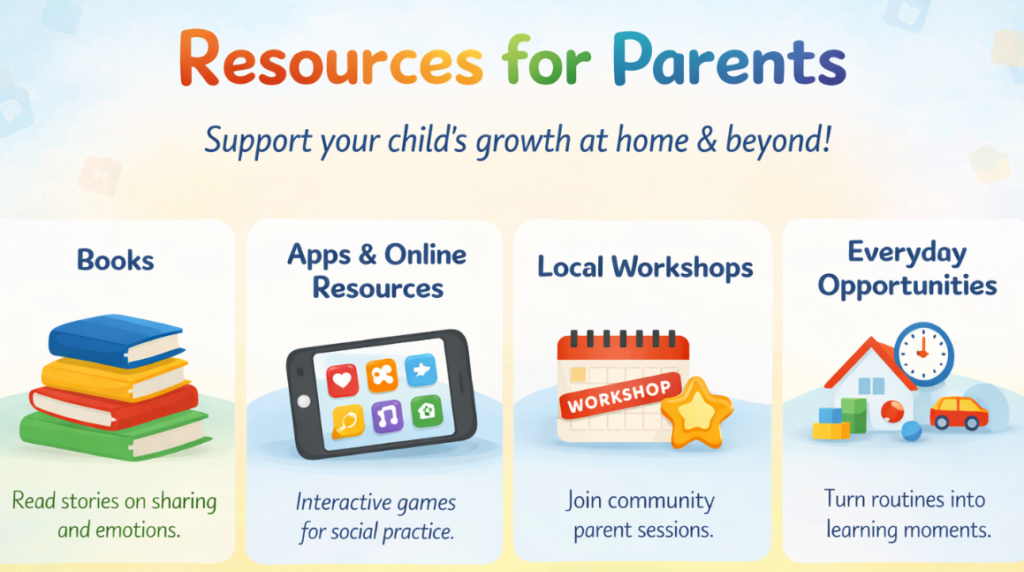
Resources for Parents
Parents can also explore additional resources to support social skill development:
- Books: Stories about sharing, empathy, and teamwork tailored for preschoolers.
- Apps & Online Resources: Interactive games that encourage cooperation, turn-taking, and problem-solving.
- Local Workshops: Parenting workshops or child development classes that demonstrate hands-on activities for social growth.
- Everyday Opportunities: Encourage participation in chores, community projects, or group activities to practice real-life sharing and cooperation.
Final Thoughts: Encouraging Social Growth Through Activities
Developing preschool social skills, especially sharing and cooperation, is a critical part of preschool development. Consistent, playful activities at home and in structured environments help children learn to communicate effectively, empathize with peers, and navigate group interactions successfully. With patience, encouragement, and repetition, children gradually gain confidence in social settings and build lasting relationships.
Structured routines and guided experiences amplify these efforts. Creative Children Center LLC provides toddler and preschool programs that integrate hands-on activities designed to teach sharing, cooperation, and other essential preschool social skills. Through circle time, group projects, cooperative games, and daily routines, children learn to engage positively with peers, develop empathy, and strengthen problem-solving skills. Parents can explore Creative Children Center’s programs to see how a nurturing, activity-based approach supports lifelong social growth and prepares children for confident, meaningful interactions.