

For many parents, there’s a quiet moment when a question starts to linger: “Should my child be talking more by now?” It might come during a playdate when another child is speaking in full sentences, or at home when gestures and sounds seem to replace words. These moments can feel small—but the uncertainty behind them isn’t.
Speech development doesn’t follow a perfectly straight line. Some children talk early and often. Others take their time. The challenge is knowing the difference between a normal variation and a delay that may need attention. And right now, more families are asking this question—not because children have suddenly changed, but because awareness around early development has grown.
This article breaks down what speech delay actually means, what typical development looks like across ages, and when it’s worth taking a closer look. The goal isn’t to create worry—it’s to give parents clear, grounded guidance so they can make confident decisions.
What Is Speech Delay—and What Isn’t?
Speech delay refers to a child developing speech and language skills later than expected for their age. That sounds straightforward, but in practice, it’s often misunderstood.
Here’s the distinction that matters:
- Speech is the ability to produce sounds and words clearly
- Language is broader—it includes understanding, using gestures, forming sentences, and communicating ideas
A child may have delayed speech but strong language skills (for example, understanding instructions but not speaking much). Or they may struggle with both.
This is usually overlooked, but it matters:
Not all late talkers have a developmental issue. Some are simply slower to express themselves verbally while still learning in other ways.
Typical Speech and Language Milestones by Age
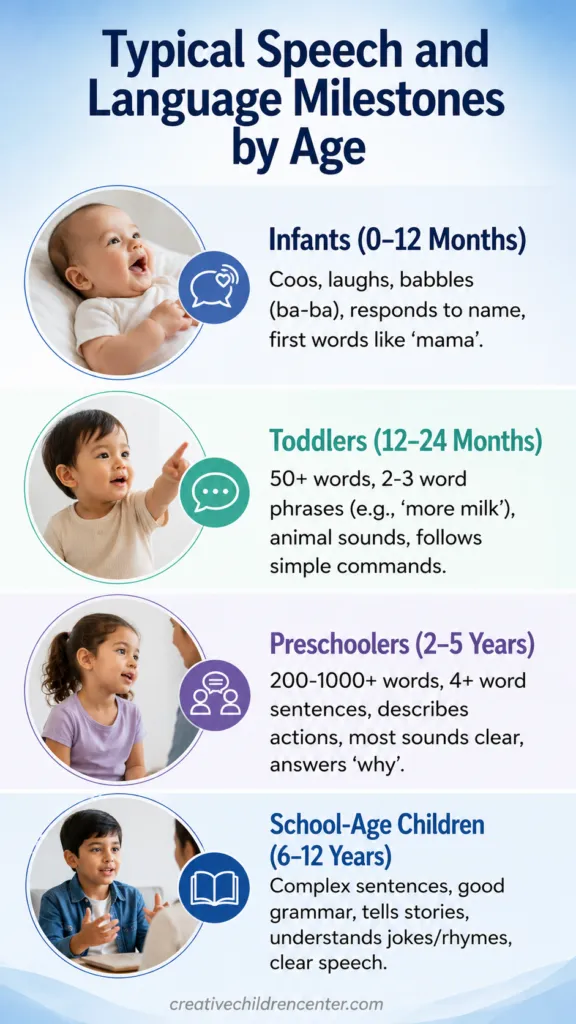
Development varies, but there are general patterns professionals look for. These aren’t strict deadlines—but they offer helpful reference points.
Infants (0–12 Months)
- Respond to sounds and voices
- Babble (e.g., “ba-ba,” “da-da”)
- Use gestures like pointing or waving
- Recognize familiar words like their name
At this stage, communication is mostly nonverbal—but it’s active.
Toddlers (12–24 Months)
- Say first words (around 12–15 months)
- Build a vocabulary of 10–50 words by 18 months
- Begin combining simple words (“more milk”)
- Follow simple instructions
Some children talk earlier, others later—but steady progress is key.
Preschoolers (2–5 Years)
- Rapid vocabulary growth
- Use short sentences by age 2–3
- Ask questions and express needs clearly
- Be understood by familiar adults most of the time
By age 4–5, most children can hold simple conversations.
School-Age Children (6–12 Years)
- Speak clearly in full sentences
- Understand complex instructions
- Use language for storytelling, reasoning, and social interaction
At this stage, speech issues are less about “talking” and more about clarity, comprehension, or expression.
When Is It Just Normal Variation?
Here’s where things can get confusing.
Some children:
- Focus more on physical development first (walking, climbing)
- Are naturally quieter or more observant
- Grow up in bilingual environments
- Prefer gestures before words
In these cases, speech may come later—but still within a healthy range.
This is why experienced caregivers look at the whole child, not just word count. If a child:
- Understands what’s being said
- Responds to communication
- Shows interest in interaction
…it’s often a sign development is progressing, even if speech is slower.
When Parents Should Pay Closer Attention
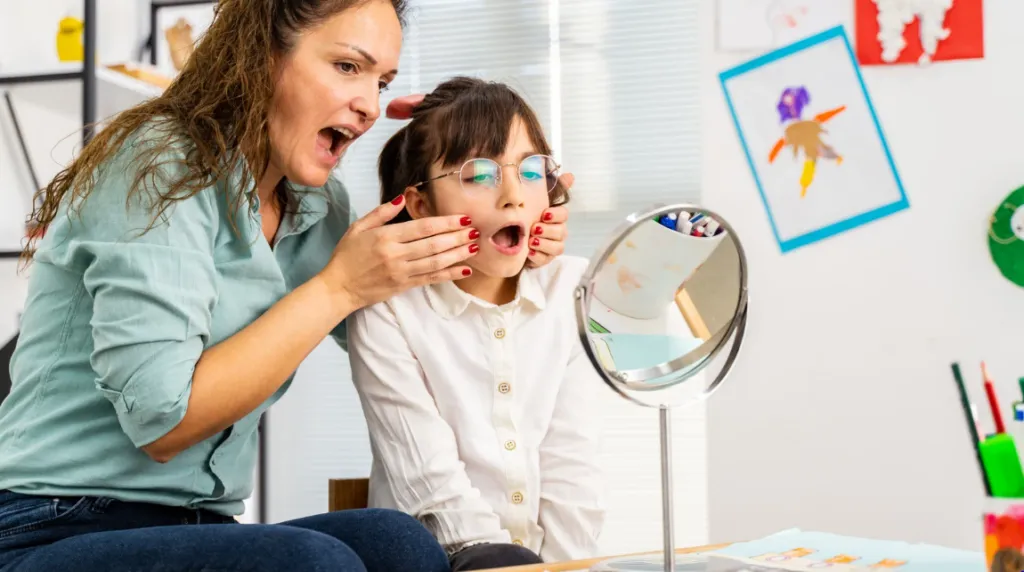
Here’s where things often go wrong—either concerns are dismissed too quickly, or every delay causes alarm.
Instead, it helps to watch for specific patterns.
Red Flags by Age
By 12–15 Months
- No babbling or very limited sounds
- No response to name
- No gestures (pointing, waving)
By 18–24 Months
- No spoken words
- Limited understanding of simple instructions
- Little interest in communicating
By 2–3 Years
- Not combining words
- Difficulty being understood by caregivers
- Frustration when trying to communicate
By 4 Years and Beyond
- Speech is unclear to unfamiliar listeners
- Trouble forming sentences
- Difficulty following directions or expressing ideas
These signs don’t automatically mean something serious—but they do suggest it’s worth exploring further.
Common Causes of Speech Delay
Speech delay isn’t one-size-fits-all. There are several possible reasons, and sometimes it’s a combination.
Hearing Issues
If a child can’t hear clearly, speech development is naturally affected. Even mild or temporary hearing loss can play a role.
Developmental Differences
Conditions like language disorders or broader developmental delays can impact communication.
Environmental Factors
Limited interaction, reduced conversation, or heavy screen exposure may slow language development.
Personality and Temperament
Some children are simply less verbal early on. They may catch up quickly later.
This is where nuance matters—there isn’t always a single cause or clear answer right away.
What Parents Can Do at Home
Before jumping to conclusions, there are practical ways to support speech development daily.
1. Talk More Than You Think You Need To
Describe actions, label objects, and narrate routines:
- “We’re putting on your shoes”
- “That’s a red ball”
It may feel repetitive—but repetition builds language.
2. Read Together Every Day
Books expose children to vocabulary and structure.
Even for toddlers:
- Point to pictures
- Ask simple questions
- Let them turn pages
Consistency matters more than length.
3. Encourage, Don’t Pressure
If a child struggles to say a word, gently model it instead of correcting:
- Child: “Ba”
- Adult: “Ball, yes, that’s a ball!”
Pressure can create frustration, which may reduce communication attempts.
4. Limit Passive Screen Time
This is usually overlooked, but it matters.
Screens don’t respond, pause, or adapt like real conversation does. Language develops best through interaction—not observation.
5. Create Opportunities to Communicate
Instead of anticipating every need:
- Pause and wait for a response
- Offer choices (“Do you want milk or water?”)
- Encourage pointing or verbal attempts
Small moments add up.

When to Seek Professional Support
If concerns persist, early support can make a significant difference.
Parents may consider:
- Talking to a pediatrician
- Requesting a hearing evaluation
- Consulting a speech-language professional
Here’s the important part:
Seeking help doesn’t mean something is “wrong.” It means you’re gathering information and supporting your child early.
And in many cases, early intervention leads to faster progress.
Myth: “They’ll Grow Out of It—Just Wait”
This is one of the most common—and risky—assumptions.
Yes, some children do catch up on their own. But others benefit greatly from early support.
The challenge is that waiting too long can delay progress unnecessarily.
A more balanced approach is:
- Monitor development closely
- Support language at home
- Seek guidance if progress stalls
It’s not about rushing—it’s about staying informed.
Why Early Awareness Matters
Speech and language are foundational skills. They influence:
- Learning
- Social interaction
- Confidence
- Emotional expression
When children struggle to communicate, it can affect more than just words. It can impact how they connect with others and navigate their environment.
That’s why early awareness—not panic, but awareness—is so important.
When It’s Not So Clear (And That’s Normal)
Some situations fall into a gray area:
- A child who understands everything but speaks very little
- A bilingual child mixing languages
- A child making progress—but slowly
In these cases, there’s rarely a simple yes-or-no answer.
This is where experience and observation matter most. Patterns over time tell a clearer story than any single moment.
What Parents Should Focus on First
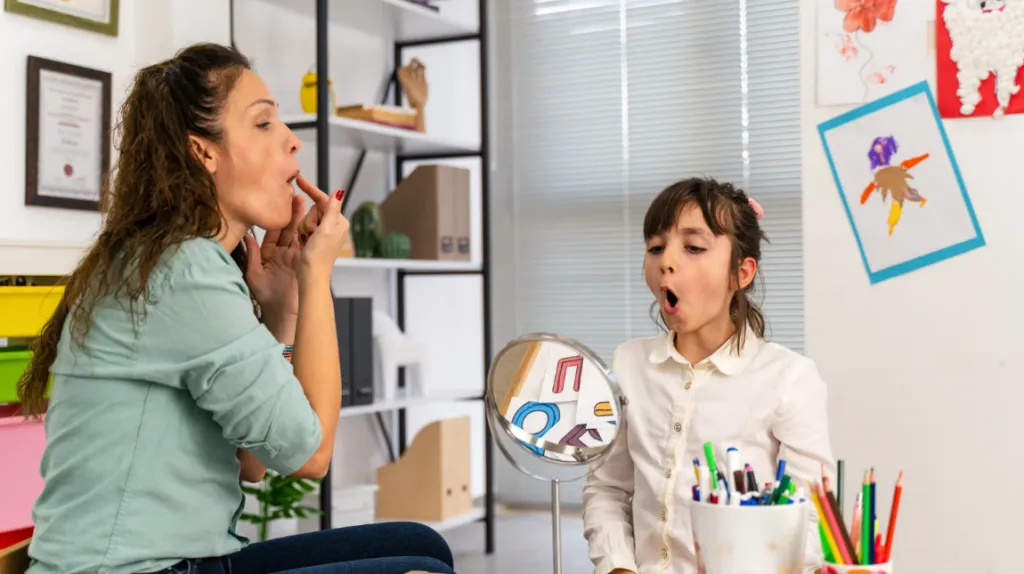
If everything feels overwhelming, start here:
- Observe patterns, not isolated behaviors
- Support communication daily through interaction
- Trust concerns—but verify them with guidance
These steps keep the approach grounded and proactive without being reactive.
A Clearer Way to Understand Your Child’s Speech Development
Speech delay versus normal development isn’t always easy to distinguish—but it becomes clearer when parents look at the full picture: understanding, interaction, progress over time, and overall communication. Some children will take a little longer and catch up naturally, while others may benefit from additional support. The key is staying observant, responsive, and willing to take the next step when something doesn’t feel quite right.
For families navigating these questions, having a supportive environment makes a meaningful difference. At Creative Children Center LLC, children are guided through every stage of development with attentive care, language-rich interactions, and programs designed to nurture communication skills naturally. Through play, conversation, and thoughtful observation, children are given the space and support they need to grow, express themselves, and build confidence in their own voice.