
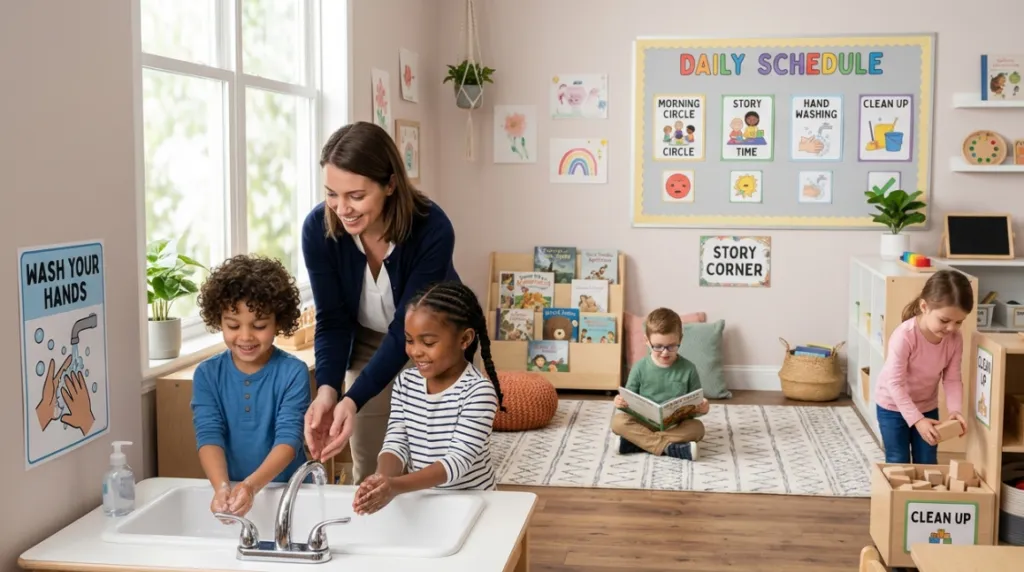
Building healthy habits in early childhood is not just about rules or schedules—it’s about creating a sense of safety, predictability, and confidence in a child’s everyday world. When children know what comes next, they feel more secure and are better able to focus on learning, exploring, and connecting with others. This is where the importance of routine becomes especially powerful in shaping growing minds.
Routines are more than just daily time blocks; they are the invisible structure that helps children understand their environment. From morning wake-ups to bedtime rituals, predictable patterns help reduce anxiety, improve behavior, and support emotional development. Over time, these small daily habits build a foundation for lifelong discipline, independence, and healthy decision-making.
Importance of Routine for Developing Brains
A child’s brain develops rapidly in the early years, forming millions of neural connections every second. Recognizing the importance of routine helps adults provide the repetition and consistency needed to strengthen these vital connections for healthy cognitive development.
When routines are consistent, children:
- Learn cause-and-effect relationships more easily
- Develop stronger memory and recall skills
- Build attention span and focus
- Feel safer in unfamiliar environments
Predictability also reduces decision fatigue. Instead of constantly wondering what will happen next, children can direct their energy toward learning and play. This stability allows their brains to shift from “stress response mode” into “growth and learning mode,” where real development happens.
In contrast, unpredictable environments can lead to confusion or anxiety. While some flexibility is healthy, too much inconsistency can make it harder for children to regulate behavior and emotions.
How Routine Shapes Emotional Regulation
One of the most overlooked benefits of structure is how it impacts emotional control. When we look at the importance of routine, we see how daily predictability helps children learn how to manage big feelings like frustration, sadness, and excitement.
A stable routine helps by:
- Creating emotional predictability throughout the day
- Reducing sudden transitions that can trigger meltdowns
- Teaching patience through repeated patterns
- Encouraging self-soothing behaviors over time
For example, when a child knows that playtime always comes after snack time, they are less likely to become upset during transitions. This predictability builds trust in their environment and teaches them that their needs will be met consistently.
Over time, this strengthens emotional resilience. Children begin to internalize structure, which later helps them manage school expectations, friendships, and responsibilities with more confidence.
Routine and Early Learning Skills
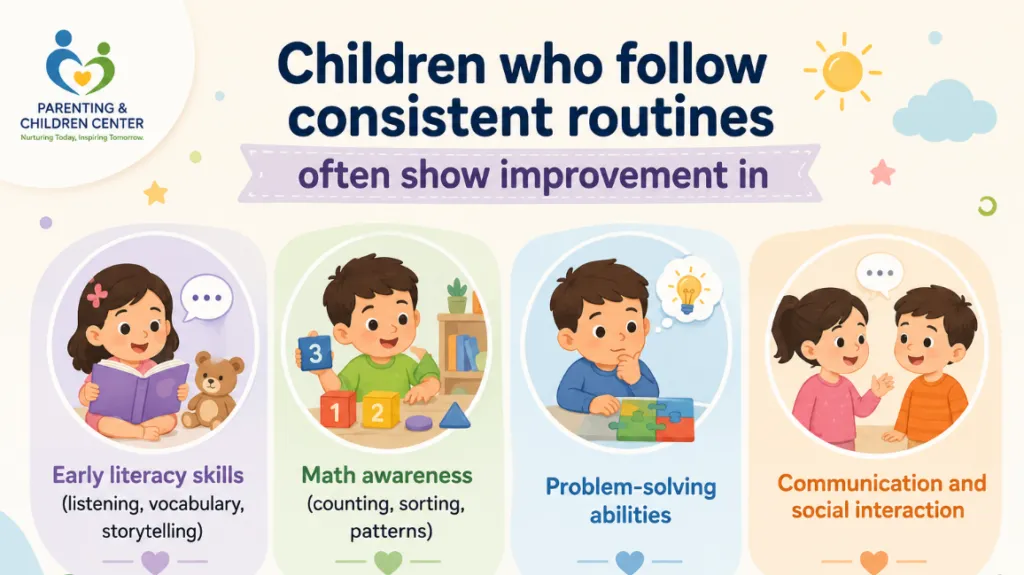
Learning doesn’t just happen during structured lessons—it happens throughout the day. Embracing the importance of routine supports early academic development by creating repeated opportunities for practice and reinforcement. Children who follow consistent routines often show improvement in
- Early literacy skills (listening, vocabulary, storytelling)
- Math awareness (counting, sorting, patterns)
- Problem-solving abilities
- Communication and social interaction
Routines also help children transition smoothly between activities, which is a critical skill in school environments. Instead of resisting change, they learn to adapt because they understand that each part of the day has a purpose.
For parents looking to understand developmental expectations, resources like the Child Development Milestones Guide can be helpful in connecting daily routines with age-appropriate skills and behaviors.
Daily Routine Components for Children
A balanced structure reflects the importance of routine while leaving room for flexibility, play, and rest. The goal is consistency, not perfection. Here are the key components of a healthy daily routine:
Morning routine
- Wake-up time consistency
- Hygiene habits (brushing teeth, washing face)
- Simple breakfast routine
- Positive start to the day (songs, greetings, calm transition)
Learning and activity time
- Story time or reading
- Creative play (art, building, pretend play)
- Guided learning activities
Physical activity
- Outdoor play or movement games
- Gross motor skill development (running, climbing, dancing)
Meal and snack times
- Predictable eating schedule
- Social interaction during meals
- Encouraging independence (self-feeding, cleanup)
Rest or quiet time
- Nap time for younger children
- Quiet reading or calming activities for older children
Evening wind-down
- Bath or hygiene routine
- Calm activities (storytelling, soft music)
- Consistent bedtime schedule
Each of these elements works together to create stability and reduce stress throughout the day.
Age-Based Expectations in Routine Development
Routines must always match a child’s developmental stage. When applying the importance of routine, parents must realize that what works for a toddler will not be the same as what works for a school-age child.
Infants and Toddlers (1–3 years)
- Short, simple routines repeated daily
- Focus on feeding, sleep, and comfort
- Strong reliance on caregiver guidance
- Frequent transitions between rest and activity
Preschool Age (3–5 years)
- More structured daily flow
- Introduction of learning blocks and group activities
- Increased independence in small tasks
- Better understanding of sequence (first, next, then)
School-Age Children (6–12 years)
- Clear morning and after-school routines
- Homework and study time included
- Responsibility for personal tasks (packing, organizing)
- Ability to follow multi-step schedules
Each stage builds on the previous one, helping children gradually take ownership of their daily habits.
Common Mistakes Parents Make with Routine
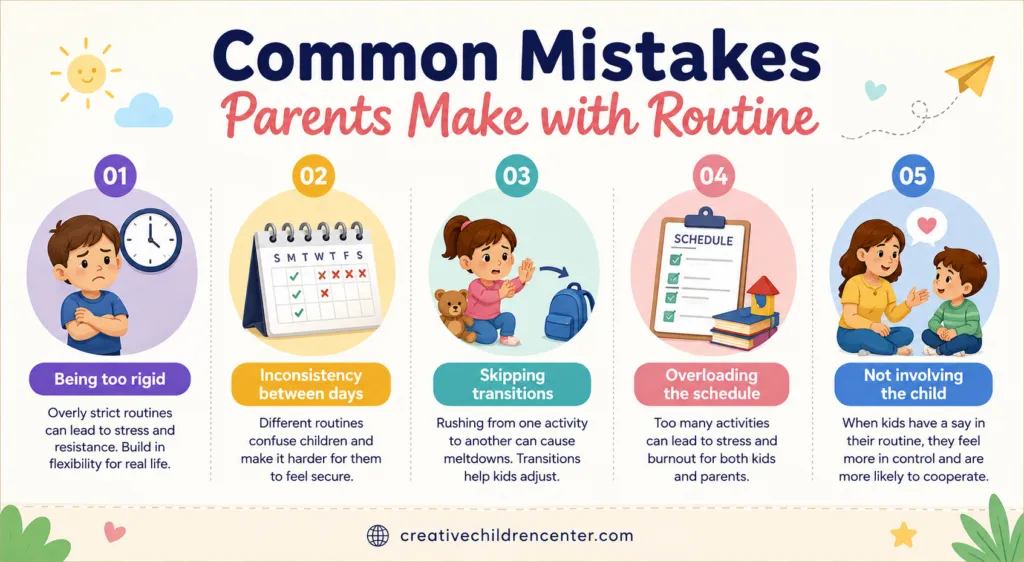
Even with good intentions, maintaining structure can be challenging. Here are some common pitfalls:
- Being too rigid: Overly strict schedules can create stress instead of stability
- Inconsistency between days: Changing routines too often confuses children
- Skipping transitions: Not preparing children for what’s next can lead to resistance
- Overloading the schedule: Too many activities can lead to burnout and frustration
- Not involving the child: Children are more likely to follow routines they understand and help create
The goal is not perfection, but consistency with flexibility. A healthy routine adapts to real life while still maintaining structure.
How to Build a Routine That Sticks
Building a successful routine takes time, patience, and repetition. When parents understand the importance of routine, they can create consistent, realistic structures that actually work in everyday family life. A routine doesn’t need to be complicated—it needs to be repeatable, predictable, and easy enough to follow even on busy days.
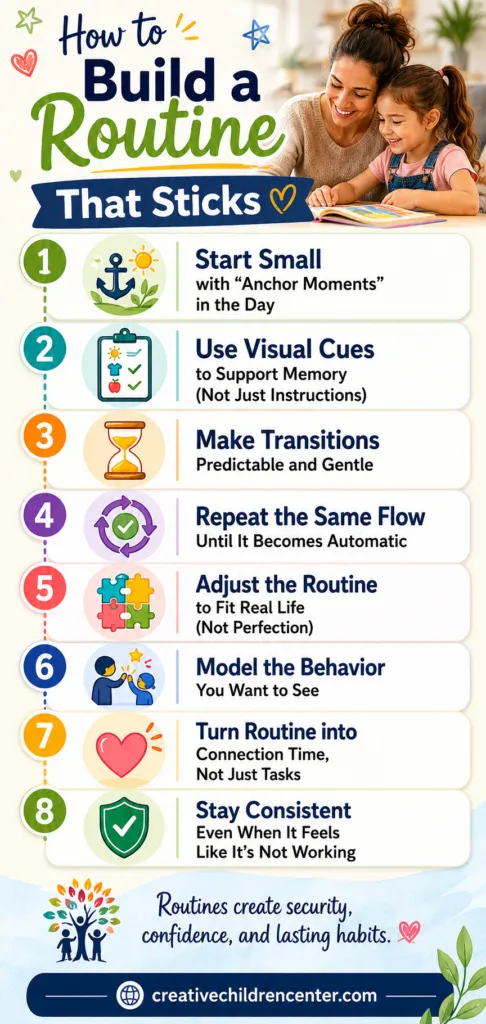
Here are expanded, actionable steps parents can use to build routines that truly last:
1. Start Small with “Anchor Moments” in the Day
Instead of trying to structure the entire day at once, focus on 1–2 key anchor routines that naturally shape everything else. These are the moments that stay consistent no matter how busy life gets.
Try starting with:
- Morning wake-up routine
- Bedtime routine
- After-school wind-down routine
- Mealtime routine
Make it practical:
- Keep the steps short and simple (3–5 steps max)
- Do them in the same order every day
- Avoid overloading with too many expectations at once
For example, a bedtime routine could look like:
Bath → Pajamas → Brush teeth → Story time → Sleep
Once this becomes natural, you can gradually add more structure elsewhere in the day.
2. Use Visual Cues to Support Memory (Not Just Instructions)
Young children don’t always respond well to verbal reminders alone. Visual cues help them see what comes next, making routines easier to follow independently.
Practical ways to do this:
- Create a simple picture chart of daily activities
- Use stickers or drawings for each step
- Hang a “daily flow board” at child eye level
- Let your child move an arrow or marker as they complete steps
This turns routine into something interactive instead of something they are constantly being told to do. It also builds independence because they begin to “check the schedule” on their own.
3. Make Transitions Predictable and Gentle
One of the biggest challenges for children is switching from one activity to another. Sudden changes often lead to resistance or emotional outbursts, especially in younger children.
To make transitions smoother:
- Give advance warnings (“5 more minutes of play, then we clean up”)
- Use countdowns (“2 more slides, then we go home”)
- Keep transition language consistent each time
- Use simple cues like songs or timers to signal change
Over time, children begin to associate these cues with what happens next, reducing resistance and stress.
4. Repeat the Same Flow Until It Becomes Automatic
Children don’t learn routines through explanation—they learn through repetition. The goal is to make the sequence so familiar that it feels natural, not forced.
To reinforce consistency:
- Follow the same order of activities every day
- Avoid changing steps frequently in the beginning
- Stick to the routine even on weekends when possible
- Expect repetition for several weeks, not days
Think of it like building a path in the brain—the more it is walked, the clearer it becomes.
Even if it feels repetitive for adults, it creates emotional security for children because they know what to expect.
5. Adjust the Routine to Fit Real Life (Not Perfection)
A routine that only works on “perfect days” won’t last. Life with children is flexible, so the routine should be too—but within a stable structure.
Helpful mindset shifts:
- Aim for consistency, not perfection
- Allow flexibility in timing, not in the overall structure
- If a step is missed, return to the routine without stress
- Have a “minimum version” of your routine for busy days
For example, a simplified bedtime routine might be:
Brush teeth → Story → Sleep
This prevents routines from breaking completely on hectic days.
6. Model the Behavior You Want to See
Children learn more from what they observe than what they are told. If they see adults following structure, they naturally begin to mirror it.
Parents can model routines by:
- Following a consistent morning and bedtime pattern themselves
- Narrating actions (“I’m putting my shoes here so I can find them tomorrow”)
- Staying calm during transitions instead of rushing or reacting emotionally
- Showing organization in daily tasks
When children see structure in action, they understand that routines are not rules imposed on them—they are normal parts of life.
7. Turn Routine into Connection Time, Not Just Tasks
A routine is more effective when it includes emotional connection. Children are far more likely to cooperate when they feel seen and engaged.
Simple ways to add connection:
- Talk during routines (ask about their day during bath time)
- Add small moments of play (sing a song during cleanup)
- Offer choices within structure (“Do you want the blue pajamas or red ones?”)
- Celebrate small wins (“You did that all by yourself!”)
These moments transform routine from something mechanical into something meaningful.
8. Stay Consistent Even When It Feels Like It’s Not Working
There will be days when children resist, forget steps, or push back against structure. This is normal. Routines often feel “messy” before they feel natural.
What helps:
- Stay calm and repeat the steps consistently
- Avoid giving up the routine after difficult days
- Focus on long-term progress, not daily perfection
- Remind yourself that learning takes repetition
Eventually, the routine becomes second nature—and that’s when you start seeing real behavior changes.
Why Routine Builds Lifelong Confidence and Success
The real value of routine goes far beyond childhood behavior. When children understand the importance of routine, they learn how to approach challenges, manage time, and build discipline later in life. A strong early structure teaches them that consistency leads to success and that their environment can be trusted.
Children who grow up with healthy routines often become:
- More independent
- Better at time management
- Emotionally stable under pressure
- More confident in new situations
This is why routine is not just about managing the present—it is about preparing for the future.
Building Strong Foundations for a Lifetime of Growth
At its core, childhood development is about creating a balance between freedom and structure. When routines are thoughtfully designed, they give children the tools they need to explore the world with confidence while still feeling secure.
Understanding the importance of routine helps caregivers create environments where children can thrive emotionally, socially, and intellectually. Every small daily habit contributes to a much bigger picture of growth and lifelong learning.For families seeking a supportive environment that reinforces these principles through play, learning, and care, Creative Children Center LLC offers a nurturing space designed to support early development. If you are ready to explore a place where structure meets creativity, Learn About Our Toddler Program and discover how strong early routines can help children build a confident and joyful start in life.