
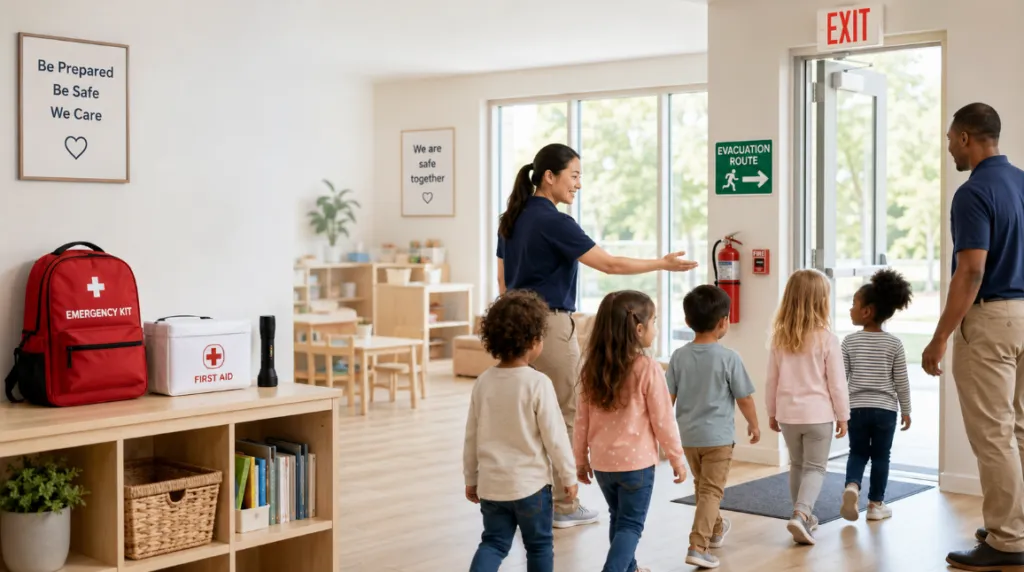
Choosing a childcare center is one of the most emotional and important decisions a parent can make. Beyond curriculum, activities, and learning environments, parents are quietly asking a deeper question: “Will my child be safe when I’m not there?” That concern becomes even more serious when thinking about unexpected situations that can happen at any time during the day.
This is where understanding childcare emergency preparedness becomes essential. It is not just about policies written on paper—it is about real actions, trained staff, and systems that protect children during unexpected events like injuries, fires, severe weather, or health incidents. Knowing what to look for before enrolling helps parents feel more confident and ensures children are placed in environments that take safety seriously.
Why Emergency Preparedness Matters in Childcare Settings
Childcare environments are dynamic. Children are active, curious, and still developing awareness of risk. Because of this, even well-supervised spaces can face unexpected situations. Emergency preparedness ensures that when something does go wrong, the response is immediate, calm, and effective.
A well-prepared childcare center doesn’t wait for emergencies to happen—it actively plans for them. This includes training, drills, communication systems, and safety protocols designed to minimize harm and prevent confusion during stressful moments.
Key reasons emergency preparedness is critical include:
- Young children may not recognize danger quickly
- Staff must respond instantly without hesitation
- Parents need reassurance that procedures are reliable
- Emergencies can escalate quickly without structure
- Clear planning reduces panic and confusion
Ultimately, preparedness is not about fear—it is about control, readiness, and protection.
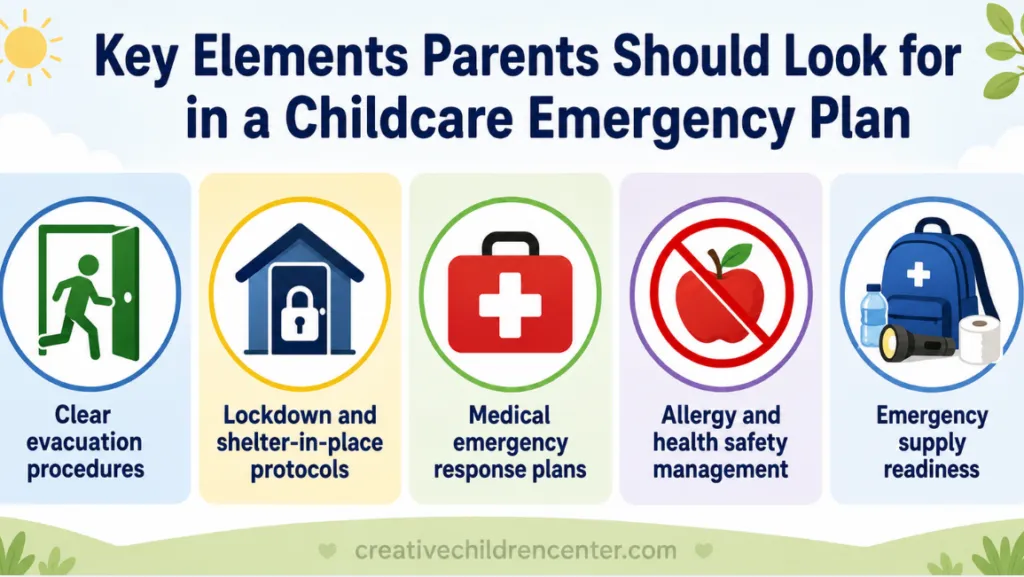
Key Elements Parents Should Look for in a Childcare Emergency Plan
When evaluating a childcare center, parents should look beyond surface-level promises and ask for specific details about safety systems. Strong emergency plans are structured, practiced, and easy to explain.
Important components include:
1. Clear evacuation procedures
- Step-by-step plans for fire or building evacuation
- Designated safe meeting areas
- Regularly practiced drills for children and staff
2. Lockdown and shelter-in-place protocols
- Procedures for external threats or severe weather
- Secure classroom locking systems
- Quiet, controlled environments during emergencies
3. Medical emergency response plans
- Immediate first aid procedures
- Staff trained in CPR and child first aid
- Clear steps for contacting emergency services
4. Allergy and health safety management
- Awareness of severe allergies and medical conditions
- Proper medication storage and administration rules
- Emergency action plans for allergic reactions
5. Emergency supply readiness
- First aid kits in accessible locations
- Emergency contact lists updated regularly
- Basic survival supplies for extended incidents
A strong childcare emergency plan should feel organized, not improvised. Parents should feel that every possible scenario has been thought through carefully.
Staff Training and Response Readiness
Even the best emergency plan is only as effective as the people carrying it out. That is why staff training is one of the most important indicators of safety quality in a childcare environment.
Well-trained staff members know how to stay calm under pressure and follow procedures without hesitation. Training is not a one-time requirement—it should be ongoing and regularly updated.
Parents should look for:
1. CPR and first aid certification
- All caregivers trained, not just supervisors
- Refresher courses completed regularly
2. Emergency simulation drills
- Fire drills conducted monthly or quarterly
- Practice for lockdown and evacuation scenarios
- Age-appropriate instruction for children
3. Crisis communication training
- How staff communicate during high-stress events
- Clear reporting lines within the center
- Coordination with emergency responders
4. Behavioral management under stress
- Keeping children calm during emergencies
- Preventing panic and confusion
- Maintaining supervision at all times
Strong training builds confidence—not only for staff but also for parents who trust them with their children.
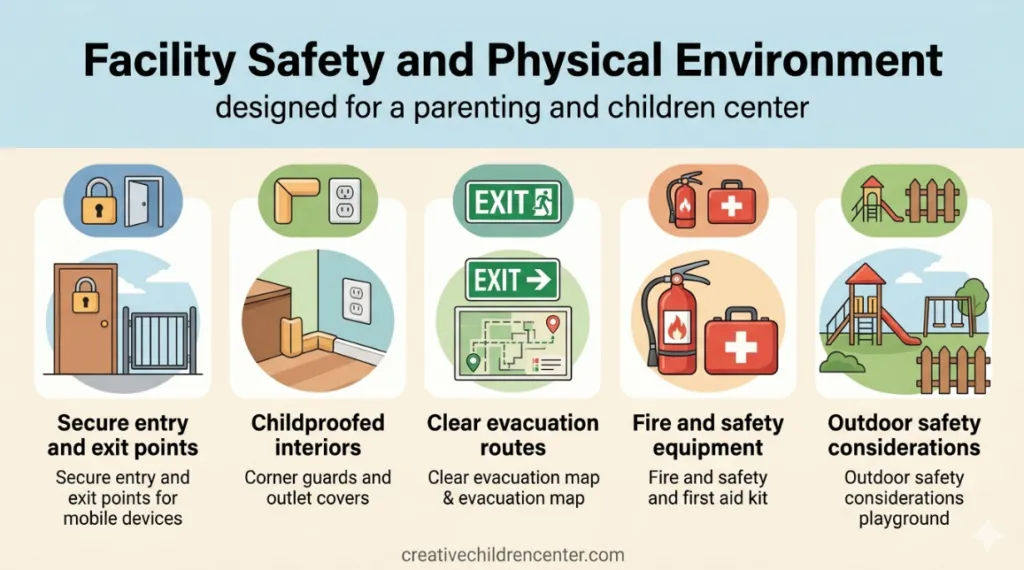
Facility Safety and Physical Environment
The physical setup of a facility plays a major role in childcare emergency readiness. Even with well-trained staff, unsafe environments can increase risk during unexpected situations. Parents should evaluate whether the center includes:
1. Secure entry and exit points
- Controlled access to prevent unauthorized entry
- Visitor sign-in systems
- Locked doors during operating hours
2. Childproofed interiors
- Covered electrical outlets
- Secure furniture and shelving
- Safe play areas with soft surfaces
3. Clear evacuation routes
- Visible exit signage
- Unblocked pathways
- Easy access for emergency responders
4. Fire and safety equipment
- Smoke detectors and alarms in working condition
- Fire extinguishers placed appropriately
- Regular safety inspections
5. Outdoor safety considerations
- Fenced play areas
- Supervised outdoor activities
- Safe playground equipment
A safe facility reduces the likelihood of emergencies escalating and ensures smoother response when they occur.
Communication During Emergencies
One of the most overlooked parts of a childcare emergency is communication. Parents need to know not only that their child is safe but also what is happening in real time. Strong communication systems typically include:
1. Immediate parent notification systems
- Phone calls or text alerts during emergencies
- Email updates for detailed information
- Backup communication channels if systems fail
2. Transparent reporting procedures
- Clear explanation of what occurred
- Steps taken by staff during the incident
- Follow-up actions to prevent recurrence
3. Emergency contact accuracy
- Regular updates of parent contact information
- Multiple emergency contacts per child
- Verification of pickup authorization lists
4. Post-emergency communication
- Summary reports after incidents
- Reassurance about child well-being
- Opportunities for parent questions
During a childcare emergency, communication can significantly reduce anxiety and build long-term trust between parents and caregivers.
Questions Parents Should Ask Before Enrolling
Asking the right questions helps parents evaluate whether a center is truly prepared for a childcare emergency or simply claims to be. Important questions include:
- What emergency situations are you trained to handle?
- How often do staff complete safety training?
- How are emergency drills conducted with children?
- What happens if a child has a medical emergency?
- How do you communicate with parents during an incident?
- Are emergency procedures reviewed and updated regularly?
Parents should feel comfortable asking these questions. A professional childcare center will answer clearly and confidently, without hesitation.
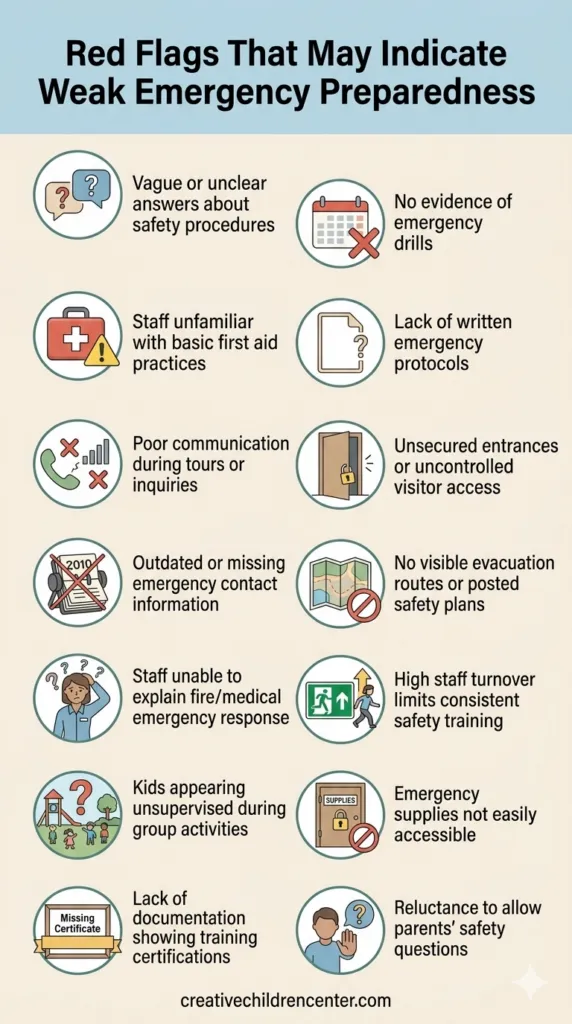
Red Flags That May Indicate Weak Emergency Preparedness
Not all childcare centers prioritize safety equally. Parents should be aware of warning signs that suggest gaps in emergency planning or inconsistent safety practices. While one issue alone may not always be alarming, repeated or combined concerns can indicate that emergency readiness is not a priority.
Red flags include:
- Vague or unclear answers about safety procedures
- No evidence of regular emergency drills
- Staff unfamiliar with basic first aid practices
- Lack of written emergency protocols
- Poor communication during tours or inquiries
- Unsecured entrances or uncontrolled visitor access
- Outdated or missing emergency contact information for children
- No visible evacuation routes or posted safety plans inside the facility
- Staff unable to clearly explain what to do during fire, lockdown, or medical emergencies
- High staff turnover that limits consistent safety training and procedure familiarity
- Children appearing unsupervised or loosely monitored during group activities
- Emergency supplies (first aid kits, etc.) not easily accessible or visibly maintained
- Lack of documentation showing training updates or certifications
- Reluctance to allow parents to ask detailed safety-related questions
If these issues appear, it may indicate that emergency preparedness is not a priority and that the center may not be fully equipped to handle unexpected situations effectively.
Why Emergency Preparedness Builds Long-Term Trust
Preparing for a childcare emergency is not just about rare events—it is about everyday confidence. When parents know that a center is ready, they feel more comfortable leaving their child each day. Children also benefit from structured safety systems because they learn routines that help them feel secure. A strong emergency system supports:
- Emotional safety for children
- Trust between parents and caregivers
- Stability during unexpected situations
- Faster, more effective responses when needed
Preparedness creates peace of mind, and peace of mind is one of the most valuable parts of childcare.fire
Safe Starts Begin with the Right Environment for Your Child
At the heart of every childcare decision is a simple desire: ensuring children are safe, supported, and cared for in every situation. Understanding emergency preparedness is not about expecting the worst—it is about choosing a place that is ready for anything and has clear systems in place to respond with confidence when the unexpected happens.
When parents know what to look for, they can confidently evaluate whether a center is truly equipped to handle both everyday care and urgent situations. From trained staff to secure facilities, structured routines, and clear communication systems, every detail plays a role in creating a safe environment where children can grow, learn, and thrive with peace of mind.
If you are exploring childcare options and want a setting where safety, care, and readiness are taken seriously, Creative Children Center LLC offers a nurturing environment built around children’s well-being and development at every stage. Families are encouraged to take the next step and Learn about our School-Age Program to see how older children continue to grow in a safe, structured, and supportive learning space.