

Children learn best when they are actively engaged, curious, and having fun. From stacking blocks as toddlers to solving science challenges as older kids, every stage of childhood offers opportunities to build confidence, creativity, and important life skills. The key is choosing activities that match a child’s age, interests, and developmental needs so learning feels exciting instead of forced.
Parents and caregivers often search for meaningful ways to keep children entertained while also helping them grow emotionally, socially, physically, and academically. That’s why understanding the best learning activities for different ages can make such a powerful difference. Age-appropriate activities help children explore the world around them, strengthen communication skills, develop independence, and build a lifelong love of learning through everyday play and interaction.
Why Creative Learning Matters at Every Age
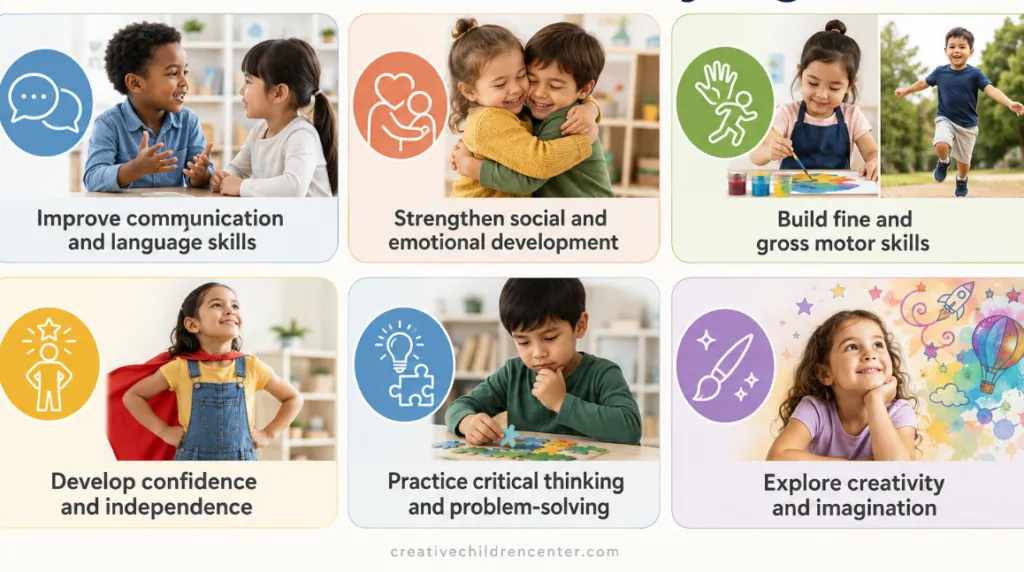
Creative learning goes beyond worksheets and memorization. It is essential to choose targeted learning activities for different ages to spark genuine imagination and problem-solving skills. Whether a child is painting, building, pretending, dancing, or experimenting, they are developing abilities that support healthy growth. These creative experiences help children:
- Improve communication and language skills
- Strengthen social and emotional development
- Build fine and gross motor skills
- Develop confidence and independence
- Practice critical thinking and problem-solving
- Explore creativity and imagination
Children also learn differently at each stage of growth. A toddler’s learning style will not look the same as a preschooler’s or school-age child’s experience. Understanding these differences helps parents and caregivers create activities that truly support development.
Creative Learning Activities (Children in Different Ages)
Spark curiosity and unlock your child’s potential with dynamic, hands-on projects tailored for growth. Discover age-appropriate learning activities for different ages that transform everyday play into meaningful developmental milestones, making education both an exciting adventure and a natural part of daily life.
1. Learning Activities for Infants (0–12 Months)
Infants learn through their senses, movement, and interactions with caregivers. At this stage, even simple everyday moments become powerful learning experiences.
Sensory Exploration
Sensory play introduces babies to new textures, sounds, and sights. Soft fabrics, crinkly toys, textured balls, and musical rattles help stimulate brain development. Many experts discuss why sensory play is essential because it supports early cognitive growth while encouraging curiosity and exploration.
Simple sensory activities include:
- Touching soft and textured materials
- Listening to calming music
- Looking at high-contrast images
- Playing with water during bath time
- Exploring safe sensory bins with supervision
Tummy Time Activities
Tummy time helps strengthen neck, shoulder, and core muscles while encouraging movement and coordination.
Fun tummy time ideas include:
- Placing mirrors nearby
- Using colorful toys for visual tracking
- Singing songs face-to-face
- Encouraging reaching and rolling
Reading and Talking
Even before babies understand words, hearing language helps develop communication skills. Reading colorful board books, naming objects, and singing nursery rhymes all support early language development.
2. Learning Activities for Toddlers (1–3 Years)
Toddlers are naturally curious and energetic. Incorporating specific learning activities for different ages helps this group thrive through movement, repetition, and hands-on discovery. Structured play opportunities perfectly balance creativity and early developmental exploration.
Music and Movement Games
Toddlers love dancing, clapping, jumping, and moving to music. These activities improve coordination, listening skills, and rhythm awareness.
Ideas include:
- Freeze dance
- Animal movement games
- Action songs
- Rhythm instruments
- Obstacle courses
Activities that encourage movement are also closely connected to gross motor skill activities that help active kids build balance, coordination, and body awareness.
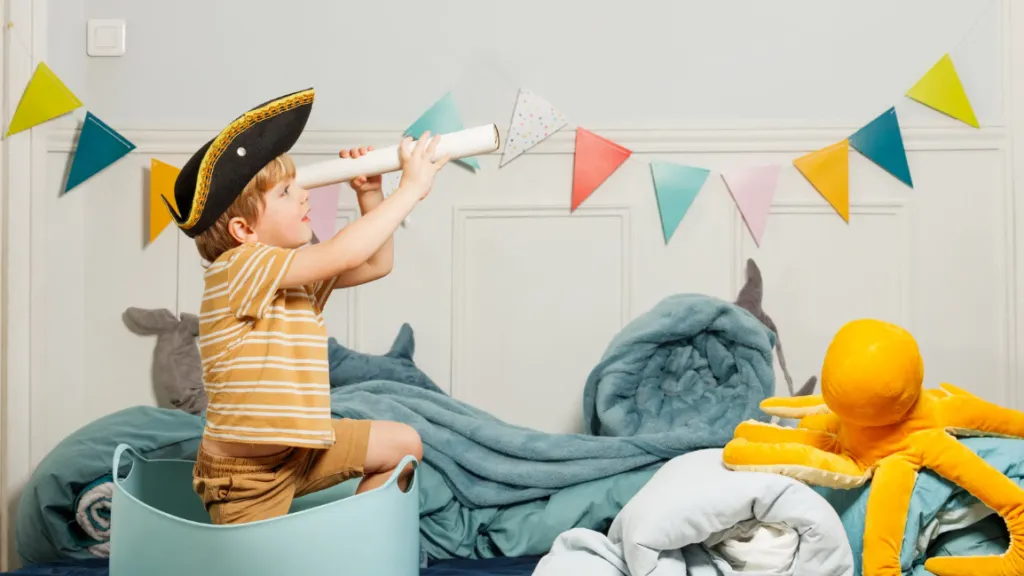
Pretend Play
Imaginative play allows toddlers to copy the world around them while developing emotional understanding and communication skills.
Popular pretend play ideas:
- Toy kitchens
- Baby dolls
- Doctor kits
- Dress-up clothes
- Puppet storytelling
Simple Art Activities
Toddlers enjoy creative freedom more than perfect results. Painting, coloring, and sensory crafts allow them to experiment with textures and colors while improving coordination.
Easy toddler art activities include:
- Finger painting
- Sticker collages
- Crayon scribbling
- Sponge painting
- Playdough exploration
This stage is also where play based learning explained through hands-on experiences becomes especially important because children absorb information naturally through play and interaction.
3. Learning Activities for Preschoolers (3–5 Years)
Preschoolers begin developing stronger independence, communication skills, and curiosity. Introducing tailored learning activities for different ages at this stage encourages creativity and cooperation. These engaging projects foster early academic readiness and deeper exploration of the world.
Early Literacy Activities
Reading readiness can be introduced through fun and playful activities rather than formal instruction.
Helpful literacy activities include:
- Alphabet scavenger hunts
- Rhyming games
- Storytelling
- Letter tracing
- Reading picture books together
Children also benefit from social interaction during group learning experiences. Many parents explore preschool social skills activities that teach sharing and cooperation because these experiences help children build friendships and emotional confidence.
STEM Learning Through Play
Preschoolers naturally enjoy experimenting and discovering how things work. Simple science and building activities encourage critical thinking and curiosity.
Popular STEM activities include:
- Building block towers
- Sink-or-float experiments
- Magnetic exploration
- Simple measuring games
- Nature observation
Many families enjoy STEM activities for preschoolers because they transform simple play into exciting learning moments while encouraging problem-solving skills.
Fine Motor Skill Activities
Preschool years are important for strengthening hand muscles and coordination needed for writing and self-care tasks.
Helpful fine motor activities include:
- Bead threading
- Cutting with safety scissors
- Playdough shaping
- Tweezers sorting games
- Puzzles
Parents often search for fine motor skills activities for 3 4 year olds because these activities directly support independence, coordination, and school readiness.
Creative Arts and Crafts
Preschoolers love expressing themselves creatively. Open-ended art projects help develop imagination while improving focus and patience.
Fun ideas include:
- Painting with different tools
- Nature crafts
- Collage making
- Puppet creation
- Paper plate art
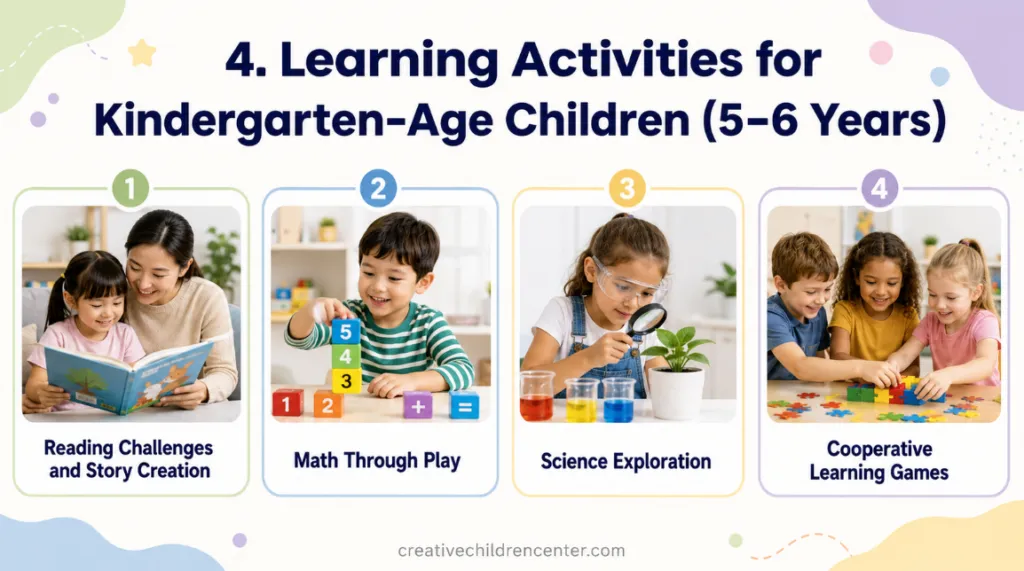
4. Learning Activities for Kindergarten-Age Children (5–6 Years)
Kindergarten-age children are eager to explore structured concepts while still benefiting from creativity. Designing intentional learning activities for different ages at this milestone successfully combines early academics with hands-on engagement and essential physical movement.
Reading Challenges and Story Creation
Children at this age enjoy creating their own stories and practicing early reading skills.
Ideas include:
- Creating homemade books
- Acting out stories
- Word matching games
- Sight word scavenger hunts
- Story sequencing activities
Math Through Play
Math becomes more engaging when children can physically interact with concepts.
Creative math activities:
- Counting games
- Shape hunts
- Measuring ingredients while cooking
- Board games with dice
- Pattern-building exercises
Science Exploration
Simple science activities encourage observation and curiosity.
Try activities such as:
- Growing plants
- Weather journals
- Simple chemical reactions with baking soda
- Animal habitat exploration
- Shadow experiments
Cooperative Learning Games
Group games teach teamwork, patience, communication, and emotional regulation.
Helpful group activities include:
- Team scavenger hunts
- Building challenges
- Cooperative board games
- Role-playing games
- Partner art projects
5. Learning Activities for School-Age Children (6–12 Years)
Older children benefit from activities that encourage independence, creativity, and deeper critical thinking. School-age children enjoy challenges that allow them to express their interests and talents.
Independent Creative Projects
Giving children opportunities to create independently builds confidence and responsibility.
Creative project ideas include:
- Comic book creation
- DIY crafts
- Photography projects
- Building models
- Designing simple inventions
STEM Challenges
School-age children often enjoy hands-on experiments and engineering activities.
Popular ideas:
- Coding games
- Robotics kits
- Bridge-building challenges
- Science experiments
- Marble runs
These activities strengthen problem-solving skills while making learning feel exciting and interactive.
Journaling and Creative Writing
Writing helps children express emotions, strengthen communication skills, and improve creativity.
Encourage writing through:
- Daily journals
- Story prompts
- Poetry writing
- Travel diaries
- Comic strips
Outdoor Learning Activities
Outdoor experiences combine physical activity with exploration and discovery.
Fun outdoor learning ideas:
- Nature scavenger hunts
- Gardening
- Sidewalk chalk math
- Outdoor obstacle courses
- Bird watching
Children who spend time outdoors often improve focus, coordination, and emotional well-being.
The Importance of Screen-Free Learning
Technology can be useful in moderation, but children also need opportunities to learn without screens. Hands-on experiences support creativity, communication, and problem-solving in ways digital entertainment often cannot.
Many families now prioritize screen-free quiet time activities because they encourage imagination, focus, and independent learning while reducing overstimulation.
Screen-free learning activities include:
- Reading books
- Building with blocks
- Puzzles
- Sensory bins
- Art projects
- Pretend play
- Journaling
- Nature walks
Balancing screen time with active and creative experiences helps children develop healthier learning habits.

How Play Supports Child Development
Play is not separate from learning—it is one of the most effective ways children develop important skills. Through play, children experiment, solve problems, communicate, and understand emotions in a low-pressure environment.
Research continues to support play based learning because it allows children to engage naturally with the world around them while developing academically, socially, and emotionally.
Benefits of play-based learning include:
- Improved attention span
- Better emotional regulation
- Increased creativity
- Stronger communication skills
- Enhanced social development
- Greater confidence
When children feel safe and engaged, they become more motivated to learn and explore independently.
Tips for Choosing Age-Appropriate Learning Activities
Not every activity works for every child. Finding the right learning activities for different ages ensures the best experiences are flexible, enjoyable, and perfectly matched to developmental stages.
1. Follow the Child’s Interests
Children learn best when activities connect to their natural curiosity.
Examples:
- Dinosaur-loving children may enjoy fossil crafts
- Animal lovers may enjoy nature observation
- Creative children may prefer art and storytelling
2. Keep Activities Simple
Complicated instructions can overwhelm younger children. Focus on easy, engaging experiences instead of perfection.
3. Allow Open-Ended Exploration
Children benefit when there is no “right” way to complete an activity. Open-ended play encourages creativity and independent thinking.
4. Encourage Movement
Young children especially need active learning opportunities throughout the day.
Movement-based learning can include:
- Dancing
- Outdoor exploration
- Active games
- Sensory movement stations
5. Prioritize Consistency Over Perfection
Children do not need expensive supplies or elaborate lesson plans. Consistent interaction, conversation, and creative opportunities matter most.
Creating a Learning-Friendly Environment at Home
A supportive environment helps children feel confident exploring new ideas. Setting up space for targeted learning activities for different ages makes encouraging home education simple and highly effective.
- Keeping books accessible
- Creating a quiet creative space
- Rotating toys and materials
- Limiting distractions
- Encouraging questions
- Celebrating effort instead of perfection
Children thrive when they feel supported, encouraged, and emotionally safe while learning.
Inspire Curiosity and Confidence Through Everyday Learning
The best learning moments often happen during ordinary daily experiences. Whether children are painting, building, reading, exploring outside, or engaging in imaginative play, these moments shape their confidence, creativity, and lifelong love of discovery. Choosing meaningful learning activities for different ages helps children grow emotionally, socially, physically, and intellectually while making learning feel joyful and natural.
Families looking for a nurturing environment that supports creativity, exploration, and age-appropriate development can explore the programs offered by Creative Children Center LLC. From toddler learning experiences to school-age enrichment, the center focuses on helping children build confidence, curiosity, and important life skills through engaging educational activities and compassionate care.